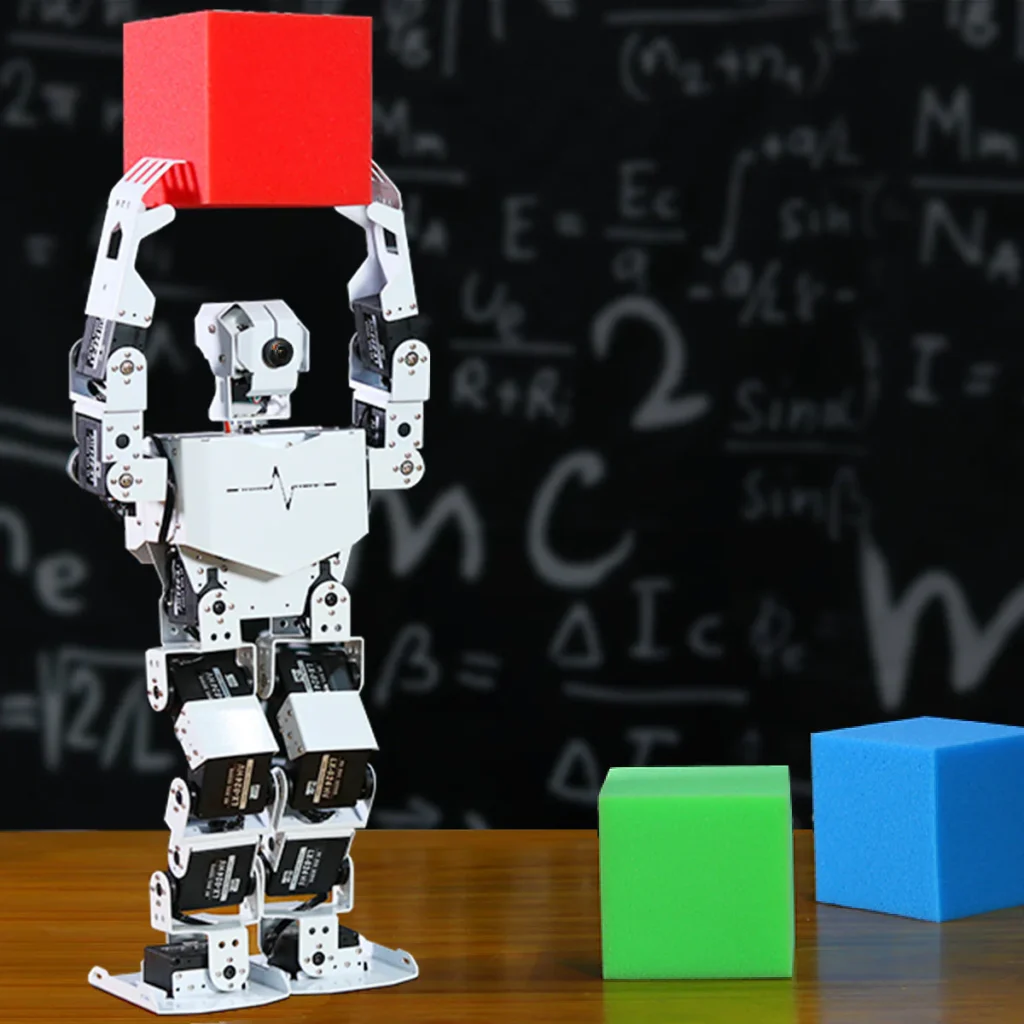
A 20-DOF humanoid robot built on a Raspberry Pi 5 with a dedicated MCU for real-time servo control, 18 high-voltage bus servos, a 2-DOF head with an HD camera, and robotic hands with a 66 mm grip. Fluent in Python, OpenCV and ChatGPT multimodal AI — the little humanoid that turns “kick the red ball” into an actual physical action.
Most educational humanoids ship a hard-coded “wave” and call it AI. TonyPi Pro talks to a real ChatGPT-class multimodal model, listens for a wake word, sees objects through a 2-DOF pan-tilt head, and executes hand-eye pick-and-place, ball kicking, stair climbing and gesture recognition — from the same natural-language sentence.
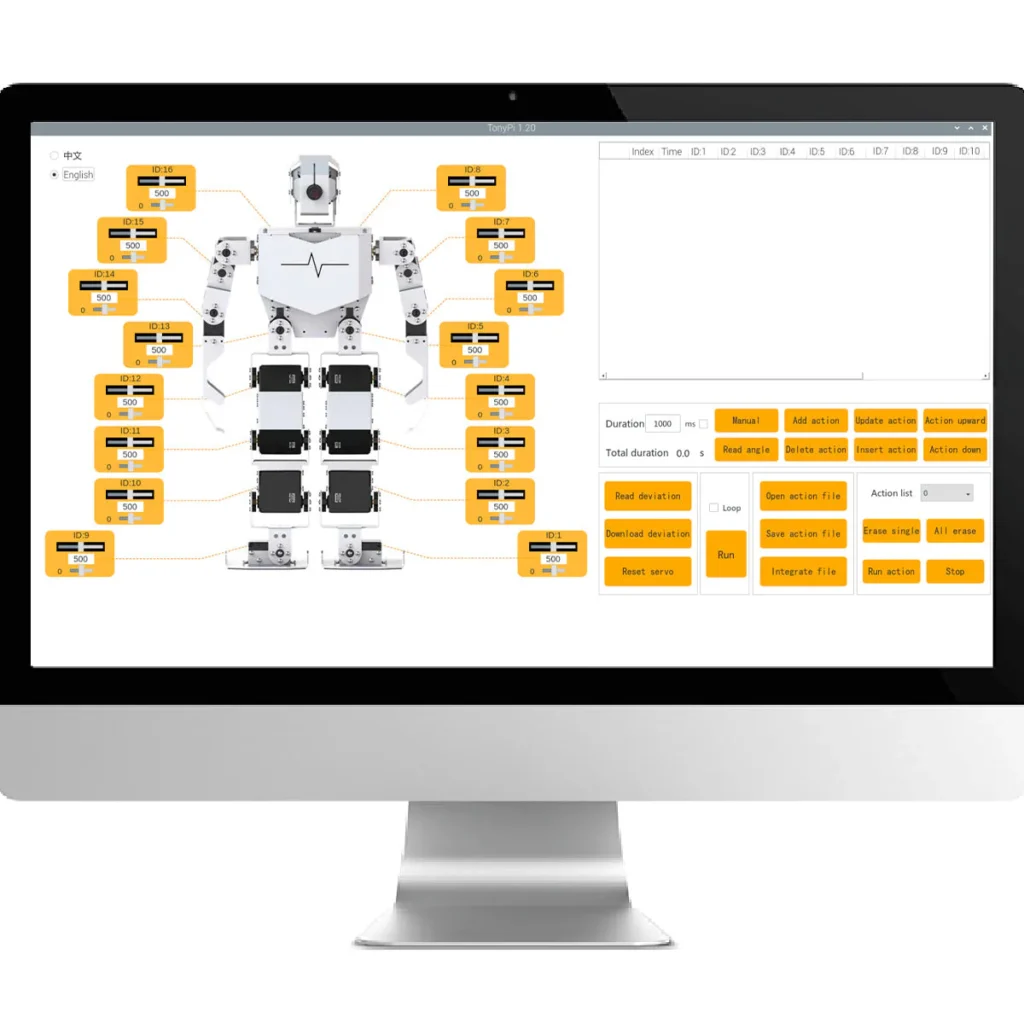
Vision, voice, ChatGPT, MediaPipe and OpenCV run on the Raspberry Pi 5. Gait control, servo bus, joint updates — every millisecond of it — runs on a dedicated high-frequency MCU. Two brains, two workloads. The robot can chase a ball while listening to your next voice command without a hitch.
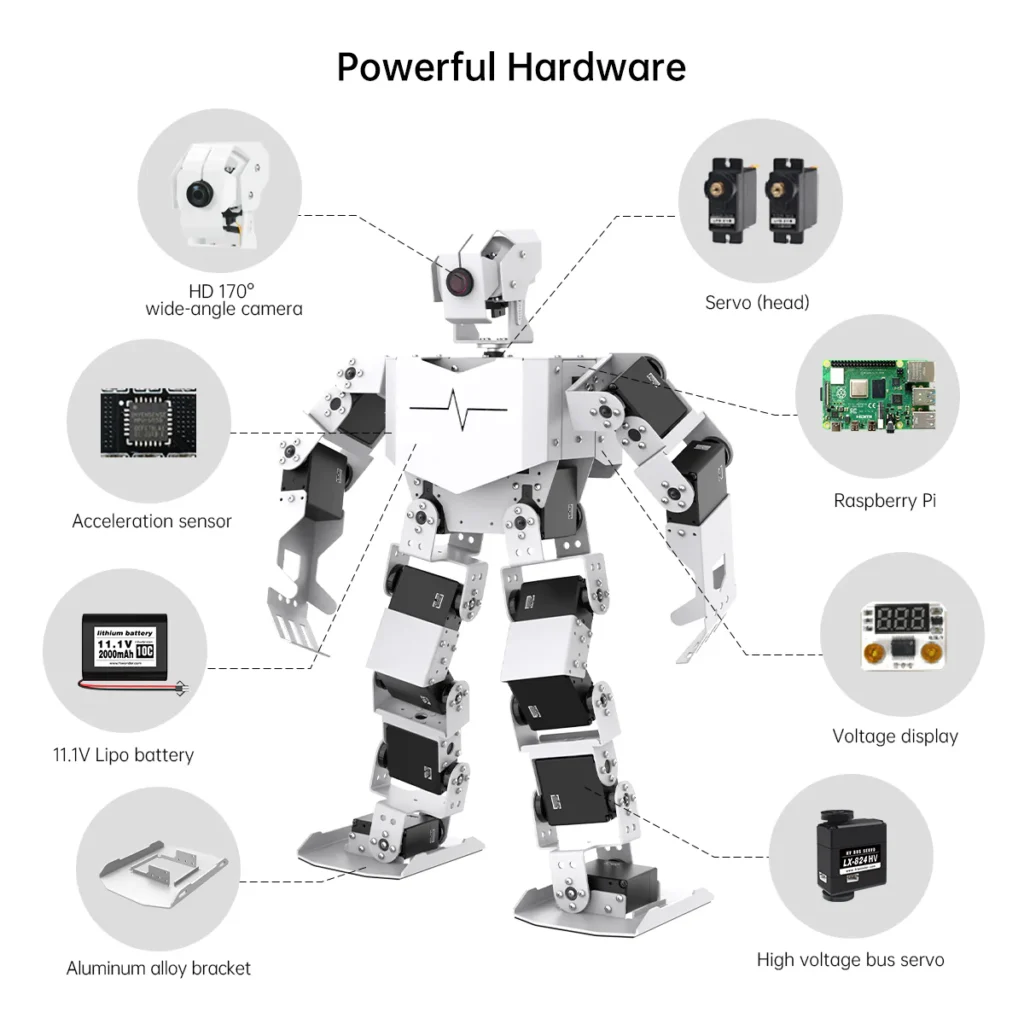
Eighteen high-voltage intelligent serial-bus servos drive the body, plus a 2-DOF pan-tilt head and expandable 2-DOF robotic hands with a 66 mm open-close grip — big enough to grasp a golf ball, a small block or a Rubik’s cube. Anti-stall protection prevents servo damage during collision or overload. Real-time voltage display right on the robot.
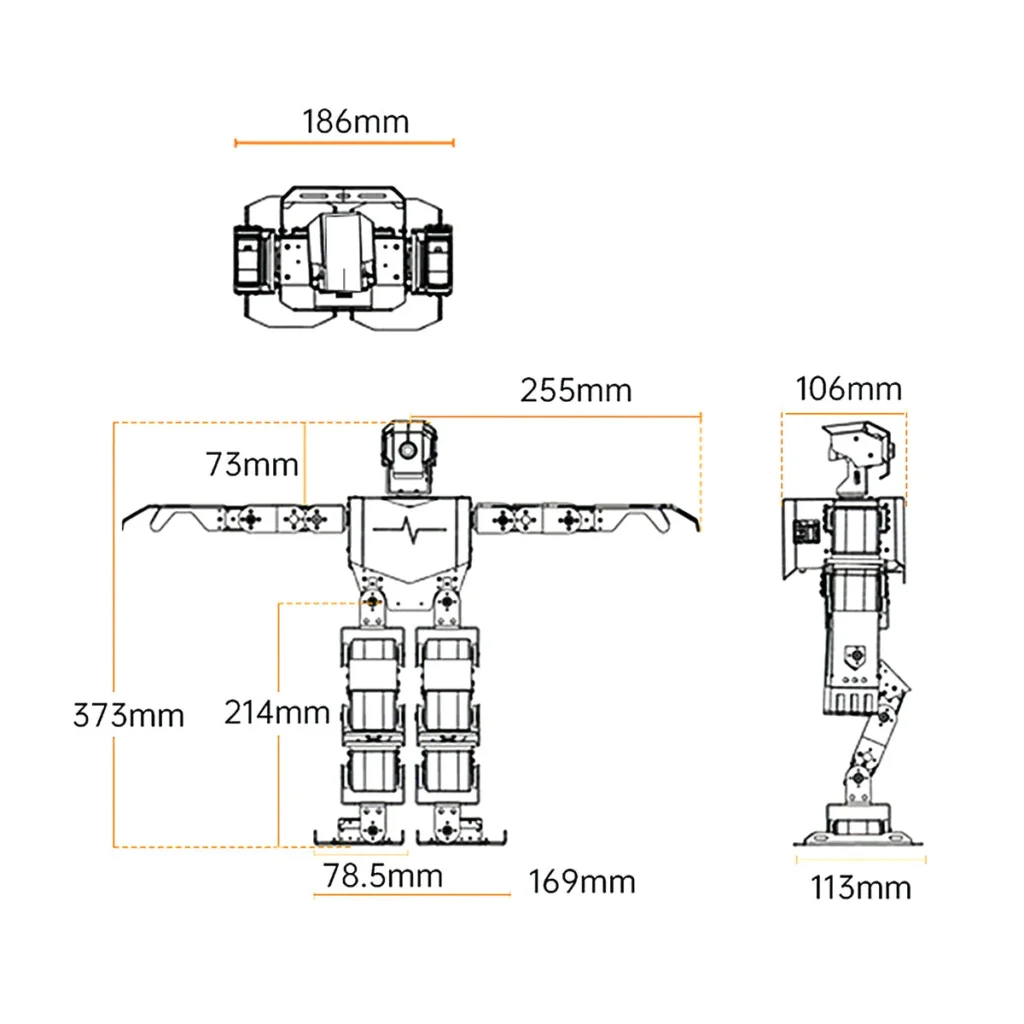
OpenCV contour detection lets TonyPi Pro see stair edges and climb them autonomously. Hand-eye coordination lets it identify an object, walk to it and pick it up. LLM semantic targeting plus PID vision tracking makes ball-kicking a real skill, not a demo. Hurdle crossing and line-patrol modes are pre-tuned. IMU keeps posture stable through all of it.
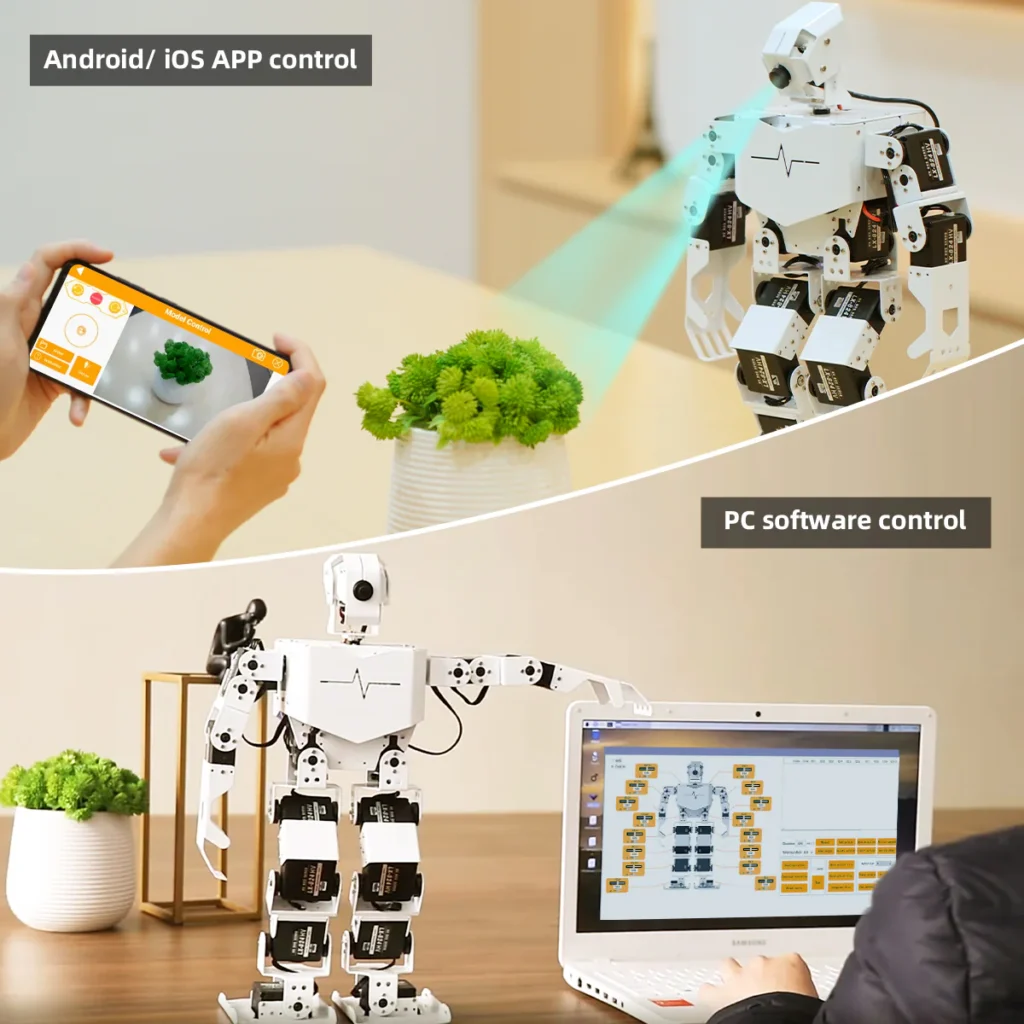
Ship it with your OpenAI or OpenRouter key. Wake-word voice input, TTS response, and a ChatGPT-class multimodal model turn a spoken instruction into a Python action plan the robot actually executes. OpenCV, MediaPipe body / gesture recognition, PID target tracking — all pre-installed. Open Python source. No black boxes.
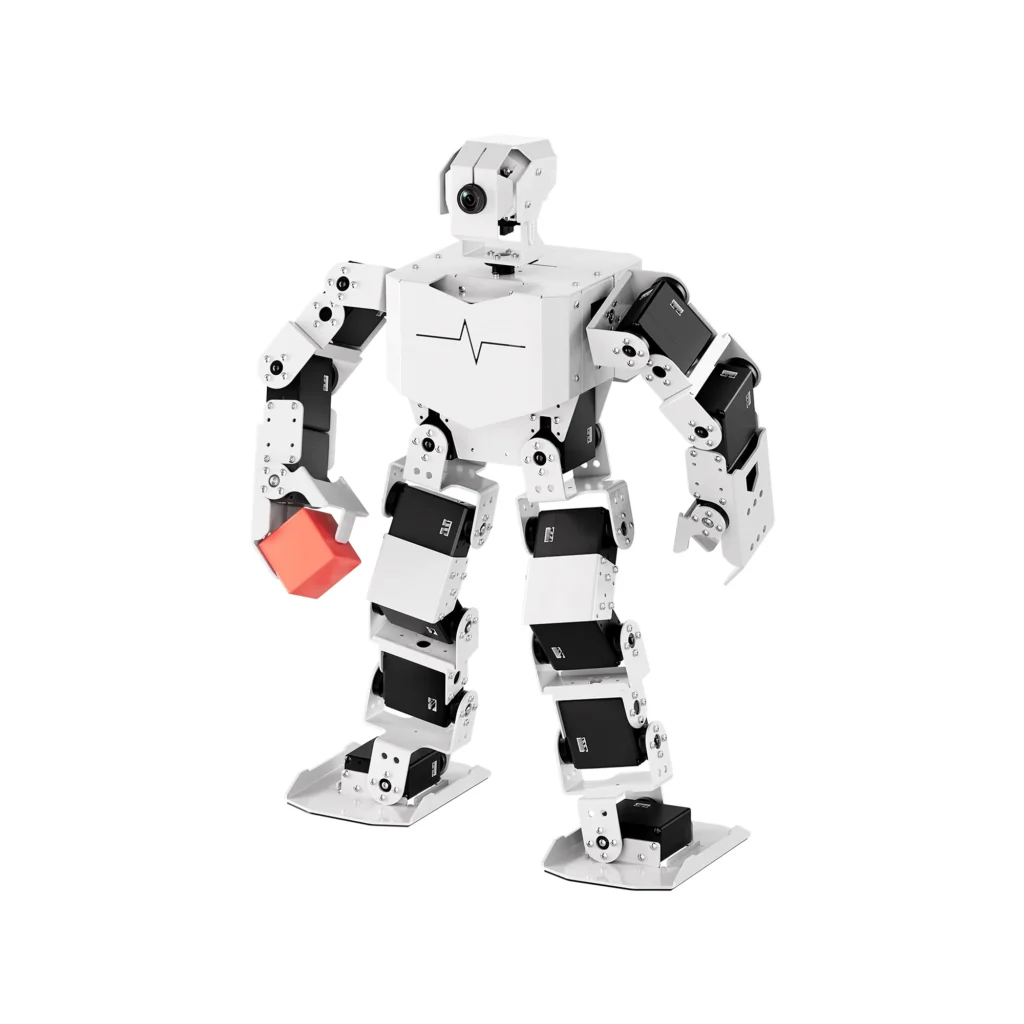
Body, hardware, control, design — six product-photography views.
Full mechanical, electrical, sensor and software configuration — every detail of the shipping kit.
Specs per manufacturer datasheet. Institution discount, GeM listing, KYC and bulk pricing on enquiry. No-Cost EMI available via Snapmint at checkout (orders above ₹ 3,000).
The TonyPi Pro tutorials map onto a 6-stage embodied-AI syllabus — from Pi 5 Linux basics to a full LLM-driven, hand-eye capstone.
Raspberry Pi OS 64-bit · VNC · Python venv · serial-bus servo API
Joint control · inverse kinematics · walking gait · IMU balance
Colour · contour · face detect · PID target tracking
Camera-to-arm calibration · pick & place · ball kick
Wake word · TTS · multimodal · semantic action planning
LLM → vision → motion pipeline · publish or compete
The humanoid Indian AI research labs, engineering colleges and robotics competition teams reach for when the demo has to speak, see and move.
LLM + vision + motion pipelines, sim-to-real experiments, multimodal action planning — publish-quality data on an approachable budget.
The T1–T6 ladder covers a full BTech / MTech course in humanoid robotics + embodied AI — Python, OpenCV, IK, LLMs, voice.
Stair-climb events, ball-kicking, pick-and-place, obstacle courses — competition-ready with tuned Python examples.
Investor pitches, corporate showrooms, science fairs — a humanoid that responds to natural language and physically acts on it.
Yes — 20 DOF, dual-controller (Raspberry Pi 5 AI + dedicated MCU gait), ChatGPT multimodal integration, OpenCV + MediaPipe + PID tracking, open-source Python. It’s designed for LLM → vision → action research the way most humanoid teaching platforms are not. Most Indian PhD / MTech embodied-AI groups can adopt it as their primary platform on day one.
You supply an OpenAI or OpenRouter API key. The robot listens for a wake word, sends the transcribed request (plus a live camera frame for multimodal calls) to the LLM, receives a structured action plan back, and dispatches it to the motion / vision stack in Python. Because the source is open, you can swap in a local model, a Claude endpoint, or your own agent framework — nothing about the pipeline is hard-coded to a single vendor.
Autonomous stair climbing, hand-eye pick & place, ball kicking, hurdle crossing, line patrol, colour tracking, face detection, gesture recognition, and voice conversation via ChatGPT. All of it ships pre-tuned with open Python source, so students extend it rather than reverse-engineer it.
The Pi 5’s Arm Cortex-A76 + VideoCore VII GPU is a large step up from Pi 4B for OpenCV and MediaPipe workloads — and the 2 GB variant hits the sweet spot for the humanoid’s vision + control loop. Because gait runs on a dedicated MCU, no Pi RAM is spent on real-time joint control. For heavier local LLMs, you can drop in a Pi 5 4GB or 8GB — the same Python stack runs.
Intermediate to advanced. Comfortable with Python, basic Linux, and ideally some OpenCV or AI/ML exposure. High school students with strong coding backgrounds handle it well; the real sweet spot is undergraduate final-year projects, MTech electives and PhD research groups.
Yes — bulk pricing for colleges and universities, GST invoicing at ₹ 1,24,900 excl. GST, No-Cost EMI from ₹ 13,878/mo across 9 months (via Snapmint at checkout), GeM listing where required, and government-tender documentation. Ask for the institution price sheet on enquiry.
Manufacturer warranty plus the 1-Year xBoom AMC. Every order ships with remote onboarding, a Python + ChatGPT + hand-eye walkthrough session, and access to the full tutorial library including motion control, OpenCV, MediaPipe, ChatGPT integration and voice interaction. Pan-India insured shipping. On-site training and workshops available on request.
Tell us your programme — college, research group, competition team, demo studio — and we’ll drop an INR proposal into your inbox with GST invoice, institution discount, No-Cost EMI, and pan-India insured shipping.