search
0
001 / FIREFIGHTING DRONES · INDIA · 2026

Eyes first. Suppression second.

Two firefighting drone systems stocked in India — for fire services, industrial safety teams, forest departments and smart-city responders.

Fire response is a race against the clock. The H300 carries thermal imaging and suppression payloads to find and hit the heart of the fire — even through smoke that ground crews cannot see through. The Cavalry H50L-2 adds a unique window-breaking capability for high-rise rescue access where ladder trucks cannot reach. Both come with operator training, AMC and DGCA registration support. Pan-India delivery from Bengaluru.

STOCKED IN INDIA
2 firefighting drones · ready to deploy
CAPABILITIES
Recon · suppression · entry · comms
PARTNERS
Cavalry · H300 · India dealer
SUPPORT
DGCA · training · AMC · pan-India
002 / WHAT THEY DO

Four jobs.
One incident.

A firefighting drone is not a single tool — it does four distinct jobs across the timeline of a fire incident. Reconnaissance before the team commits, suppression on the active fire face, entry access for sealed structures, and continuous comms relay back to the incident commander.

01
JOB 01 · RECONNAISSANCE

See through smoke.

Thermal imaging identifies hotspots invisible to the human eye. Maps the fire perimeter, locates trapped occupants, tracks fire-spread direction in real time. The data goes to the incident commander on the ground — not a person climbing into the smoke.
02
JOB 02 · SUPPRESSION

Hit the heart of the fire.

Fire retardant payloads delivered precisely onto active flame fronts. Especially valuable in high-rise floors above ladder reach, in industrial sites where ground access is restricted, and in forest fires too vast for hand crews to cover quickly.

03
JOB 03 · ENTRY ACCESS

Break the glass.

Modern high-rises seal heat and smoke inside the burning compartment. The Cavalry H50L-2 breaches the glass from outside — opens ventilation, creates rescue routes for occupants, opens a path for direct suppression delivery. A capability ladder trucks and helicopters do not have.

04
JOB 04 · COMMS RELAY

Live eye for command.

Live HD video and thermal feed streamed back to the incident commander. Ground teams see the fire face that no one on the ground can see. Supports tactical decisions in real time and creates the record for post-incident review and training.

003 / WHY DRONE FIREFIGHTING

Four reasons.
One outcome.

Drones don't replace firefighters — they extend the team's reach, cut response time, and remove the human from the most dangerous moments of a fire incident. Four operational gains over conventional ladder-and-helicopter response.

01

No human in the smoke.

The most dangerous moment in a fire response — the first entry into smoke and heat — happens with a drone instead of a firefighter. Human risk drops to zero in the reconnaissance phase.

02

Above ladder reach.

Conventional ladder trucks top out around floor 18. Indian metros are increasingly building above that. Drones don't care about floor count — they fly to whichever window the fire is behind.

03

Faster than helicopters.

A firefighting drone deploys in minutes, not the half-hour a helicopter typically needs to launch. For a fire that's spreading every minute, deployment time is the metric that matters most.

04

Repeatable, recordable.

Every flight logs telemetry. Every incident generates a video and thermal record. Post-incident review becomes data-driven — what worked, what didn't, what to train next year.

004 / FULL LINEUP · 2 FIREFIGHTING DRONES

Cavalry H50L-2.
And H300.

Two complementary platforms — H300 for the broad mission profile (suppression, thermal recon, HD video), Cavalry H50L-2 for the high-rise specialty (window-breaking entry access). Many fire services equip both. Hover any tile for the alternate angle.

SpecialistXBM·00
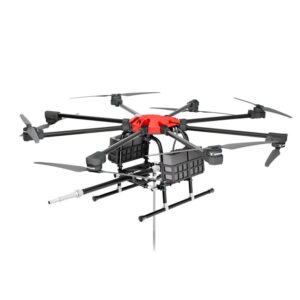
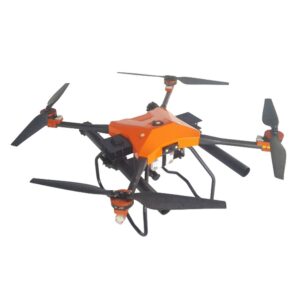
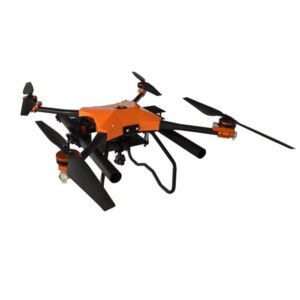
Cavalry H50L-2 window-breaking firefighting drone India Cavalry H50L-2 alternate view
HIGH-RISE · ENTRY ACCESS · SPECIALIST

Cavalry H50L-2 Window-Breaking

Cavalry H50L-2 — the specialist platform. Purpose-built window-breaking capability for high-rise fire response. Breaches glass facades from outside to open rescue routes, ventilation paths, and direct suppression delivery into the fire compartment.

Class
Specialist · entry access
Capability
Window-breaking · suppression
Best for
High-rise rescue access
Use case
Sealed-facade buildings
Price on request
Request quote →
General-purposeXBM·01
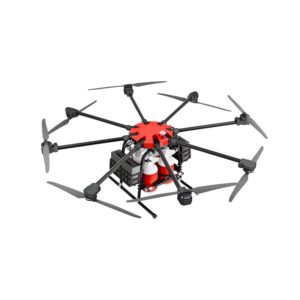
H300 firefighting drone thermal suppression India H300 firefighting drone alternate view
GENERAL-PURPOSE · SUPPRESSION · THERMAL

H300 Firefighting Drone

H300 — the general-purpose firefighting drone. Fire suppression payloads, thermal imaging for hotspot detection, HD video streaming to ground command. Suitable for most fire-incident profiles — high-rise to industrial to forest.

Class
General-purpose suppression
Capability
Suppression · thermal · HD video
Best for
Most fire-incident profiles
Use case
High-rise · industrial · forest
Price on request
Request quote →
005 / WHERE THEY DEPLOY

Six incident
contexts.

Real fire-incident contexts where a drone changes the response profile — from sealed high-rise residential towers to wildfire fronts, from refinery hazmat zones to old-city narrow lanes that fire engines cannot enter.

/ 01
HIGH-RISE · RESIDENTIAL

Apartment towers.

Residential high-rises in Mumbai, Delhi, Bengaluru, Hyderabad, Chennai. Conventional ladder trucks top out around floor 18 — drones don't. Cavalry H50L-2 specialises in this exact scenario.

/ 02
HIGH-RISE · COMMERCIAL

Office & hotel towers.

Commercial towers and luxury hotels with sealed-glass facades that trap heat and smoke. The drone breaches a window from outside, ventilates the compartment, opens rescue routes and suppression access in one move.

/ 03
INDUSTRIAL

Refineries & plants.

Oil refineries, chemical plants, fuel depots, large warehouses. Ground access is often restricted by hazardous material zones. The H300 reaches the seat of the fire from above — no ground crew at risk.

/ 04
FOREST · WILDLAND

Forest & wildland fires.

Forest fires across the Western Ghats, Himalayan foothills, central India's tiger reserves. The drone maps the fire-line from above, identifies hotspots, supports retardant drops and search-and-rescue for trapped wildlife teams.

/ 05
CONFINED URBAN

Old city, narrow streets.

Old-city narrow lanes where fire engines physically cannot enter. The drone deploys from a few streets away, flies over the rooftops, reaches the fire while ground crews work the access route.

/ 06
TUNNEL · METRO

Tunnel & metro fires.

Highway tunnels, metro tunnels, underground parking structures. The drone provides reconnaissance from positions humans cannot reach safely. Thermal imaging maps the fire envelope through smoke before any team enters.

006 / WHO BUYS FIREFIGHTING DRONES

Four buyers.
Four briefs.

Firefighting drones serve four distinct buyer types in India — municipal fire services, industrial safety teams, state forest departments, and smart-city / defence units. Find your role and the recommended platform configuration for it.

01

For municipal fire services.

State and city fire departments. Drones extend reach beyond ladder height, cut reconnaissance time, and reduce firefighter exposure to smoke and heat. The drone supports the team — it does not replace it.

Best fits · H300 + Cavalry H50L-2
02

For industrial safety teams.

Refineries, chemical plants, fuel depots, power stations. In-house drone teams cut response time during hazmat incidents and reduce dependence on external fire-service mobilisation for first-line response.

Best fits · H300
03

For forest departments.

State forest departments, wildlife reserves, tea / coffee estate operators. Forest-fire reconnaissance from above — fire-line tracking, hotspot detection, retardant support, missing-person search.

Best fits · H300
04

For smart city & defence.

Smart-city safety initiatives, defence installations, paramilitary, cantonment fire services. Adds aerial firefighting capability to existing surveillance and incident-management infrastructure.

Best fits · H300 + Cavalry H50L-2
007 / DRONE VS TRADITIONAL

Drone wins
on most metrics.

Drones don't replace ladder trucks or helicopters — but they win on most operational metrics for the recon-and-suppression mission profile. Eight comparison rows across deploy time, reach, capability and cost.

MetricLadder truckHelicopterDrone
Deploy time15–25 min20–40 minMinutes
Maximum reach~ 18 floorsAbove buildingAny floor
Operates close to faceYesNo (downdraft)Yes
Thermal imagingNoSomeStandard
Glass-breach capabilityNoNoCavalry H50L-2
Crew at riskYes (ladder team)Yes (crew + pilot)No (operator on ground)
Cost per deploymentLowVery highLow
Best forMid-rise, suppressionWildland, transportReach, recon, suppression, entry
008 / TRAINING & DEMO PROGRAM

Trained crews. Mission-ready drones.

A firefighting drone is only useful if your team can fly it under pressure. So we don't just sell platforms — we train operators, run on-site demonstrations for incident commanders, and integrate the drone into your existing incident-command structure.

Training covers DGCA pilot certification, mission planning specific to fire-incident profiles, thermal target acquisition, suppression payload handling, and recurring drills. Delivered at your site or our Bengaluru facility. Three-step engagement.

01

Brief us.

Tell us your service profile — municipal fire department, industrial team, forest department, smart city responder. We confirm the right drone configuration, training scope, and zone-clearance support needed.

02

On-site demo.

Our team visits your station / facility and runs a no-obligation flight demonstration with both H300 and Cavalry H50L-2 (where applicable). Your incident commanders evaluate platform fit before commitment.

03

Full training.

After procurement: DGCA pilot certification, mission planning, thermal target acquisition, suppression payload handling, incident-command integration, and recurring drills. Delivered at your site or our Bengaluru facility.

009 / FREQUENTLY ASKED

Firefighting drone FAQ.

Eight questions Indian fire-service procurement teams, industrial safety officers and forest departments ask most often before placing the first firefighting drone order — covering capability, conditions, comparison, training and DGCA approval.

What do firefighting drones do?

Firefighting drones do four main jobs in a fire incident — reconnaissance (mapping the fire and identifying hotspots with thermal imaging), suppression (delivering fire retardant payloads precisely onto active flame fronts), entry access (the Cavalry H50L-2 in particular can break high-rise glass to open rescue paths and ventilation routes), and communications relay (carrying live HD video and thermal data back to the ground incident commander). They support the fire team — they don't replace firefighters.

How does the H300 help in a fire incident?

The H300 carries fire suppression payloads and uses thermal imaging to identify hotspots inside smoke-filled environments where the human eye is blind. Once the hotspot is located, the drone targets it precisely — minimising water and retardant waste — while streaming HD video back to the ground commander. This is especially valuable in high-rise residential and commercial fires that exceed ladder-truck reach, in industrial complexes where ground access is restricted, and in forest fires that span large areas.

What is the Cavalry H50L-2 window-breaking capability used for?

In modern high-rise fires, sealed glass facades trap heat and smoke inside the burning compartment. The H50L-2 can breach the glass from outside — opening a ventilation route that drops the internal temperature, opening a rescue access for trapped occupants, and creating a path for direct suppression delivery into the fire compartment. This capability does not exist in conventional ladder trucks (which top out around floor 18) or in helicopters (which cannot operate close to the building face).

Can firefighting drones operate in heat and smoke?

These drones are built for the operating envelope of a real fire incident — heat, smoke, downdraft from thermal columns, and turbulent airflow around burning structures. Both the Cavalry H50L-2 and H300 use rugged airframe construction, redundant flight systems and stable hover characteristics specifically tuned for fire-incident conditions. That said, no drone is invulnerable — the operator and incident commander always retain authority on whether to commit the drone to a particular hazard zone.

What information do they send back to the ground team?

Live HD video plus thermal imagery streamed in real time to the ground incident commander. The thermal feed is critical — it shows hotspots through smoke that ground teams cannot see, identifies fire-spread direction, and verifies whether suppression has actually extinguished the heart of the fire (not just the visible flame). HD video supports situational awareness and post-incident review.

What is the difference between the Cavalry H50L-2 and the H300?

The two drones serve different points in the fire-response timeline. The H300 is a general-purpose suppression and reconnaissance platform — thermal imaging, HD video, fire retardant delivery — suitable for most fire incidents from forest fires to industrial complexes. The Cavalry H50L-2 adds a specialist capability: window-breaking entry for high-rise structures. Many fire services equip both — H300 for the broad mission, H50L-2 for the high-rise specialty.

Do you provide pilot training and AMC?

Yes — every firefighting drone we sell includes operator training as standard, and an AMC (annual maintenance contract) option is offered for life-cycle support. Training covers DGCA pilot certification, mission planning specific to fire-incident profiles, thermal target acquisition, suppression payload handling, and integration with the incident-command structure. Training is delivered at the buyer's site or at our Bengaluru facility.

Are firefighting drones DGCA-approved in India?

Operating drones in India falls under the DGCA Drone Rules. xBoom assists with the registration documentation, operator certification, and any zone-clearance support required for fire-service deployments. For genuine emergency use during an active fire incident, additional regulatory accommodations may apply — we walk you through the current framework during the procurement process.

010 / TALK TO US

Two drones. One conversation.

Tell us your service profile — fire department, industrial team, forest department, smart-city responder — and we'll spec the right configuration, schedule a demo, factor in DGCA, training and AMC, and quote in INR with pan-India delivery from Bengaluru.

OFFICES
Bengaluru · Dubai
Close Menu
Hit enter to search or ESC to close