
01
JOB 01 · CROP SPRAYING
Pesticide & herbicide.
Apply CIB&RC-approved pesticides, herbicides, fungicides at ultra-low volume (5–10 L/acre). 25–50× faster than manual knapsack. Worker exposure to chemicals drops to zero.
Eleven kisan drone systems stocked in India — DJI Agras T10 to T100, VFLYX Made-in-India 5L to 40L, Mavic 3 Multispectral mapping. SMAM & Namo Drone Didi subsidy support included.
From the entry VFLYX 5L Quadcopter at ₹2,85,524 to the 75-litre DJI Agras T100 flagship — the most complete agriculture drone catalogue in India. Spray pesticides at 5–10 L/acre instead of 200 L. Cover 16 acres in an hour instead of 16 days. Apply IFFCO Nano Urea, scout fields with NDVI multispectral, broadcast direct-seeded rice — one drone, five jobs. SMAM 50% subsidy for individual farmers, Namo Drone Didi 80% subsidy for women SHGs, FPO 100% support — we walk you through the paperwork. DGCA-approved · pan-India delivery · operator training included.
An agriculture drone is not just a sprayer — across the season it does pesticide spraying, IFFCO Nano fertiliser application, multispectral mapping, granule and seed broadcasting, and scout-and-detect surveys. Five jobs across one airframe.
Apply CIB&RC-approved pesticides, herbicides, fungicides at ultra-low volume (5–10 L/acre). 25–50× faster than manual knapsack. Worker exposure to chemicals drops to zero.
IFFCO Nano Urea and Nano DAP are formulated for drone application — 250 ml per acre. Reduces fertiliser cost by 30–40%, eliminates urea bag-handling labour, runs faster than ground spreading.
DJI Mavic 3 Multispectral captures G/R/RE/NIR plus RGB. Vegetation indices detect crop stress, nutrient deficiency, water issues 2–3 weeks before visible symptoms appear in the canopy.
EFT 10L seeder and 10kg seed spreader handle direct-seeded rice (DSR), wheat broadcasting, NPK granules, urea, cover-crop seeds. DJI Agras T40/T50 carry 50 kg granule loads.
Routine RGB scouting for visible symptoms — pink bollworm in cotton, brown plant hopper in paddy, fall armyworm in maize, woolly aphid in sugarcane. Catch outbreaks early, intervene precisely.
Indian agriculture is the largest opportunity for drones in the world — by far. Government policy, farmer demand, and pesticide-cost pressure all push the same way. Here's the India context you should know before you buy.
India runs the world's largest state-backed drone push for agriculture. The Government has rolled out the SMAM Sub-Mission on Agricultural Mechanization with subsidies up to 50% for individual farmers, 100% for FPOs and KVKs. The Namo Drone Didi scheme aims to put 15,000 drones in the hands of women Self-Help Groups with 80% subsidy.
Pesticide approvals via the CIB&RC have progressively expanded the list of formulations cleared for drone application. IFFCO Nano Urea and Nano DAP are explicitly designed for foliar drone application — replacing the 50 kg urea bag with a 250 ml bottle.
The DGCA Drone Rules 2021 simplified registration. The PLI scheme for drones backed indigenous airframe manufacturing. VFLYX is the largest Made-in-India agriculture drone brand we represent.
Drone farming isn't an aspiration — it's a maths problem with a clear answer. Six measurable advantages over conventional knapsack and tractor spraying for the Indian farmer or service operator.
Drones use 5–10 L of spray solution per acre against 150–200 L for knapsack or tractor. Roughly 90% water reduction means less pumping, less hauling, less dependency on water sources during dry spells.
A DJI Agras T30 covers 12–16 acres/hour. A worker with a knapsack covers about 1 acre per day. One drone replaces dozens of person-days per spraying cycle.
Drone droplet size and downwash hit target leaf surfaces with less drift. Pesticide consumption typically drops 25–35% — better margins for the farmer, less chemical residue on crop and soil.
Manual spraying exposes workers to toxic chemicals through skin and inhalation. With drone spraying the operator stands away from the spray cone — a major occupational-safety win.
Better target coverage + uniform application + earlier intervention from multispectral scouting typically lifts yield by 5–15% across paddy, wheat and cotton trials in India.
Tractors can't enter standing sugarcane, tall maize, or fully-grown cotton without crop damage. Drones spray from above — reaching crop sections that ground equipment physically can't serve.
India offers some of the most generous drone subsidies in the world for agriculture. We assist eligible buyers — individual farmers, CHCs, FPOs, KVKs, agriculture universities, women SHGs — with documentation and approvals across SMAM and Namo Drone Didi schemes.
Every spraying drone in our India catalogue, organised by tank size — entry (5–10L), mid (16–20L), large CHC (30–40L), and XL plantation (40L+ to 100L). Hover any tile to see the alternate angle.
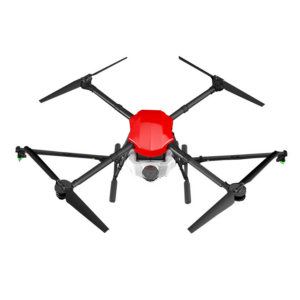
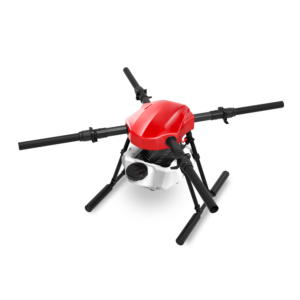
The most affordable agriculture drone in the line-up. 5-litre tank, four-rotor quadcopter, ideal for small-acreage farmers, kisan drone training centres, and women SHG operators starting under Namo Drone Didi.
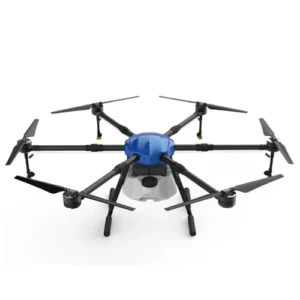
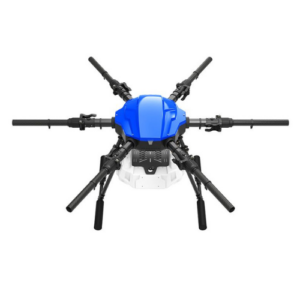
Six-motor hexacopter with 10-litre tank. Better stability than quadcopter form. Suitable for individual farmers, small CHCs, and paddy / vegetable / horticulture operators.
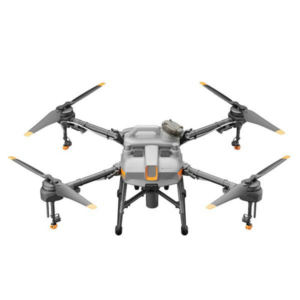
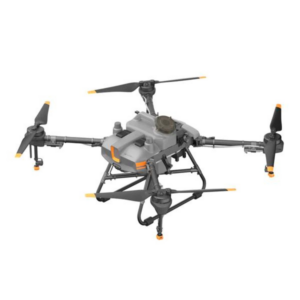
DJI Agras entry platform — 8-litre tank, four-rotor design, omnidirectional radar, and DJI SmartFarm Cloud integration. The cheapest path into the DJI Agras ecosystem.
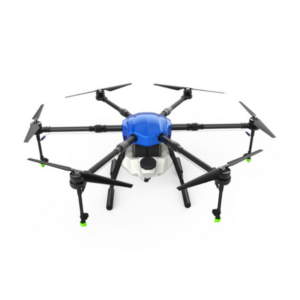
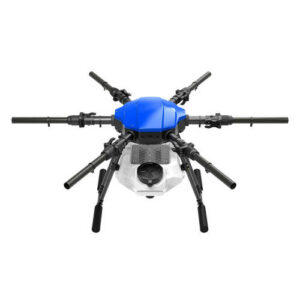
VFLYX 16L V1 basic. 16-litre tank, 28 kg max takeoff, 1200 m control radius, six 180 KV motors. Workhorse for individual farmers and small-team CHC operators.
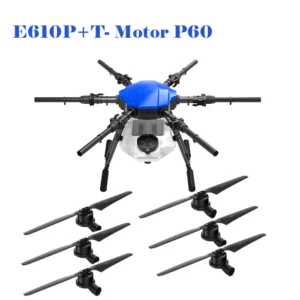
VFLYX 16L V2 — upgraded over V1 with terrain-follow radar (uneven fields stay sprayed at constant height) and autonomous obstacle avoidance (tall standing crops, irrigation channels, electric poles).
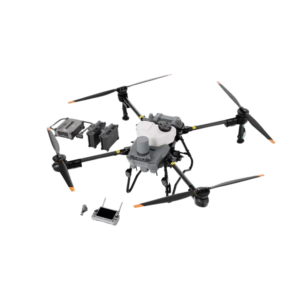
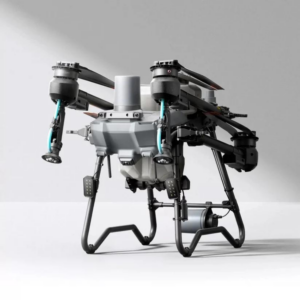
DJI Agras T25 — 20-litre tank, foldable airframe for transport in standard SUVs. Targets paddy, wheat, sugarcane and orchard contracts. Strong fit for mid-throughput CHC.
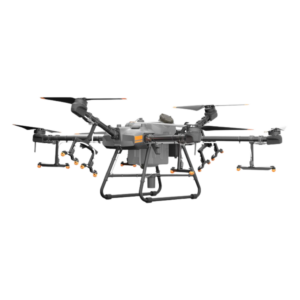
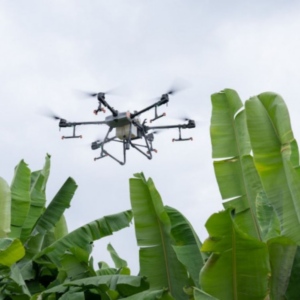
DJI Agras T30 — the most reviewed drone on this list (5/5 stars on xBoom). 30-litre tank, hexagonal rotor design, dual atomised spray system. The default choice for established Indian custom hiring centres.
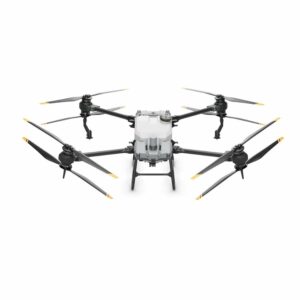
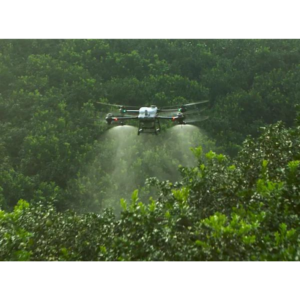
DJI Agras T40 — coaxial twin-rotor flagship of the prior generation. 40-litre spray tank or 50-kg granule spreader on the same airframe. FPO co-operatives, large paddy operations, drone-as-a-service businesses.
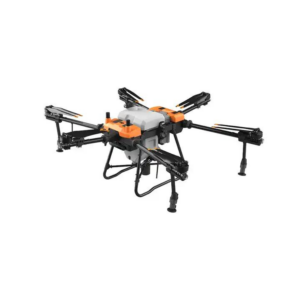
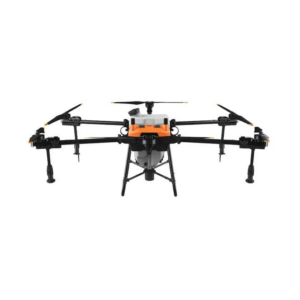
VFLYX flagship — 40-litre tank, made-in-India airframe. Strongest indigenous option for FPO co-operatives, sugarcane plantations, and high-throughput drone-service businesses preferring local manufacturing.
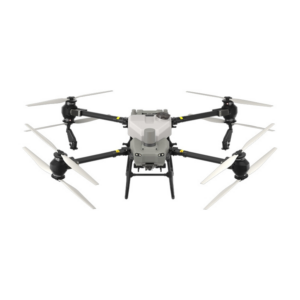
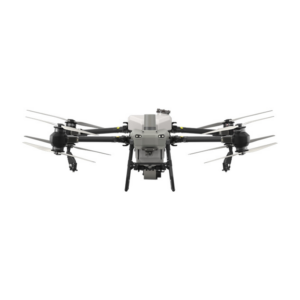
DJI Agras T50 — successor to T40. Same 40-litre tank and 50-kg granule capacity, plus IP67 waterproofing, active phased-array radar (better terrain-follow), and smarter route planning. Premium CHC choice.
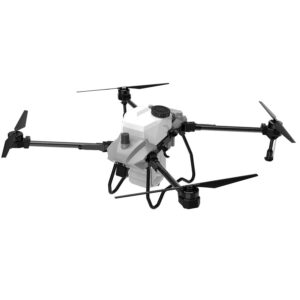
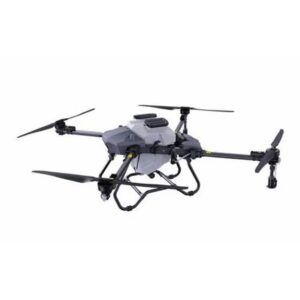
M65 agriculture drone — alternative platform for buyers comparing options outside the DJI Agras and VFLYX ecosystems. Sized for mid-to-large acreage spraying contracts.
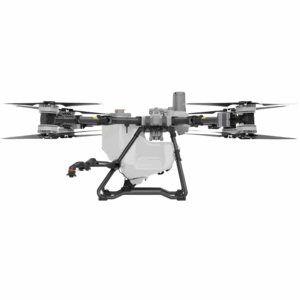
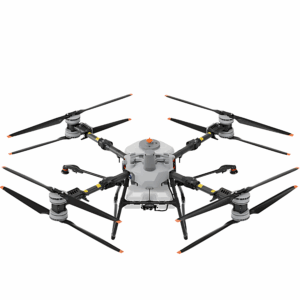
DJI Agras T100 — 2025 flagship release. 75-litre spray tank, mega-scale operations, sugarcane plantations, FPO co-operatives, and commercial drone-service businesses serving multiple villages.
Multispectral mapping drones detect crop stress 2–3 weeks before the canopy shows visible symptoms. Map first → spray smart, instead of spray everywhere. Used by agronomists, FPO field teams, sugarcane plantations and KVK research stations.
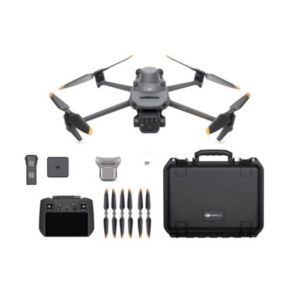
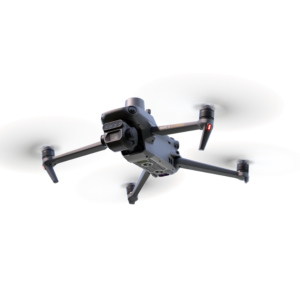
DJI Mavic 3 Multispectral — precision-agriculture mapping drone. Four-channel multispectral imaging (G, R, RE, NIR) plus 20 MP RGB camera. Detects crop stress, nutrient deficit and disease 2–3 weeks before visible symptoms.
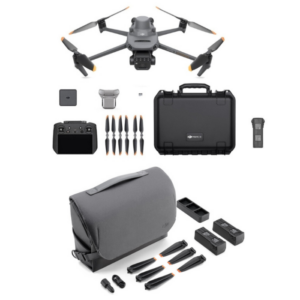
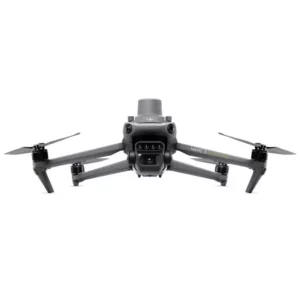
Same imaging stack as the base Mavic 3 Multispectral, packaged with shoulder bag for scout-and-go field deployments. Preferred by mobile agronomists and FPO field teams.
Granule and seed-spreader attachments for direct-seeded rice (DSR), wheat broadcasting, urea, NPK and cover crops — plus spare DJI Agras intelligent flight batteries for high-throughput CHC operators.
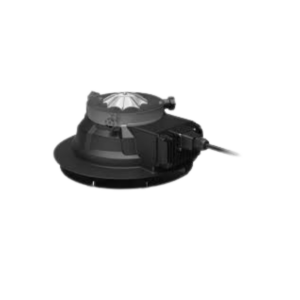
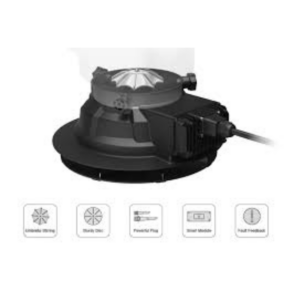
EFT 10L seeder setup — granule and seed broadcasting attachment. Direct-seeded rice (DSR), wheat broadcast, urea granules, NPK, cover-crop seeds.
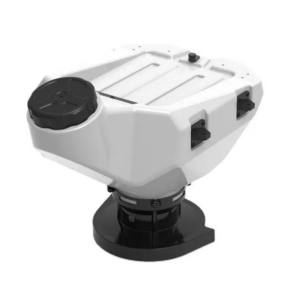
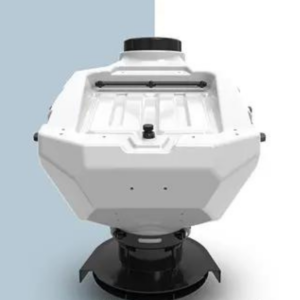
VFLYX EFT 10kg seed spreader — broadcasts urea, NPK granules, seeds and pellets across cropland. Compatible with VFLYX 10L and 16L drone airframes.
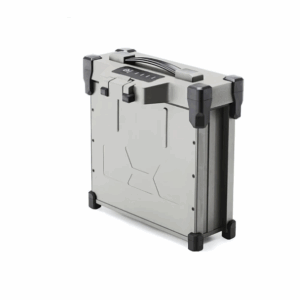
DJI Agras T20 intelligent flight battery. Spare battery for fleet operators — keep one drone airborne while the other charges, maximising hourly throughput.
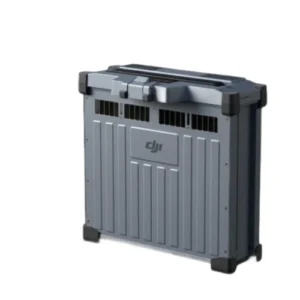
DJI Agras T40 / T50 intelligent flight battery (DB1560). Spare for high-throughput operators — keep your CHC drone running across 30+ acres a day.
Indian agriculture drone buyers fall into four distinct profiles — each with different scheme eligibility, throughput needs, and commercial models. Find your role, then drill into the right platform tier.
Buy a drone for your own farm and rent it to neighbouring farmers off-season. Common path under SMAM scheme — up to 50% subsidy with ₹5 lakh cap. ROI typically 2–3 seasons.
Drone-as-a-service business model. Charge ₹400–600/acre. A DJI Agras T30 covers 12–16 acres/hour — ₹4,800–9,600/hour gross. SMAM CHC subsidy: 40% capped at ₹4 lakh.
FPO collective ownership for member farms. SMAM scheme provides up to 100% subsidy capped at ₹10 lakh for FPOs, KVKs, ICAR institutes and agriculture universities. Service members at near-cost rates.
Namo Drone Didi scheme distributes 15,000 drones to women Self-Help Groups with 80% subsidy capped at ₹8 lakh. Train as drone-service entrepreneur, earn through agri-input company contracts.
From paddy in Punjab to coffee in Coorg — the eight crop categories where drone spraying is most established in India today. Each card lists the typical states and the pesticide / nutrient applications.
Punjab, Haryana, Andhra Pradesh, Telangana, West Bengal, Tamil Nadu, Bihar, UP. Stem borer, brown plant hopper, leaf folder pesticide; foliar nutrient; IFFCO Nano Urea.
Punjab, Haryana, UP, MP, Bihar, Rajasthan. Rust fungicide, herbicide for wild oats and Phalaris minor, Nano Urea / Nano DAP foliar application.
Maharashtra, Telangana, Gujarat, AP, Karnataka, MP. Pink bollworm pesticide, defoliant before harvest. Drone reaches mid-canopy where knapsack underdoses.
Uttar Pradesh, Maharashtra, Karnataka, Tamil Nadu. Tractors cannot enter standing cane — drones are uniquely suited. Woolly aphid, top borer, pyrilla pesticide; weedicide on bordering rows.
Madhya Pradesh, Maharashtra, Rajasthan, Karnataka. Fungicide, insect pest control, foliar nutrient. Short-window kharif crop where speed matters.
Bihar, Karnataka, Madhya Pradesh, Andhra Pradesh, Tamil Nadu. Fall armyworm — major pest controlled best by early drone-based detection + spray.
Tea: Assam, West Bengal, Tamil Nadu, Kerala. Coffee: Karnataka, Kerala, Tamil Nadu. Steep terrain, dense canopy — drone is the only practical option for many estates.
Tomato, chilli, brinjal, banana, mango, pomegranate. Foliar nutrient, fungicide for late blight / powdery mildew. Higher value per acre justifies tighter spray management.
Compared against manual knapsack and tractor-based spraying — the two methods drones are replacing — drones lead on coverage rate, water use, worker safety, drift, terrain handling, and subsidy eligibility. Eight comparison rows.
| Metric | Manual knapsack | Tractor sprayer | Agriculture drone |
|---|---|---|---|
| Coverage rate | 1 acre/day | 8–10 acres/day | 12–22 acres/hour |
| Water per acre | 150–200 L | 100–200 L | 5–10 L (ULV) |
| Worker chemical exposure | Direct (skin/lungs) | Driver exposed | Zero (operator on edge) |
| Tall standing crops | Slow and unsafe | Crop damage | Spray from above |
| Drift / off-target loss | High | Medium | Low (1.2–4 m above) |
| Hilly / uneven terrain | Slow | Inaccessible | Terrain-follow radar |
| Subsidy support | None | Some | SMAM 50% · NDD 80% |
| Best for | Marginal land | Pre-sowing operations | Standing crop spraying |
A drone is only as good as the operator. So we don't just sell — we visit your farm, FPO, CHC or KVK, run a free demo on a representative section, and walk you through DGCA pilot certification, route planning, payload mixing, and field-safety drills.
Subsidy paperwork is part of the conversation. Whether you're applying under SMAM 50%, FPO 100%, or Namo Drone Didi 80%, we hand-hold you through the documentation. Three-step engagement.
Tell us your buyer type — farmer, CHC, FPO, women SHG — your acreage, target crops, and which subsidy scheme you intend to apply under (SMAM / Namo Drone Didi / FPO 100%). We confirm fit and prepare quote.
Our team visits your farm or training centre and runs a no-obligation flight demonstration. We spray a representative section, explain platform behaviour, and walk you through the KYC + subsidy paperwork.
After purchase: DGCA Remote Pilot Certificate preparation, route planning, payload mixing, spray-pattern calibration, granule-spreader handling, field-safety. Delivered at your site or our Bengaluru facility.
Twelve questions Indian farmers, FPO secretaries, CHC operators and women SHG members ask most often before placing the first agriculture drone order — covering price, subsidy, DGCA, throughput, water savings, IFFCO Nano fertiliser and more.
Agriculture drones in India range from around ₹2,85,524 for the entry VFLYX 5L Quadcopter (Made in India), to ₹3.32 lakh for the VFLYX 10L Hexacopter, ₹3.80–4.75 lakh for the VFLYX 16L V1/V2 (with terrain-follow), ₹10.95 lakh for the flagship VFLYX 40L HD540Pro, and ₹14.29 lakh for the DJI Agras T25. Larger DJI Agras platforms (T30, T40, T50, T100) and the DJI Mavic 3 Multispectral mapping drone are quoted on configuration. SMAM and Namo Drone Didi subsidies can substantially reduce out-of-pocket cost for eligible buyers.
The Sub-Mission on Agricultural Mechanization (SMAM) scheme of the Ministry of Agriculture provides up to 50% subsidy (capped at ₹5 lakh) for individual farmer drone purchases, up to 100% subsidy (capped at ₹10 lakh) for ICAR institutes, KVKs, agriculture universities and FPOs, and 40% subsidy (capped at ₹4 lakh) for Custom Hiring Centres (CHCs). The Namo Drone Didi scheme provides up to 80% subsidy (capped at ₹8 lakh) per drone for women Self-Help Groups, with a target of distributing 15,000 drones. xBoom assists eligible buyers with subsidy documentation and approvals.
Yes — agriculture drone operation in India is governed by the DGCA Drone Rules, 2021. The drone must be DGCA-approved and registered, the operator must hold a valid Remote Pilot Certificate from a DGCA-approved RPTO (Remote Pilot Training Organisation), and pesticide application via drone is governed by CIB&RC pesticide approvals. xBoom's onboarding program covers DGCA registration documentation and pilot training.
Agriculture drones are widely deployed in India across paddy/rice (Punjab, Haryana, Andhra Pradesh, Telangana, West Bengal, Tamil Nadu), wheat (Punjab, Haryana, Uttar Pradesh, Madhya Pradesh, Bihar, Rajasthan), cotton (Maharashtra, Telangana, Gujarat, Andhra Pradesh, Karnataka), sugarcane (Uttar Pradesh, Maharashtra, Karnataka, Tamil Nadu), soybean (Madhya Pradesh, Maharashtra, Rajasthan), maize (Bihar, Karnataka, Madhya Pradesh, Andhra Pradesh, Tamil Nadu), pulses, tea (Assam, Tamil Nadu), coffee (Karnataka, Kerala) and various horticulture and vegetable crops. The CIB&RC has progressively expanded the list of pesticides approved for drone application.
Throughput depends on tank capacity, spray rate per acre, and crop type. Typical real-world numbers in Indian conditions: VFLYX 5L drone covers 2–3 acres/hour, VFLYX 10L covers 4–6 acres/hour, DJI Agras T30 covers 10–16 acres/hour, DJI Agras T40/T50 covers 16–22 acres/hour, and DJI Agras T100 covers 22–30 acres/hour. By comparison, manual knapsack spraying covers about 1 acre per worker per day. A drone replaces 25–50× the labour throughput.
Agriculture drones use ultra-low-volume (ULV) spraying with high-concentration formulations — typically 5–10 litres of spray solution per acre, against 150–200 litres per acre for traditional knapsack or tractor-based spraying. That is roughly 90% water savings. Pesticide consumption typically reduces by 25–35% because drone droplet size, spray height (1.2–4 m above canopy), and downwash give better target coverage and less drift. Lower runoff also means cleaner soil and groundwater.
Yes — this is one of the strongest use cases for drones in India. Tractors cannot enter standing sugarcane or tall maize without crop damage. Manual spraying is slow and exposes workers to dense canopy. Drones spray from above with downwash penetration through the canopy. The VFLYX 16L V2 with terrain-follow radar and DJI Agras T30/T40/T50 are particularly suited to sugarcane and tall maize spraying.
The DJI Agras T30 is a 30-litre spray tank, hexagonal-rotor workhorse — the most widely-deployed Agras platform in Indian custom hiring centres. The T40 is a 40-litre coaxial twin-rotor design with optional 50-kg granule spreader. The T50 is the T40 successor — 40-litre tank, 50-kg granule, IP67 rating, active phased-array radar, smarter route planning. The T100 is the newest 2025 flagship — 75-litre spray tank, very-large-acreage operations. Choose by acreage and throughput: T30/T40 for typical Indian CHC, T50 for premium CHC, T100 for FPO co-operatives and large plantations.
Spraying drones (DJI Agras T-series, VFLYX 5L–40L) carry a fluid tank and apply pesticides, fungicides, herbicides, foliar nutrients, IFFCO Nano Urea or IFFCO Nano DAP onto the crop. Mapping drones (DJI Mavic 3 Multispectral) carry imaging sensors — multispectral plus RGB — and fly above the crop to capture imagery. Software then computes vegetation indices like NDVI and NDRE, which detect crop stress, nutrient deficiency or disease 2–3 weeks before visible symptoms appear. A complete farm operation often uses both — map first to identify problem zones, then spray with variable-rate prescription.
Yes — drone-as-a-service is one of the fastest-growing agri-business models in India. Typical service rates are ₹400–600 per acre depending on crop and region. With a DJI Agras T30 covering 12 acres/hour, an operator can earn ₹4,800–7,200/hour gross before chemical costs. The Namo Drone Didi scheme actively trains women SHG operators for this business. xBoom's onboarding program covers DGCA pilot certification, route-planning software, and customer-acquisition guidance for new drone-service entrepreneurs.
Yes — IFFCO Nano Urea and Nano DAP are specifically formulated for foliar drone application at very low volumes (typically 250 ml of Nano Urea per acre mixed with water). DJI Agras T30, T40, T50, T100 and VFLYX 16L/40L all handle Nano Urea and Nano DAP application well. Nano fertiliser application via drone is one of the highest-volume use cases in Indian agriculture today.
Yes. Our team can visit your farm, FPO, CHC or KVK to demonstrate spraying drones on a representative section of the field. Pilot training covers DGCA Remote Pilot Certificate preparation, route planning, payload mixing, spray-pattern calibration, granule-spreader handling, and field-safety protocols. Training is delivered at the buyer's site or our Bengaluru facility, and a starter consumables and AMC package is included with most platforms.
Tell us your acreage, target crops, and which subsidy scheme you'd apply under — SMAM individual, SMAM FPO, SMAM CHC, or Namo Drone Didi. We'll spec the right platform, schedule a free farm demo, walk you through the paperwork, and quote in INR with pan-India delivery from Bengaluru. AMC and DGCA pilot training included.