

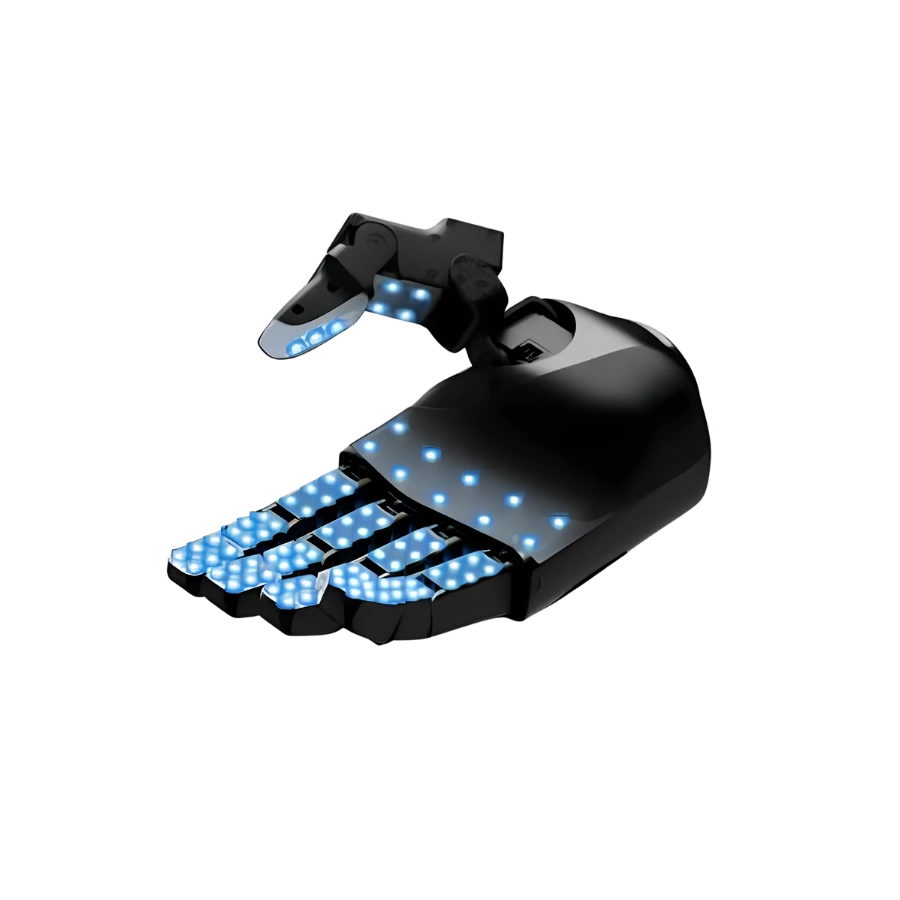
Unitree Dex5-1P Dexterous Robot Hand
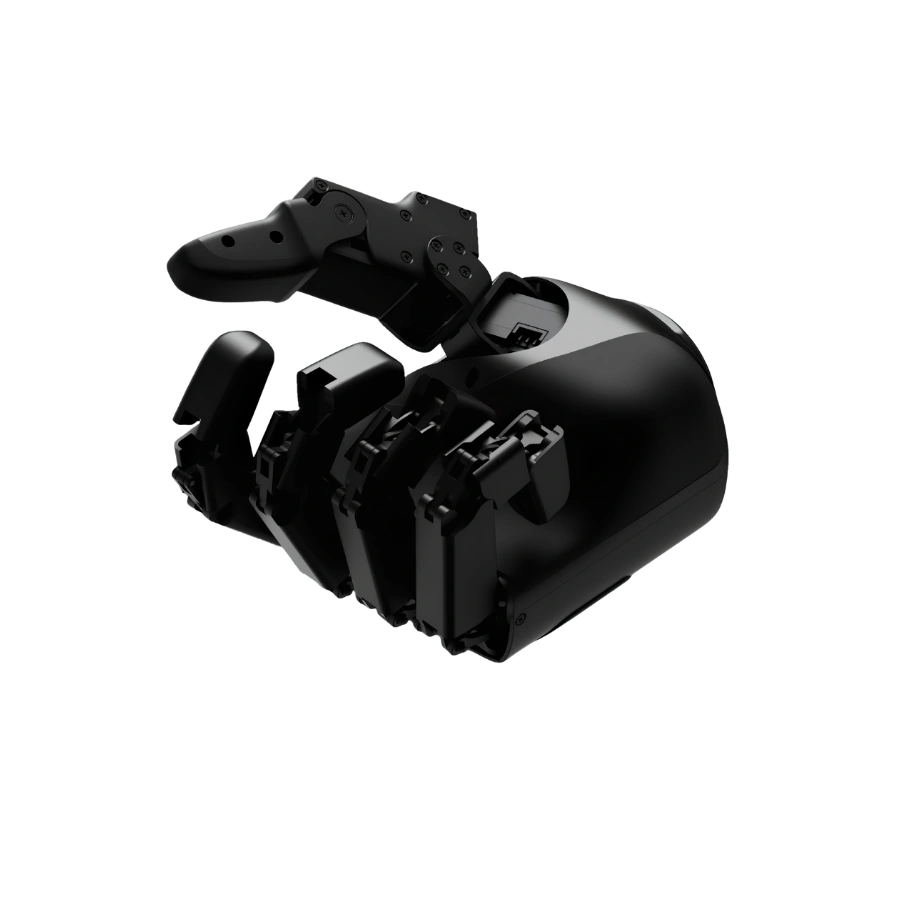
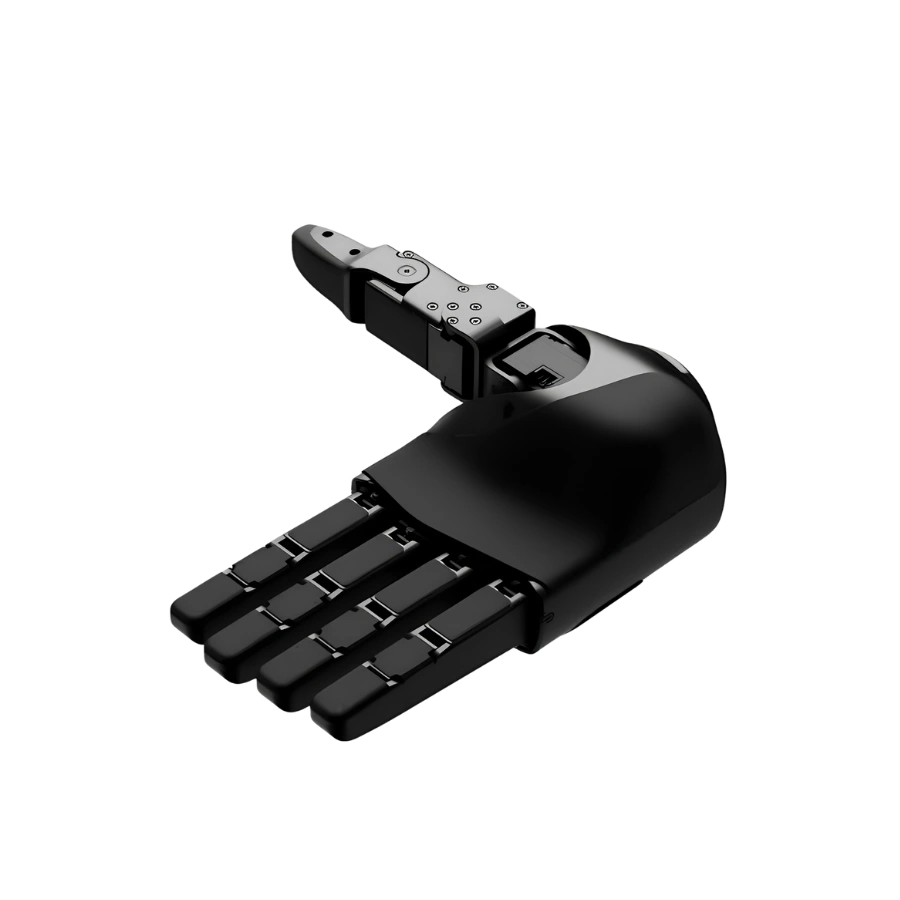
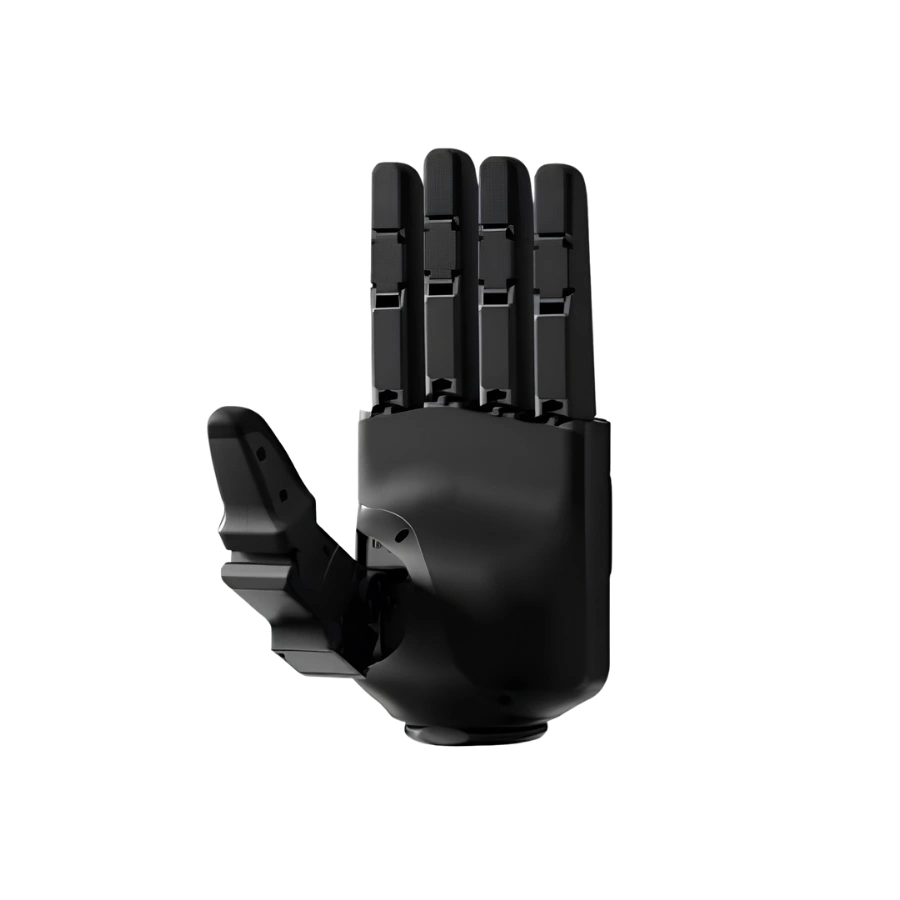
- 20 degrees of freedom (16 active + 4 passive) across thumb and four independently replaceable fingers
- 94 tactile pressure sensors distributed across palm, finger pads, fingertips, and finger roots — 10 g to 2500 g perception range
- 12 self-developed micro force-controlled composite transmission joints enabling genuine tactile proprioception
- ±1 mm fingertip repeat positioning accuracy with smooth backdrivability across all joints
- ±22° four-finger lateral swing for adaptive grip on curved and irregular surfaces
- 10 mm minimum grip diameter · 10 N fingertip force · 4.5 kg load capacity
- 1000 Hz communication over USB 2.0 — full joint and sensor telemetry in every packet
- Joint feedback: mode, position, velocity, torque, temperature, voltage/current, IMU data
- Tactile sensor feedback: pressure value and sensor temperature per cycle
- Working voltage: 24 V – 60 V · Operating range: −20°C to 60°C
- All five fingers independently replaceable for simplified field maintenance
- Trusted dealerDirect manufacturer partnership
- Pan-India deliveryInsured shipping, all states
- Post-sale supportTraining + service included
What makes it work
Unitree Dex5-1P
20 degrees of freedom, 94 tactile sensors, ±1 mm fingertip accuracy — the dexterous robot hand engineered for smart adaptability and instant responsiveness in humanoid robotics and reinforcement learning research.
High Precision Dexterous Hand with Full Tactile Sensing
The Unitree Dex5-1P is the tactile-sensing variant of the Dex5-1 dexterous robot hand — built for applications where precision grasping, real-time force feedback, and smooth backdrivability are essential. With 20 degrees of freedom (16 active + 4 passive), 12 self-developed micro force-controlled composite transmission joints, and 94 pressure sensors distributed across the palm and all five fingers, the Dex5-1P gives humanoid robots genuine tactile proprioception. Its hollow-cup motors, high-precision encoders, and low-damping reducers eliminate stiff, jerky motion — resulting in fluid, human-like grasping at ±1 mm fingertip accuracy. The Dex5-1P supports ±22° lateral swing across all four fingers, a 10 mm minimum grip diameter, and load capacity up to 4.5 kg. Operating at 1000 Hz communication rate with full joint telemetry including sensor pressure and temperature, it is designed for reinforcement learning training, humanoid robot development, and advanced manipulation research.
Four Principles Behind the Dex5-1P
Engineering Every Millimetre of Motion
Ultra-Fast Reflexes, Snake-like Flexibility
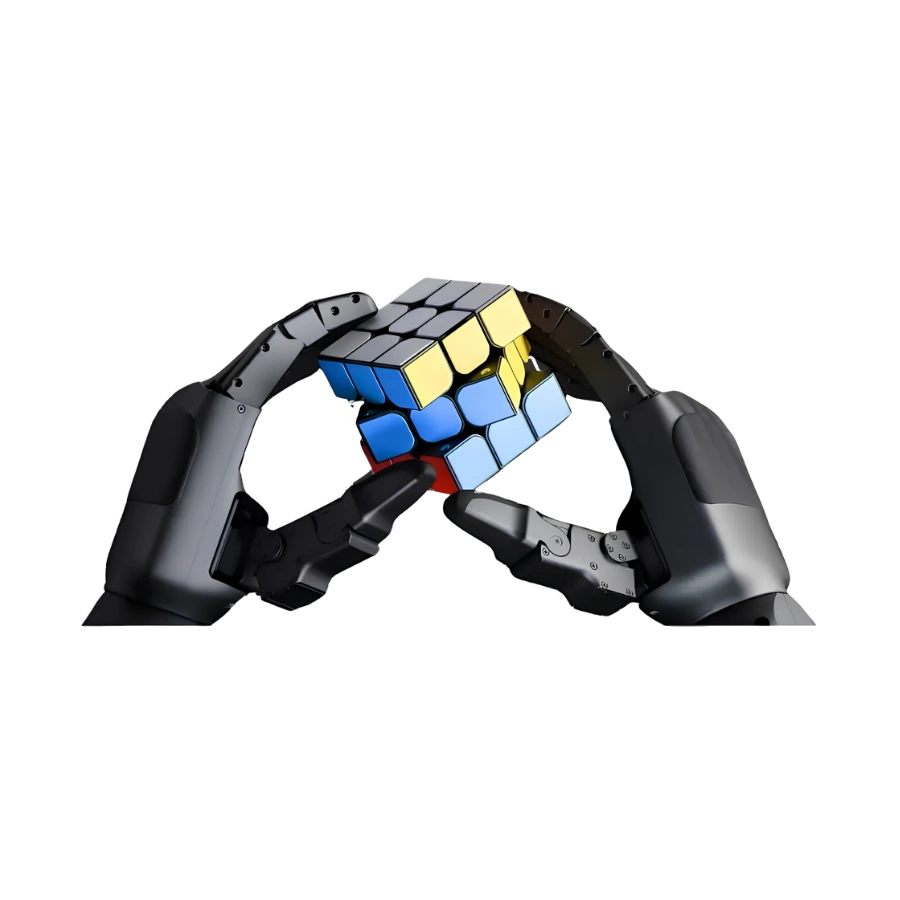
The Dex5-1P achieves 20 degrees of freedom across five independently replaceable fingers — four active joints in the thumb and three in each of the remaining fingers. The micro-gap joint design places the rotation axis closer to the surface, minimising corner protrusions that would otherwise snag on objects during grasping. The result is a hand that moves with the fluid continuity of biological fingers: no dead zones, no mechanical hesitation, no stuck corners. All five fingers are independently replaceable, simplifying field maintenance and extending operational service life.
±22° Four-Finger Lateral Swing
Each of the four non-thumb fingers supports ±22° lateral swing at the knuckle base (Knuckles 0 joint). This independent lateral movement significantly improves grip reliability — particularly when grasping curved, irregular, or cylindrical objects where purely axial finger motion would reduce contact area and grip security. The Dex5-1P can adapt finger spread in real time, conforming to the geometry of the held object rather than imposing a fixed grip pattern. With a minimum grip diameter of 10 mm, it handles objects ranging from fine components to large workpieces at up to 4.5 kg load.
Precise Feedback — 94 Tactile Sensors
The Dex5-1P adds the full tactile sensing layer absent in the standard Dex5-1. Twelve pressure sensor modules — placed across the palm, single finger pads, fingertips, and finger roots — deliver 94 individual sensing points with a perception range of 10 g to 2500 g and a maximum safe load of 20 kg before damage. Array resolutions differ by location: 2×5 at the palm, 2×3 across each of the five finger pads, fingertips, and four finger roots. This distributed tactile map enables the hand to detect contact onset, measure grip force distribution, and support tactile algorithm development — making the Dex5-1P directly applicable to reinforcement learning research and robot learning from demonstration.
Smooth Backdrivability — Eliminating Stiff Hands
Each joint in the Dex5-1P uses a hollow-cup motor paired with a high-power density drive, high-precision encoder, and a low-damping, small-clearance reducer. This combination allows each joint to be back-driven smoothly — meaning external forces acting on the fingers are absorbed and yielded to rather than resisted. In reinforcement learning training, backdrivability is critical: it allows the robot hand to be physically guided through demonstrations without fighting its own motor resistance. The micro-gap reducer design also ensures that joint gaps are minimised, eliminating the play and backlash that causes positional errors in less refined mechanisms — contributing directly to the ±1 mm fingertip repeat positioning accuracy.
Six Features That Define the Dex5-1P
Unitree Dex5-1P — Complete Specification

| Specification | Dex5-1P Details |
|---|---|
| Body Parameters | |
| Weight | 1100 g |
| Dimensions | 217.3 mm × 127.5 mm × 72.1 mm (flat state; final shipped version may vary) |
| Degrees of Freedom | 20 (16 active + 4 passive) — Thumb ×4, Index ×3, Middle ×3, Ring ×3, Little ×3 |
| Transmission Mechanism | 12 self-developed micro force-controlled composite transmission joints + 4 micro force-controlled joint gear transmission joints |
| Four-Finger Lateral Swing | ±22° |
| Minimum Grip Diameter | 10 mm |
| Fingertip Repeat Positioning Accuracy | ±1 mm |
| Fingertip Strength | 10 N |
| Joint Angle Range | |
| Thumb Joint 0 | -33.5° ~ 39° |
| Thumb Joint 1 | 0° ~ 100° |
| Thumb Joint 2 | 0° ~ 110° |
| Thumb Joint 3 | 0° ~ 92° |
| Four-Finger Knuckle 0 (Lateral) | -22° ~ 22° |
| Four-Finger Knuckle 1 | 0° ~ 90° |
| Four-Finger Knuckle 2 | 0° ~ 95° |
| Four-Finger Knuckle 3 | 0° ~ 81° (Coupling with finger joint 2) |
| Load Conditions | |
| Load — Palm Facing Down (5 cm round hard object, room temp) | Maximum 3.5 kg |
| Load — Palm Facing Left (5 cm round hard object, room temp) | Maximum 4.5 kg |
| Electrical | |
| Working Voltage | 24 V ~ 60 V |
| Static Current | 58 V @ 0.2 A |
| Maximum Current | 58 V @ 4 A |
| Communication Interface | USB 2.0 |
| Working Temperature Range | -20°C ~ 60°C |
| Tactile Sensing (Dex5-1P Exclusive) | |
| Number of Pressure Sensor Modules | 12 |
| Total Pressure Sensors | 94 |
| Array Resolution — Palm | 2 × 5 |
| Array Resolution — Single Finger Pad (×5) | 2 × 3 |
| Array Resolution — Single Fingertip (×5) | 2 × 3 |
| Array Resolution — Single Finger Root (×4) | 2 × 3 |
| Perception Range | 10 g – 2500 g |
| Maximum Safe Load (Undamaged) | 20 kg |
| Software / Communication | |
| Communication Rate | 1000 Hz |
| Full Packet — Sender | 1234 bytes |
| Full Packet — Receiver | 1270 bytes |
| Perceptual Feedback | Joint Mode, Joint Position, Joint Velocity, Joint Torque, Joint Temperature, Voltage & Current, Sensor Pressure Value, Sensor Temperature Value, IMU Data |
| Control Feedback | Joint Mode, Joint Position, Joint Velocity, Joint Torque, Joint Stiffness Coefficient, Joint Damping Coefficient |
Official Unitree Dex5 Videos
Common Questions About the Dex5-1P
What is the difference between the Unitree Dex5-1 and Dex5-1P?
Both variants share identical body parameters — 1100 g weight, 217.3 × 127.5 × 72.1 mm dimensions, 20 degrees of freedom, the same joint angle ranges, 10 N fingertip strength, ±1 mm accuracy, ±22° lateral swing, 10 mm minimum grip diameter, and identical electrical and software specifications. The Dex5-1P adds the full tactile sensing layer: 12 pressure sensor modules with 94 individual sensing points distributed across the palm, finger pads, fingertips, and finger roots. The Dex5-1P perceptual feedback packet also includes sensor pressure values and sensor temperature values not present in the standard Dex5-1.
How many tactile sensors does the Dex5-1P have and where are they located?
The Dex5-1P has 94 pressure sensors across 12 modules. Their distribution is: one 2×5 array on the palm; five 2×3 arrays on the five finger pads; five 2×3 arrays on the five fingertips; and four 2×3 arrays on the four finger roots (the little finger root does not have a sensor module). The perception range spans from 10 g to 2500 g, with a maximum safe acceptance load of 20 kg before damage.
Is the Dex5-1P suitable for reinforcement learning training?
Yes — the Dex5-1P is explicitly designed for RL training applications. Its smooth backdrivability allows physical demonstration and guidance without resistance from motor damping, which is critical for learning from demonstration workflows. The 94 tactile sensors support secondary development of tactile algorithms, and the 1000 Hz USB 2.0 communication provides high-frequency full-state feedback including joint torques, sensor pressure values, and IMU data — all the signals needed for reward shaping and policy training in dexterous manipulation tasks.
What voltage and power supply does the Dex5-1P require?
The Dex5-1P operates on a working voltage range of 24 V to 60 V. At 58 V, static current draw is 0.2 A, and maximum current is 4 A. The communication interface is USB 2.0. The hand operates across a wide temperature range of -20°C to 60°C, making it suitable for laboratory and indoor industrial environments.
Can individual fingers on the Dex5-1P be replaced independently?
Yes. All five fingers on the Dex5-1P are independently replaceable. This means that in the event of mechanical damage to a single finger — whether from an accident during testing or wear during extended RL training sessions — only the affected finger needs to be replaced rather than the entire hand. This modular design significantly reduces maintenance costs and downtime in research and development environments where the hand is used intensively.
The full sheet
Related products
-
·LND·00

-
·LND·01
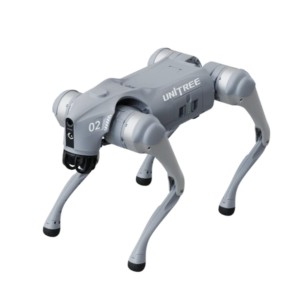
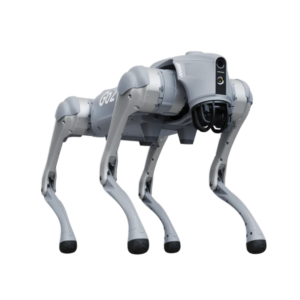 Unitree Go2 Air- Robot Dog (Without Controller)Original price was: ₹292,373.₹249,153Current price is: ₹249,153. (Excl. GST)Add to cart
 -
·LND·02
-
·LND·03


There are no reviews yet.