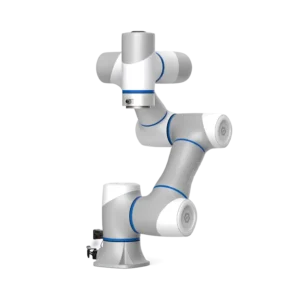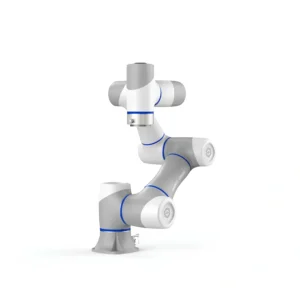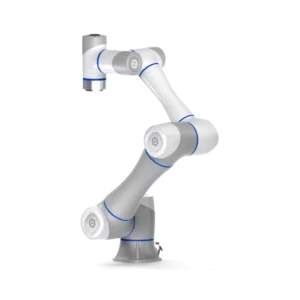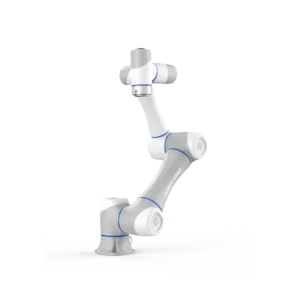
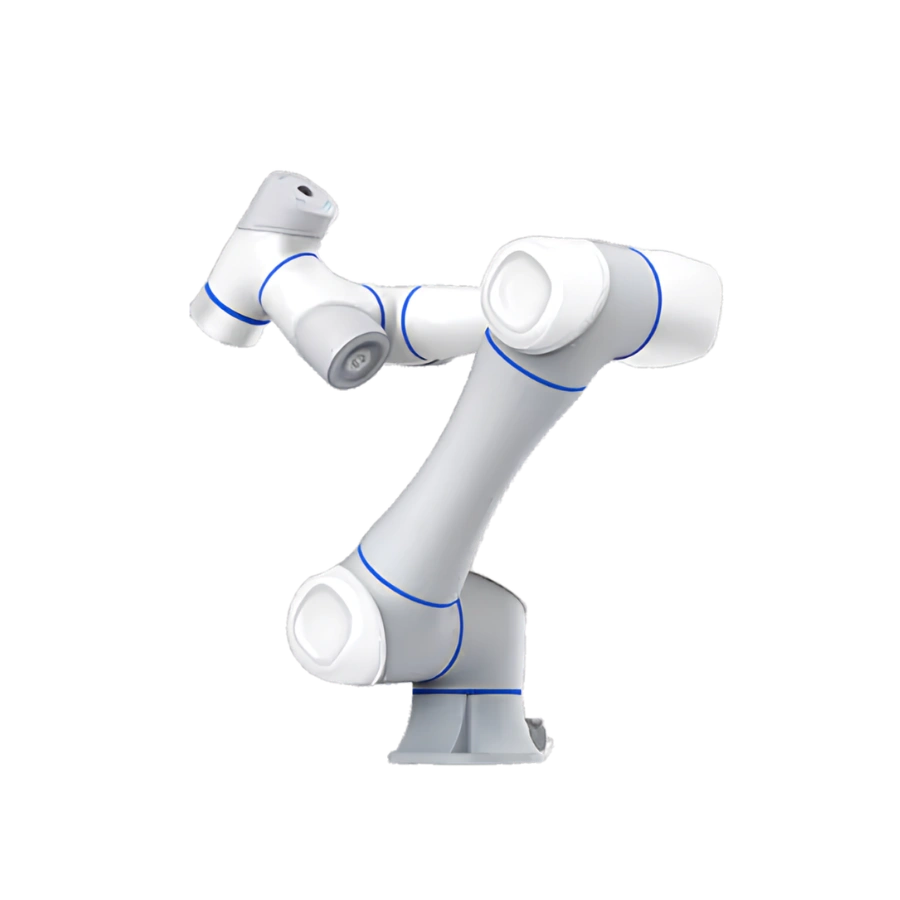
DOBOT CR5AF | 5kg Force-Controlled Cobot
• Integrated 6-axis flange force sensor enables plug-and-play force control without additional installation or deployment
• Ultra-low drag-start force under 2N — the entire flange is an active drag zone for millimeter-precise teaching
• Constant force control with automatic compensation ensures flawless grinding, polishing, and precision assembly
• Force-sensing collision detection sensitive down to 1N with industry-leading 2000N impact resistance
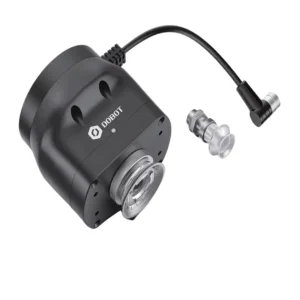
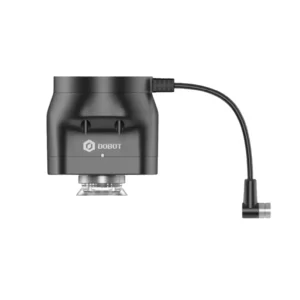
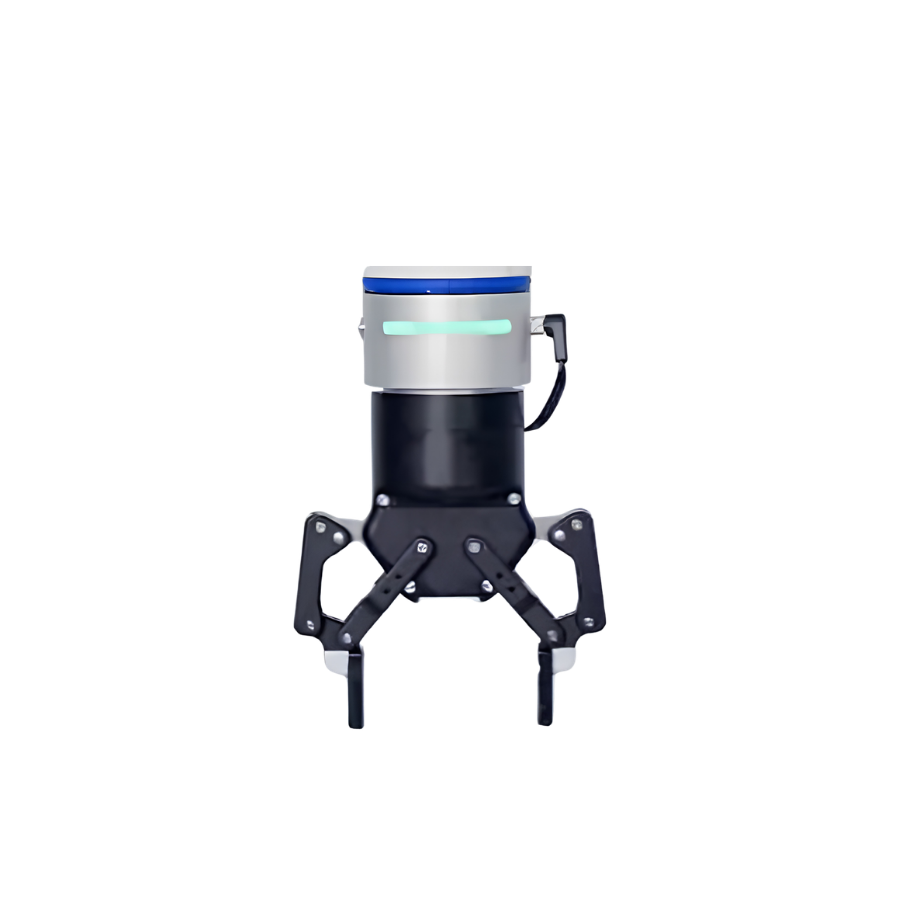
• Non-occupying end interface preserves RS485 and I/O ports for full compatibility with electric grippers and VX500 camera
• Supports orientation-locked dragging for constrained path programming and real-time environmental surface sensing
- Trusted dealerDirect manufacturer partnership
- Pan-India deliveryInsured shipping, all states
- Post-sale supportTraining + service included
What makes it work
I am raw html block.
Click edit button to change this html
DOBOT CR5AF
The next generation of force-controlled cobots — integrating a high-precision 6-axis force sensor for intelligent compliant control, plug-and-play operability, and sub-millimetre precision in smart manufacturing.
The Next Generation of Force-Controlled Cobots
Designed for high-end manufacturing applications including precision assembly, complex grinding, and medical automation, the DOBOT CR5AF redefines intelligent force control with its proprietary algorithms and integrated high-resolution 6-axis force sensor at the flange end. Built on the proven CRA series platform, the CR5AF delivers plug-and-play operability without installation complexity — enabling adaptive force applications and seamless human-robot collaboration. With a 5 kg payload, 900 mm working radius, and ±0.02 mm repeatability, the CR5AF combines the speed and reach of a standard collaborative robot with the tactile precision of a dedicated force-control system. The integrated force sensor offers 150 N force range, 15 Nm torque range, 500% F.S. overload protection, 1% F.S. accuracy, and 0.5% F.S. precision — all while leaving end-effector I/O ports fully available for external devices.
Unmatched Compliance and Precision
All-in-One Force Control, Engineered for Precision
Integrated 6-Axis Force Sensor at the Flange
The CR5AF integrates a high-precision 6-axis force sensor directly at the flange end — enabling compliant force control and precise operation without any external add-ons. The sensor delivers 150 N force range across all axes (Fx/Fy/Fz) and 15 Nm torque range (Mx/My/Mz), with 500% F.S. overload protection to withstand operational impacts. At 1% F.S. accuracy and 0.5% F.S. precision, it gives the robot the tactile intelligence needed for the most demanding precision manufacturing tasks.

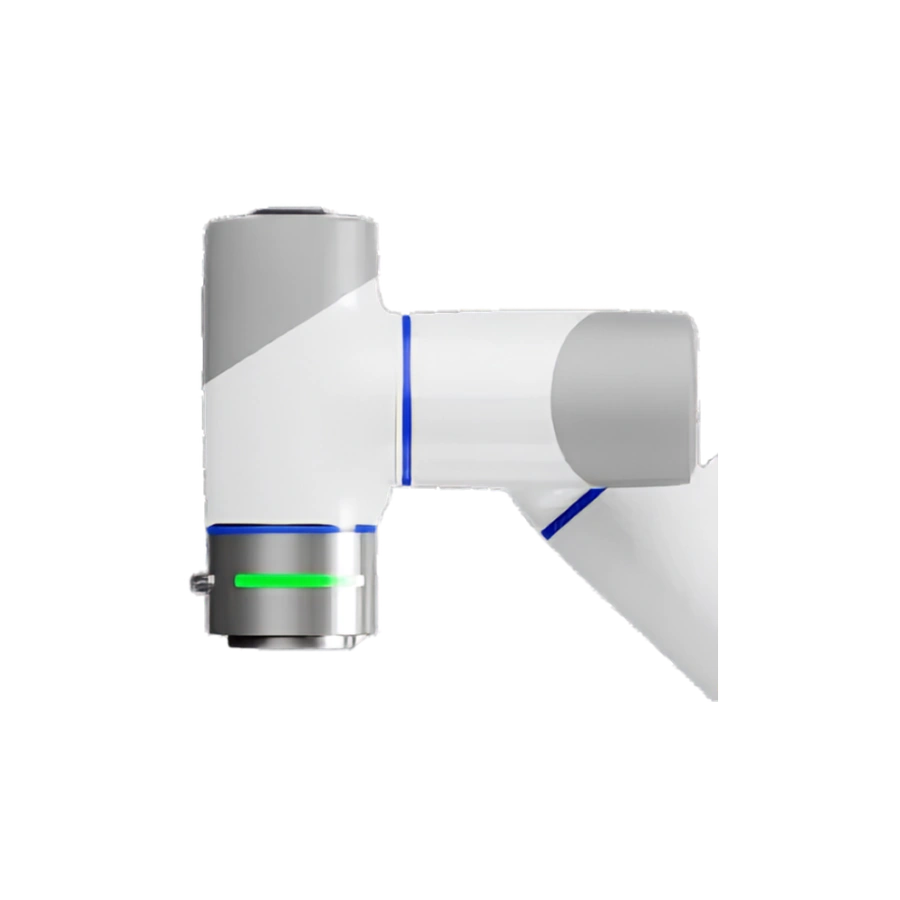
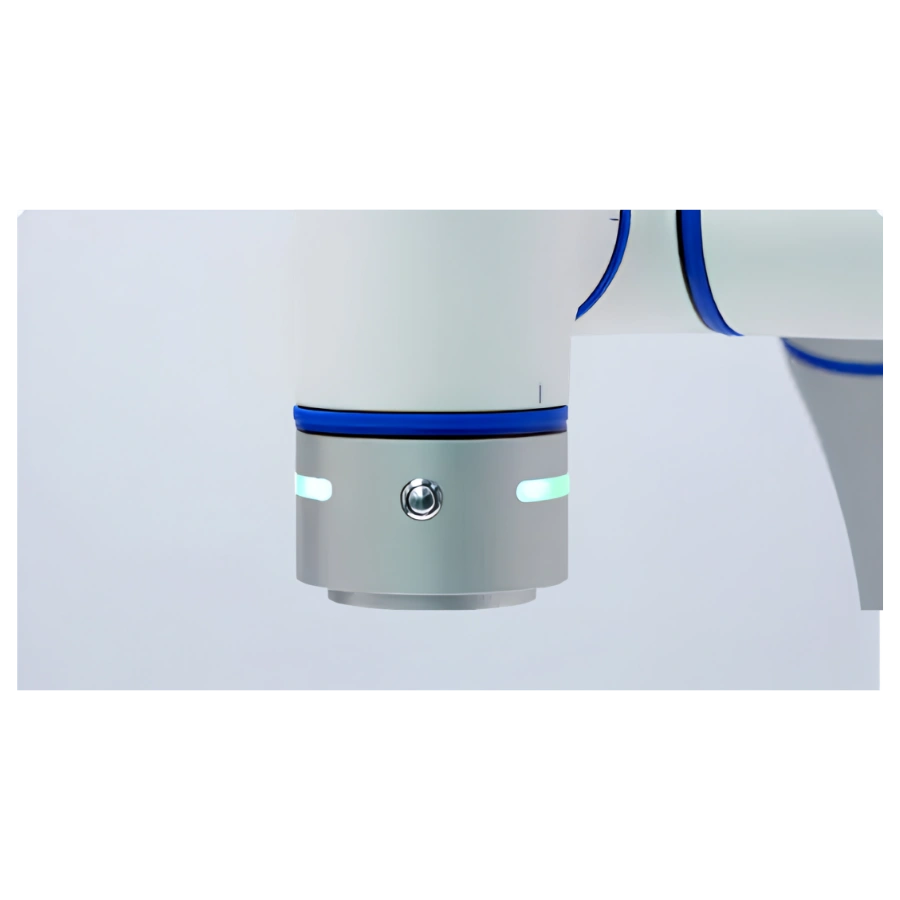
Flange Ring Status Light and Drag Button
The CR5AF features a ring status light on the flange for real-time robot state visibility — allowing operators to instantly recognise the robot's current operating mode. A dedicated press-to-drag button at the flange makes teaching intuitive: the entire flange surface serves as an active drag zone, so operators can guide the robot through complex paths with one hand. Orientation-locked dragging is also available to constrain path programming to specific axes for precise teaching.

Non-Occupying End Interface
Unlike force sensor add-ons that consume end-effector ports, the CR5AF's integrated design does not occupy the tool-side RS485 or I/O ports. The end-effector interface provides 2 DI channels, 2 DO channels, 2 AI channels shared with RS485 — all fully available for external devices such as electric grippers, vacuum systems, or the DOBOT VX500 Smart Camera. Adding force control capability does not reduce the robot's overall integration flexibility.

Six Force-Control Capabilities in Action
From smooth hand-guided teaching to sub-millimetre blind-touch positioning, the CR5AF demonstrates proprietary force intelligence across every interaction.
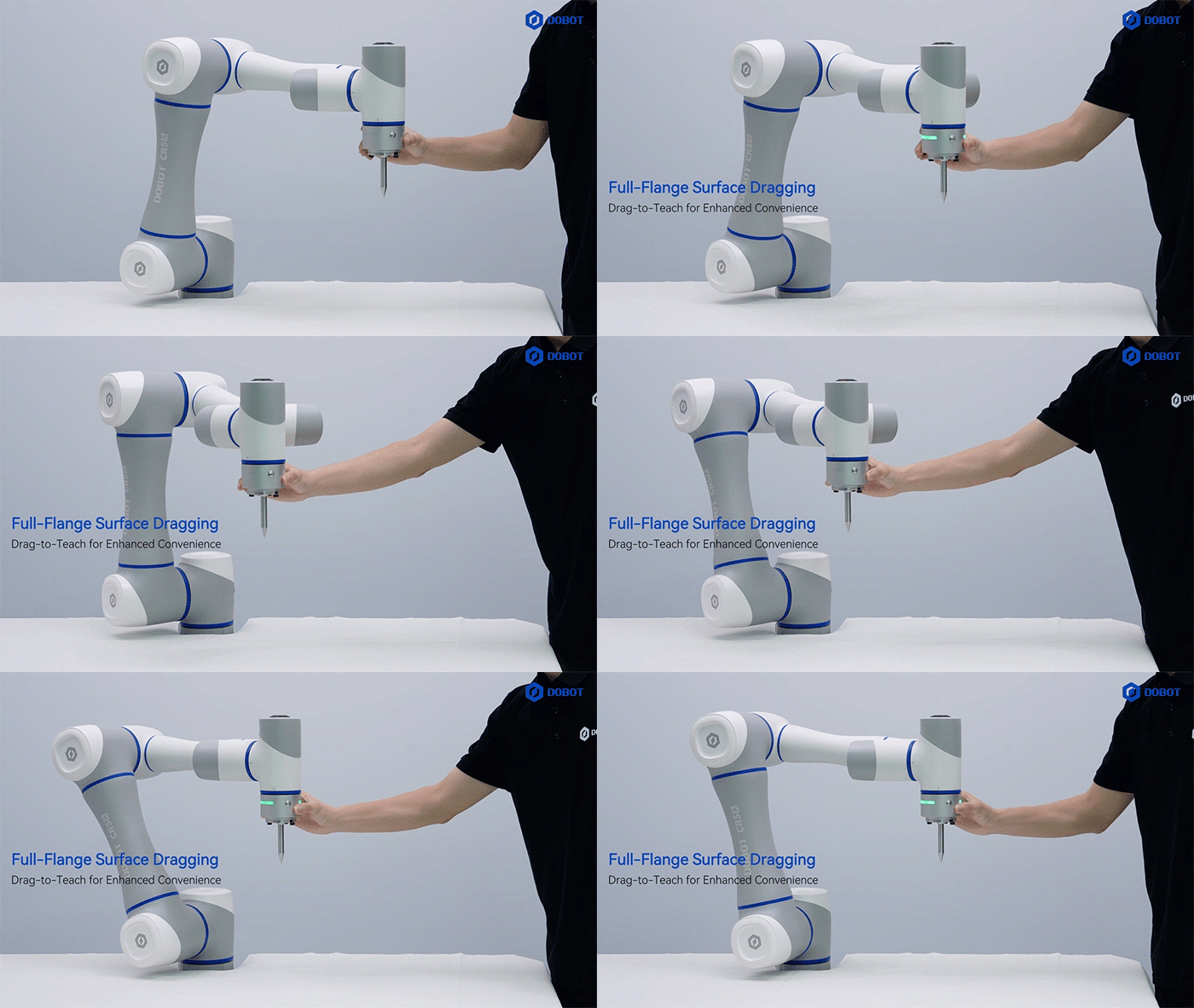
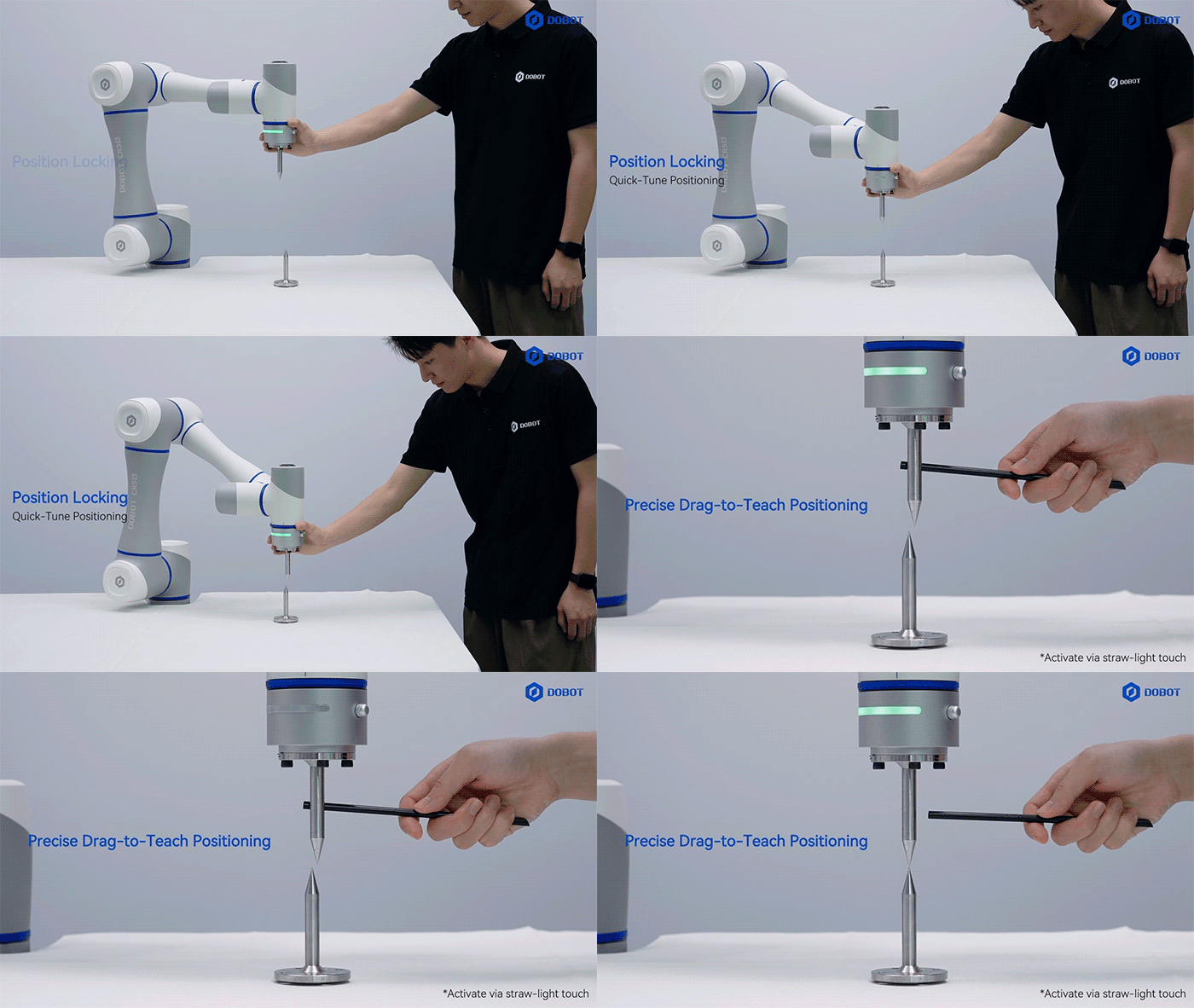
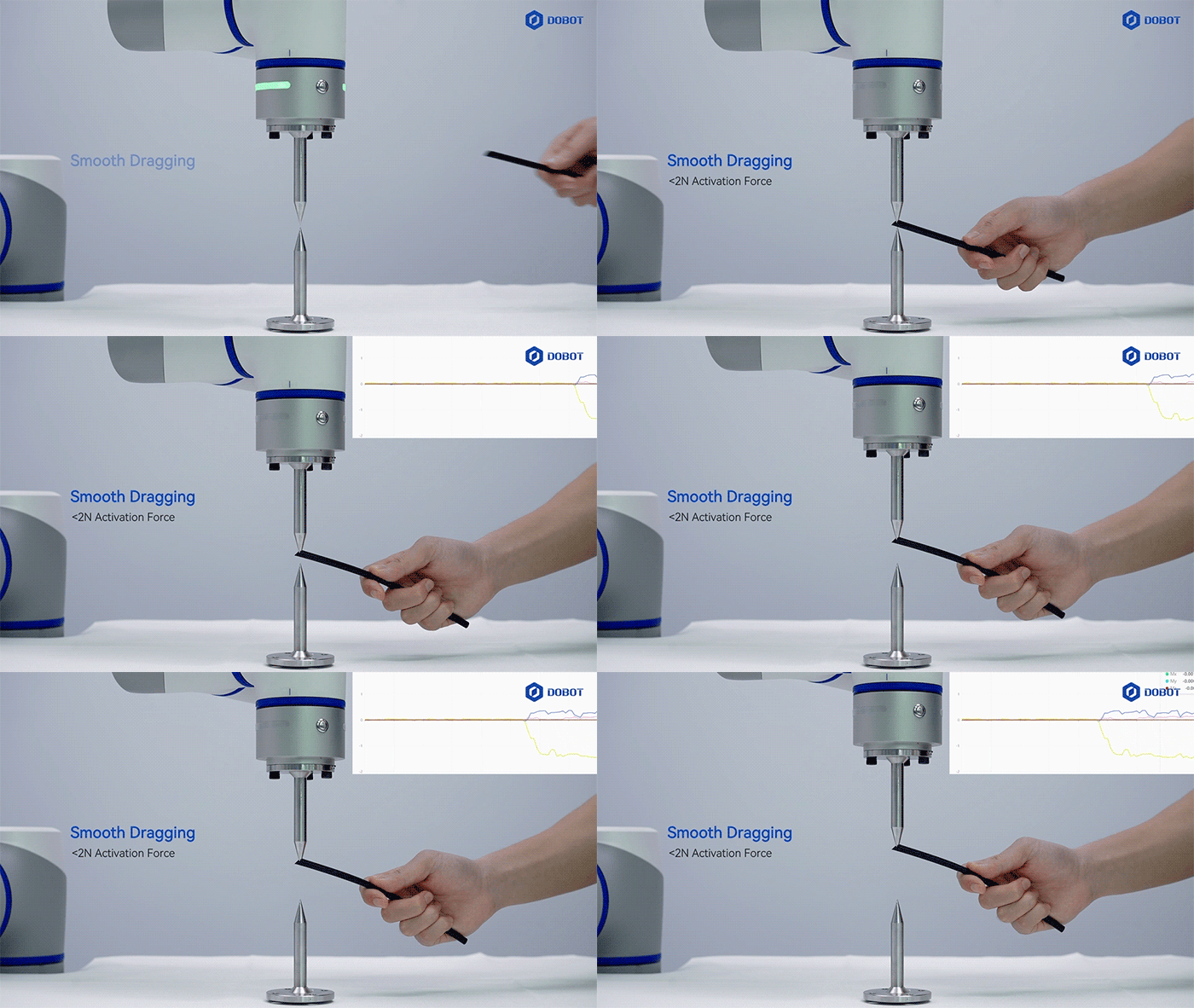

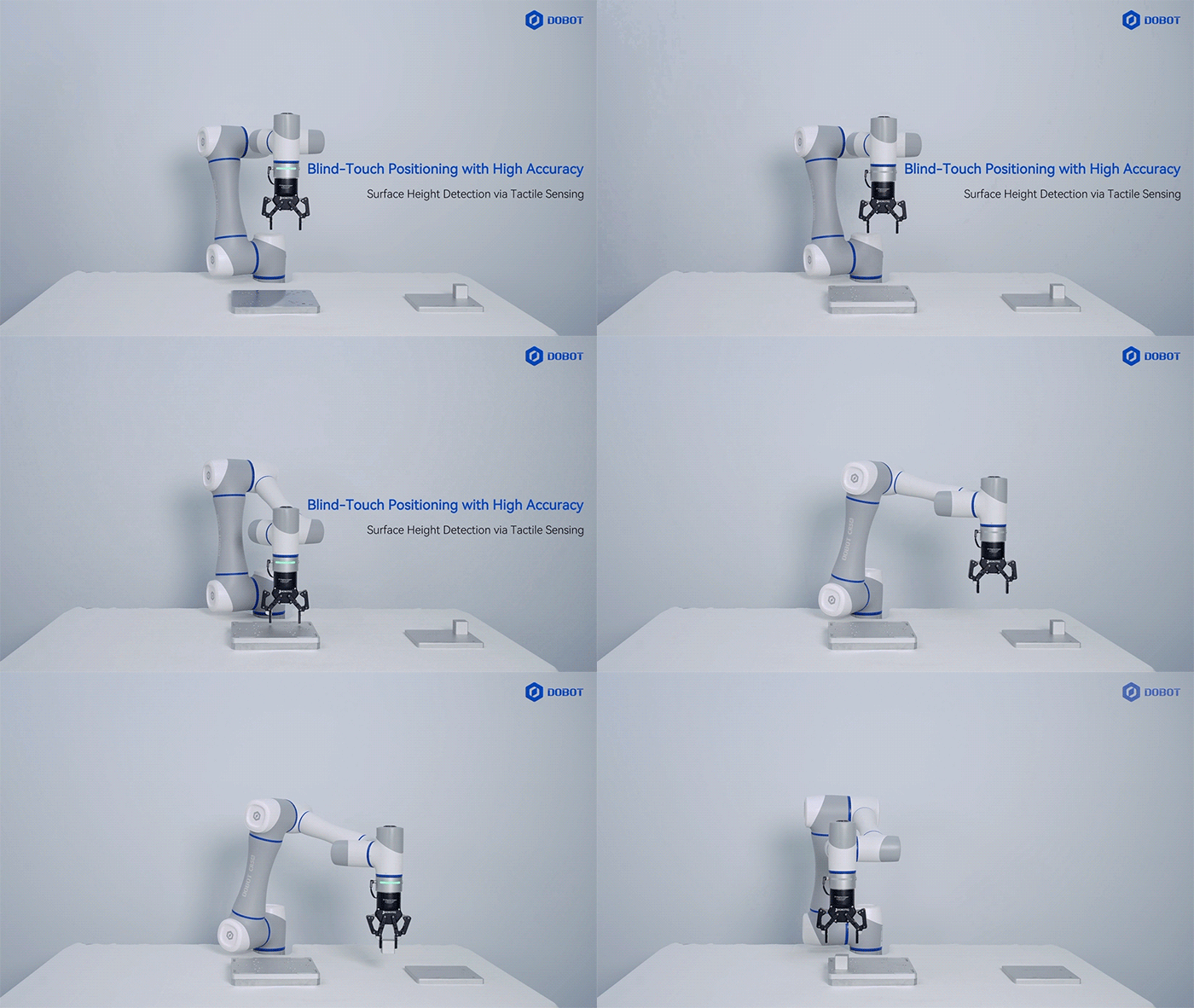
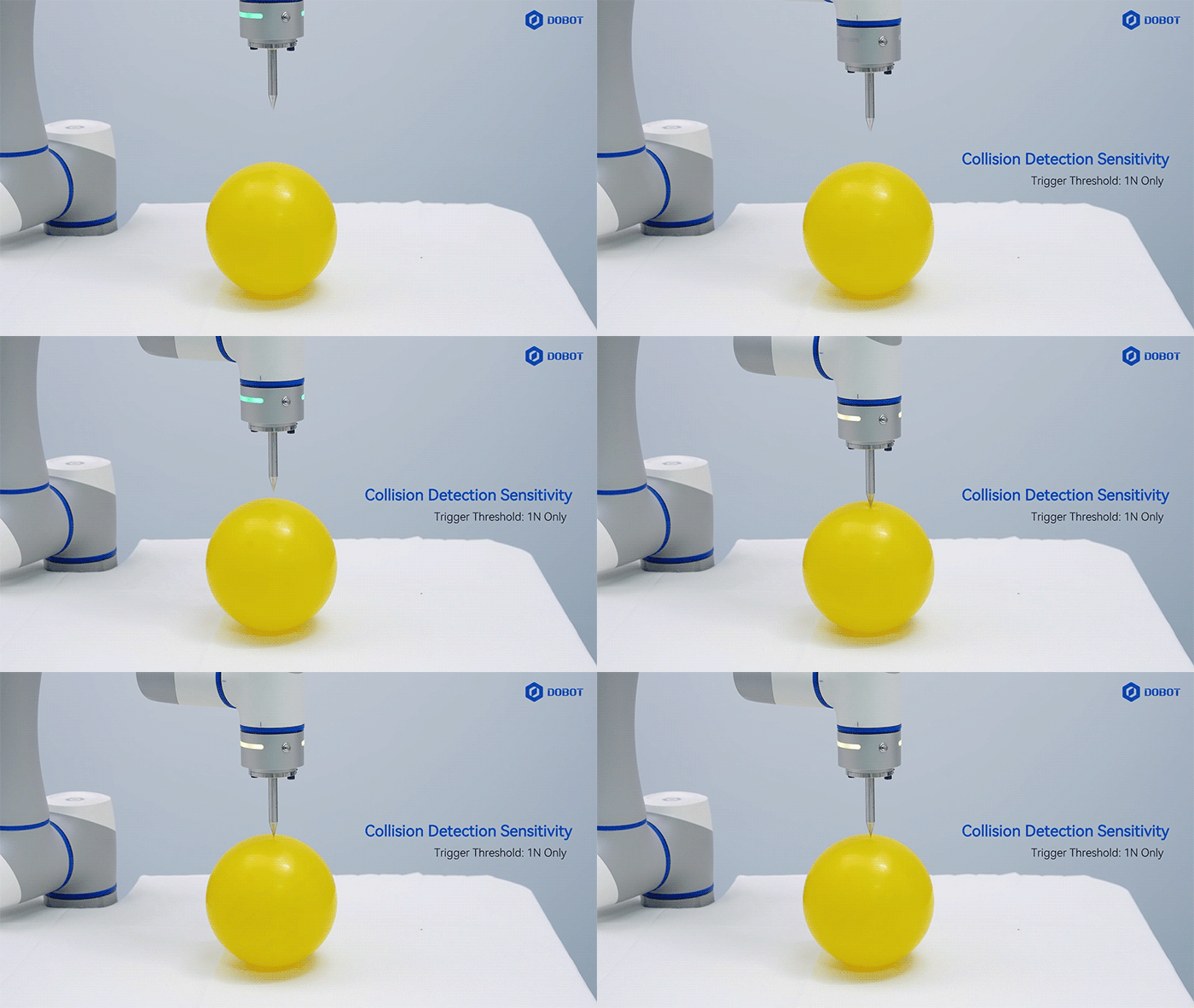
Six Features That Define the CR5AF
DOBOT CR5AF — Complete Specification
| Specification | Details |
|---|---|
| Weight | 25.5 kg |
| Maximum Payload | 5 kg |
| Working Radius | 900 mm |
| Maximum Linear Speed | 2 m/s |
| Joint Range of Motion | |
| J1 | ±360° |
| J2 | ±360° |
| J3 | ±160° |
| J4 | ±360° |
| J5 | ±360° |
| J6 | ±360° |
| Maximum Joint Speed | |
| J1 | 180° /s |
| J2 | 180° /s |
| J3 | 180° /s |
| J4 | 223° /s |
| J5 | 223° /s |
| J6 | 223° /s |
| Force Sensor | |
| Range — Force (Fx/Fy/Fz) | 150 N |
| Range — Torque (Mx/My/Mz) | 15 Nm |
| Overload | 500% F.S. |
| Accuracy | 1% F.S. |
| Precision | 0.5% F.S. |
| End-Effector I/O | |
| DI | 2 Channels |
| DO | 2 Channels |
| AI | 2 Channels (shared with RS485) |
| RS485 | Supported |
| Repeatability | ±0.02 mm |
| IP Rating | IP54 |
| Temperature Range | 0° ~ 50° C |
| Power Consumption | 150 W |
| Installation Method | Upright Installation |
| Cable Length | 5 m |
| Materials | Aluminum Alloy, ABS Plastic |
Application Scenarios
The CR5AF's force intelligence opens applications requiring compliant contact, surface adaptation, and precise tactile feedback that standard cobots cannot address.
See the CR5AF at Work
Common Questions About the CR5AF
What makes the CR5AF different from the standard CR5A?
The CR5AF is built on the CR5A platform but adds an integrated high-precision 6-axis force sensor at the flange end. This gives the robot compliant force control, tactile sensing, and adaptive surface detection — capabilities the standard CR5A does not have. The CR5AF is intended for precision assembly, grinding, polishing, and medical automation tasks that require controlled contact force rather than simple position control.
What are the force sensor specifications?
The integrated force sensor covers a force range of 150 N on Fx, Fy, and Fz axes and a torque range of 15 Nm on Mx, My, and Mz axes. It has 500% F.S. overload protection, 1% F.S. accuracy, and 0.5% F.S. precision — making it suitable for precision contact tasks while remaining robust against operational impacts.
Does the integrated force sensor use up the end-effector I/O ports?
No. The CR5AF uses a non-occupying end interface design — the force sensor does not consume any tool-side RS485 or I/O ports. The end-effector interface remains fully available with 2 DI channels, 2 DO channels, and 2 AI channels (shared with RS485), ensuring compatibility with external devices such as electric grippers or the DOBOT VX500 Smart Camera.
How sensitive is the drag-teaching function?
The CR5AF has an ultra-low drag-start force of less than 2 N, meaning the robot can be guided into position with minimal physical effort — including with a lightweight object like a straw. This enables 0.1 mm point-to-point teaching accuracy during hand-guided path programming. Orientation-locked dragging is also available to constrain motion to specific axes during teaching.
What installation orientation does the CR5AF support?
The DOBOT CR5AF supports upright installation. This differs from the standard CRA series which supports any-angle mounting. The upright installation requirement is specific to the CRAF series and should be considered during workcell design.