

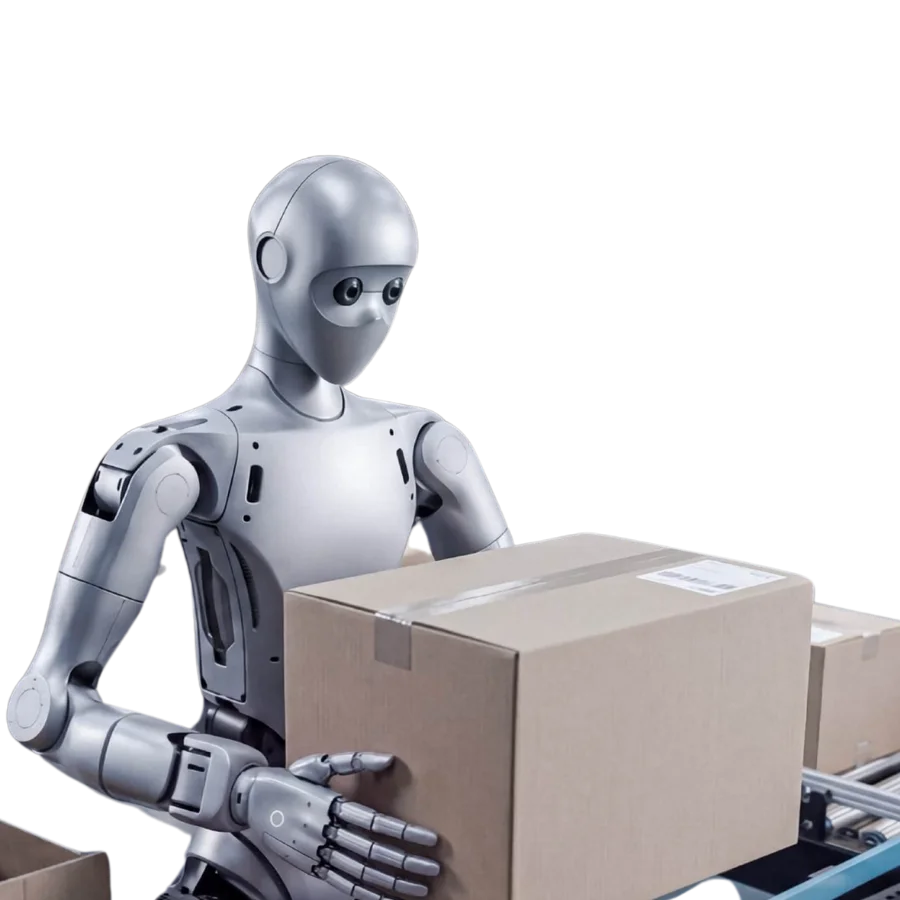
Unitree H2 Plus Humanoid Robot
- World's first Isaac GR00T reference humanoid — combining Unitree's H2 chassis, SharpaWave tactile hands, and Jetson Thor compute into one validated, research-ready platform.
- 2NVIDIA Jetson AGX Thor T5000 onboard AI — 2,070 FP4 TFLOPS, 2560-core Blackwell GPU, and 128 GB LPDDR5X unified memory for real-time inference and robot control.
- 375 total degrees of freedom — 31 across the body with aerospace-grade actuators (360 N·m leg torque, 120 N·m arm torque) plus 22 DOF per SharpaWave dexterous hand.
- 4SharpaWave five-finger tactile hands — 1,000+ tactile pixels per fingertip, 30 kg payload per hand, and 150 N grip force for precise, contact-rich manipulation tasks.
- 5Multi-view sensing suite — 140°×102° head stereo camera, ultra-wide 196° HFOV wrist cameras, and IMU paired with Wi-Fi 6, Bluetooth 5.2, Ethernet, and array microphone voice interaction.
- 615 Ah / 0.972 kWh smart quick-release battery — approximately 3 hours of continuous operation, with a remote emergency stop for safe lab testing and deployment.
- 7Open full-stack development — supports NVIDIA Isaac Teleop, Isaac Sim, Isaac Lab, GR00T open foundation models, and Isaac ROS, with secondary development interfaces and OTA upgrades.
- Trusted dealerDirect manufacturer partnership
- Pan-India deliveryInsured shipping, all states
- Post-sale supportTraining + service included
What makes it work
Unitree
H2 Plus
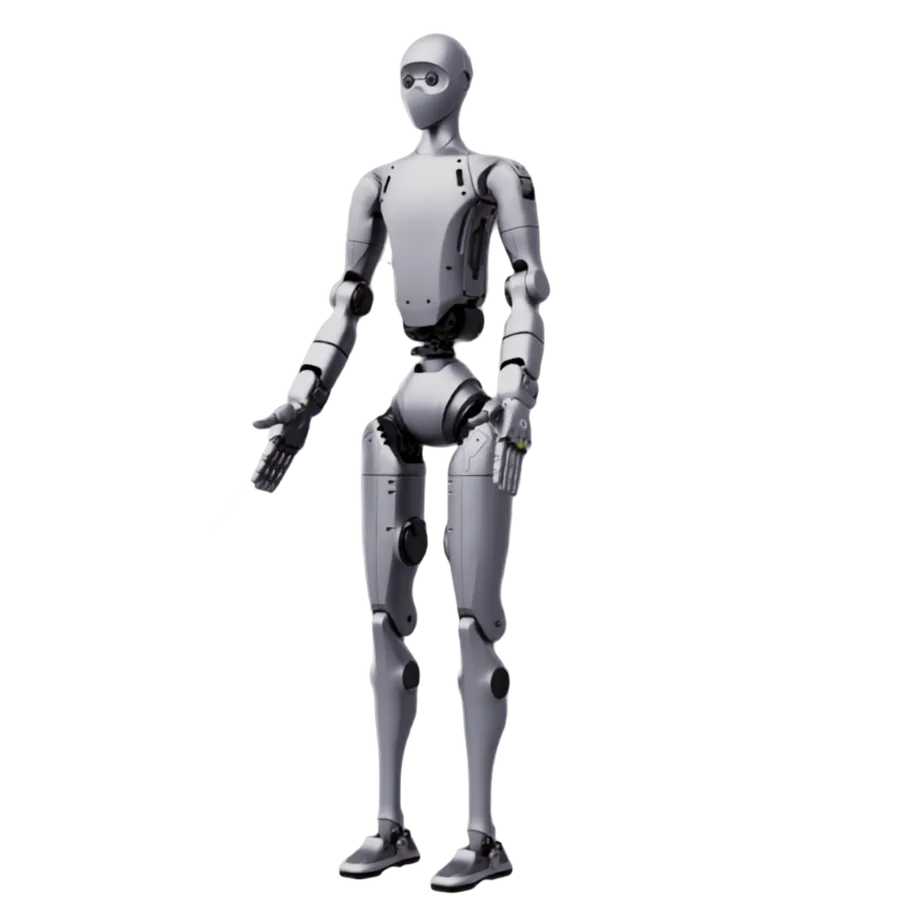
The world’s first open humanoid robot reference design built on NVIDIA Isaac™ GR00T — unifying full-scale bipedal locomotion, dexterous tactile hands, and Jetson Thor onboard AI into one validated research platform.


Unitree H2 Plus — Complete Spec Sheet
| Specification | Details |
|---|---|
| Mechanical Dimensions | |
| Height × Width × Depth (Standing) | 1820 × 456 × 218 mm |
| Weight with Battery | About 70 kg |
| Degrees of Freedom (Body) | 31 |
| Total DOF (Body + Hands) | 75 |
| Single Leg DOF | 6 |
| Single Arm DOF | 7 |
| Waist DOF | 3 |
| Head DOF | 2 |
| Joint Output Bearings | Industrial-grade crossed roller bearings (high precision, high load capacity) |
| Joint Motors | Low-inertia high-speed inner-rotor permanent magnet synchronous motors |
| Maximum Arm Joint Peak Torque | 120 N·m |
| Maximum Leg Joint Peak Torque | 360 N·m |
| Maximum Arm Payload | Peak: approx. 15 kg | Rated: approx. 7 kg |
| Lower Leg + Upper Leg Length | 1045 mm |
| Forearm + Upper Arm Length | 690 mm |
| Main Body Materials | Aerospace-grade aluminum + titanium alloy + high-strength engineering plastics |
| Electrical Characteristics | |
| Cooling System | Air Cooling |
| Power Supply | Low-resistance high-quality lithium battery |
| Battery Voltage (Maximum) | 75.6 V |
| Battery Capacity | 15 Ah | 0.972 kWh |
| Battery Life | About 3 hours |
| Base Computing Power | PC1: Intel Core i5 (Platform Functions) | PC2: Intel Core i7 (User Development) |
| Perception Sensors | Wide-FOV Humanoid Binocular Camera |
| External Interfaces | USB 3.0 ×3 | USB+DP ×3 | GMSL ×4 | Gigabit Ethernet ×4 | USB 2.0 ×2 | RS485 ×4 | CAN ×2 | Power: 12V ×1, 24V ×2, BAT ×1 |
| Voice Interaction | Array microphones and high-power speakers |
| Wireless | Wi-Fi 6 | Bluetooth 5.2 |
| Compute Module — NVIDIA Jetson AGX Thor T5000 | |
| AI Performance | 2,070 TFLOPS (FP4 — sparse) |
| GPU | 2560-core NVIDIA Blackwell Architecture GPU with 5th-Gen Tensor Cores | Multi-Instance GPU with 10 TPCs |
| GPU Max Frequency | 1.57 GHz |
| CPU | 14-core Arm® Neoverse®-V3AE 64-bit | 1 MB L2 per core | 16 MB shared L3 |
| CPU Max Frequency | 2.6 GHz |
| Vision Accelerator | 1× PVA v3 |
| Memory | 128 GB 256-bit LPDDR5X @ 273 GB/s |
| Storage | NVMe via PCIe | SSD via USB 3.2 |
| Video Encode / Decode | 2× NVENC | 2× NVDEC |
| Vision Module | |
| Head Binocular Camera — HFOV / VFOV | 140° ±3° / 102° ±3° |
| Head Camera — Aperture | f/2.0 |
| Head Camera — Focal Length | 2.67 mm |
| Head Camera — Depth of Field | 0.4 m – ∞ |
| Head Camera — Shutter | Global shutter |
| Wrist Cameras (Optional) | 3 MP ultra-wide | HFOV 196° | VFOV 154° | Global shutter |
| SharpaWave Dexterous Hand (Optional) | |
| Weight per Hand | 1.3 kg |
| Dimensions | 208 × 90 × 50 mm |
| Active DOF per Hand | 22 |
| Hand Payload | 30 kg |
| Grip Force | 150 N |
| Fingertip Force | 20 N |
| Operating Speed | >4 Hz |
| Fingertip Positional Repeatability | ±1 mm |
| Tactile Pixels per Fingertip | >1,000 |
| Force Detection Range / Sensitivity | 0–30 N | 0.005 N |
| Accessories & Other | |
| High-Performance Compute Module | NVIDIA Jetson™ T5000 |
| Smart Battery (Quick Release) | Yes |
| Charger | Yes |
| Handheld Remote Controller | Yes |
| Smart OTA Upgrade | Yes |
| Secondary Development | Yes |
| Remote Emergency Stop | Yes |
| Isaac GR00T Compatible | Yes |
7 Reasons to Choose Unitree H2 Plus
Product Overview
The First Unified Platform for General-Purpose Humanoid Research
Building a humanoid robot from scratch is a fragmented process — teams must independently source hardware, collect training data, construct simulation environments, and stitch together deployment pipelines. The Unitree H2 Plus eliminates that overhead.
Announced at NVIDIA GTC Taipei in June 2026, it is the world’s first humanoid robot reference design built on NVIDIA Isaac™ GR00T, combining Unitree’s battle-tested H2 chassis, SharpaWave tactile five-finger hands, and NVIDIA Jetson Thor onboard compute into one cohesive, research-validated system. Standing ~180 cm at ~70 kg, built from aerospace-grade aluminum, titanium alloy, and high-strength engineering plastics.

Onboard AI Performance
Blackwell GPU Compute Meets Industrial-Grade Actuation
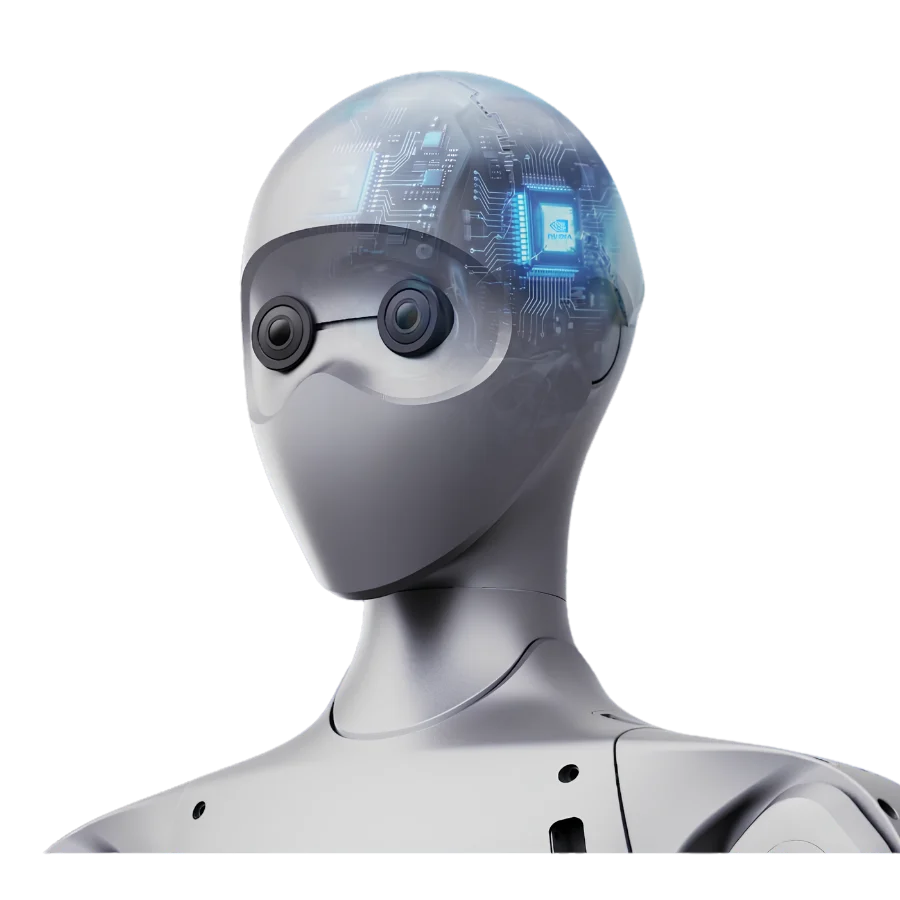
At the heart of H2 Plus is the NVIDIA Jetson AGX Thor T5000 — a 2560-core Blackwell GPU delivering 2,070 FP4 TFLOPS, paired with a 14-core Arm CPU at 2.6 GHz and 128 GB of 256-bit LPDDR5X unified memory at 273 GB/s. Real-time sensor fusion, inference, and policy execution run entirely onboard in a configurable 40–130 W power envelope.
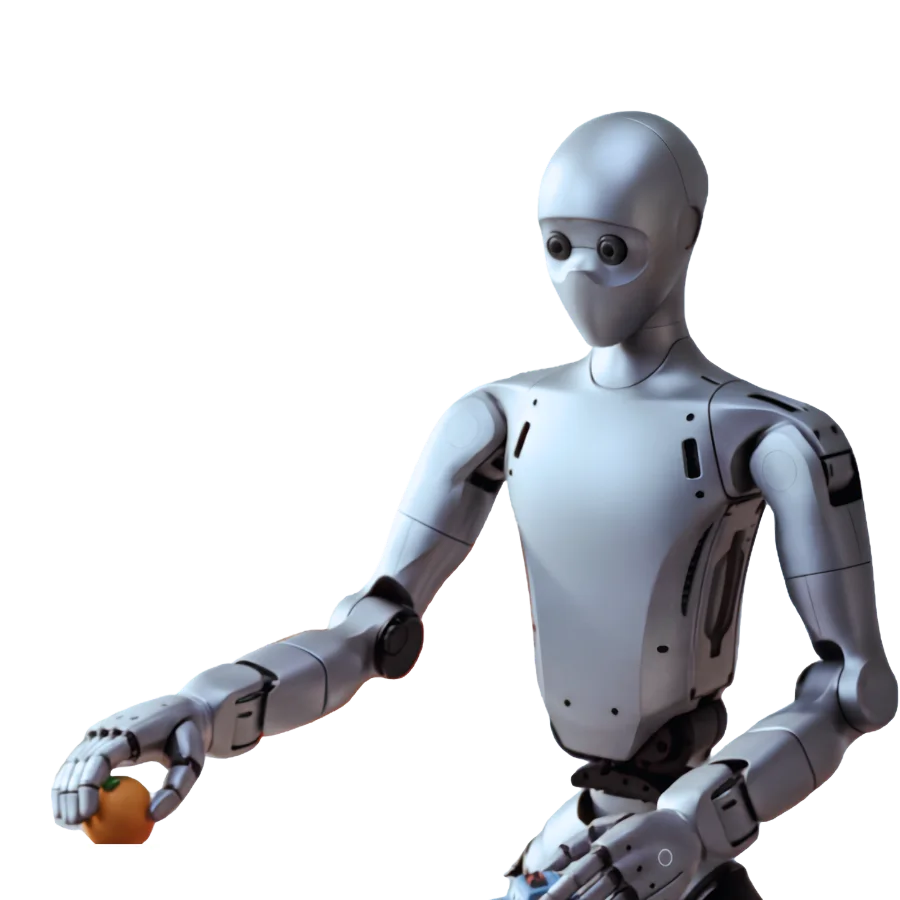
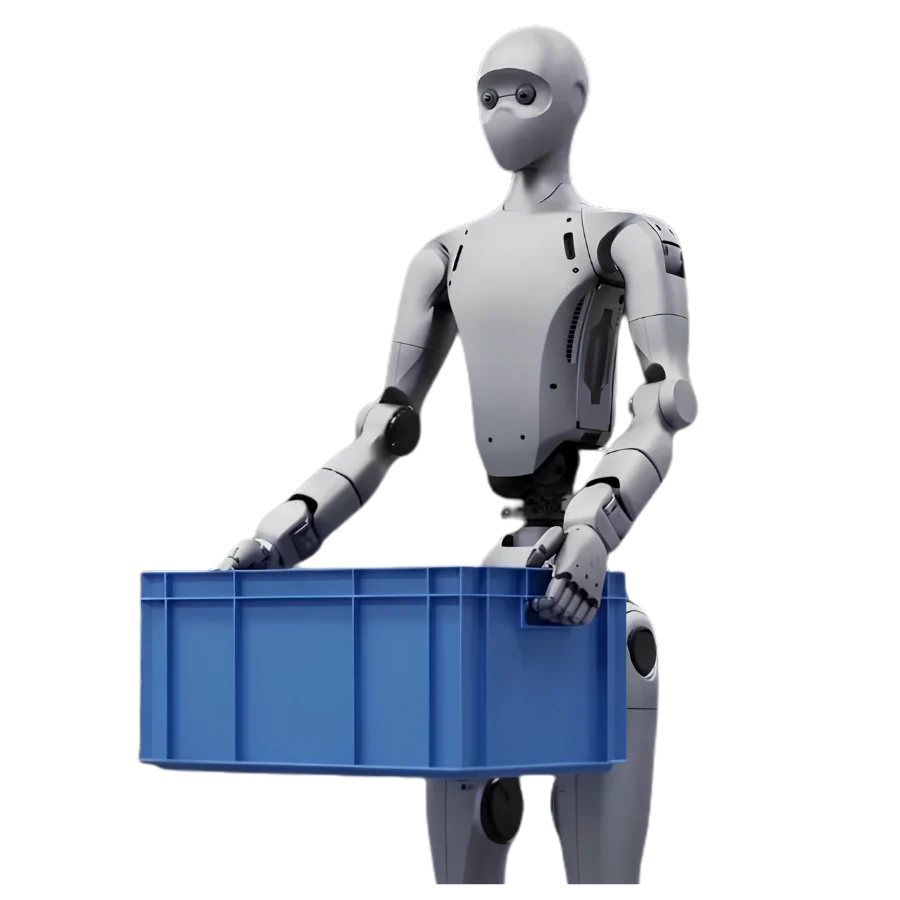
Mechanically, leg joints deliver 360 N·m peak torque and arm joints reach 120 N·m, enabling manipulation of objects up to 15 kg peak. A 3-DOF waist, 2-DOF head, 6-DOF legs, and 7-DOF arms total 31 body degrees of freedom.
SharpaWave Dexterous Tactile Hands
H2 Plus integrates dual SharpaWave five-finger dexterous hands — each with 22 active DOF, more than 1,000 tactile pixels per fingertip, 150 N grip force, and ±1 mm fingertip positional repeatability. Each hand sustains 30 kg payload and resolves forces as small as 0.005 N.
Operating at over 4 Hz, the hands enable fluid, contact-rich manipulation policies. Their tactile parameters are fully validated in NVIDIA Isaac Sim, enabling sim-to-real policy transfer without hardware retuning.
Multi-View Sensing & Full Connectivity
Perception spans a 140°×102° head binocular stereo camera with global shutter and 0.4 m to infinity depth range, optional 196° HFOV wrist cameras for close-range manipulation, and an onboard IMU for motion tracking.
Full connectivity covers Wi-Fi 6, Bluetooth 5.2, four Gigabit Ethernet ports, USB 3.0, GMSL, RS485, and CAN — plus array microphones and high-power speakers for natural voice interaction in operator workflows.
From Simulation to Deployment
H2 Plus supports the full arc of humanoid development without rebuilding your stack. Data collection with NVIDIA Isaac Teleop, policy training in Isaac Sim and Isaac Lab, open foundation model reasoning with GR00T, and deployment via accelerated Isaac ROS middleware — all in one validated reference design.
A trained policy developed against the H2 Plus URDF in simulation can be deployed to the physical robot without rewriting perception or control layers. Smart OTA upgrades ensure algorithms continuously evolve post-deployment.
Trusted by the World’s Leading Research Labs
The NVIDIA Isaac GR00T Reference Humanoid built on H2 Plus is already in use at Ai2 (Allen Institute for AI), ETH Zurich, Stanford Robotics Center, and UC San Diego’s Advanced Robotics and Controls Laboratory. NVIDIA and Unitree designed H2 Plus as the standard open platform for frontier humanoid research.
Its modular design lets research teams use the full platform or integrate selected capabilities into existing development pipelines, helping them scale humanoid development without rebuilding infrastructure for each new task or robot.


There are no reviews yet.