

Unitree H2 EDU Humanoid Robot
- Trusted dealerDirect manufacturer partnership
- Pan-India deliveryInsured shipping, all states
- Post-sale supportTraining + service included
What makes it work
H2 EDU
The research-grade H2 — 31 degrees of freedom, dexterous hand options, upgradeable high-power compute, and full secondary development access for institutions advancing humanoid robotics.
The H2 EDU shares the exact same body, joints, torques, battery, and sensors as the standard H2. These four capabilities are the only differences — and all four are exclusive to the EDU.
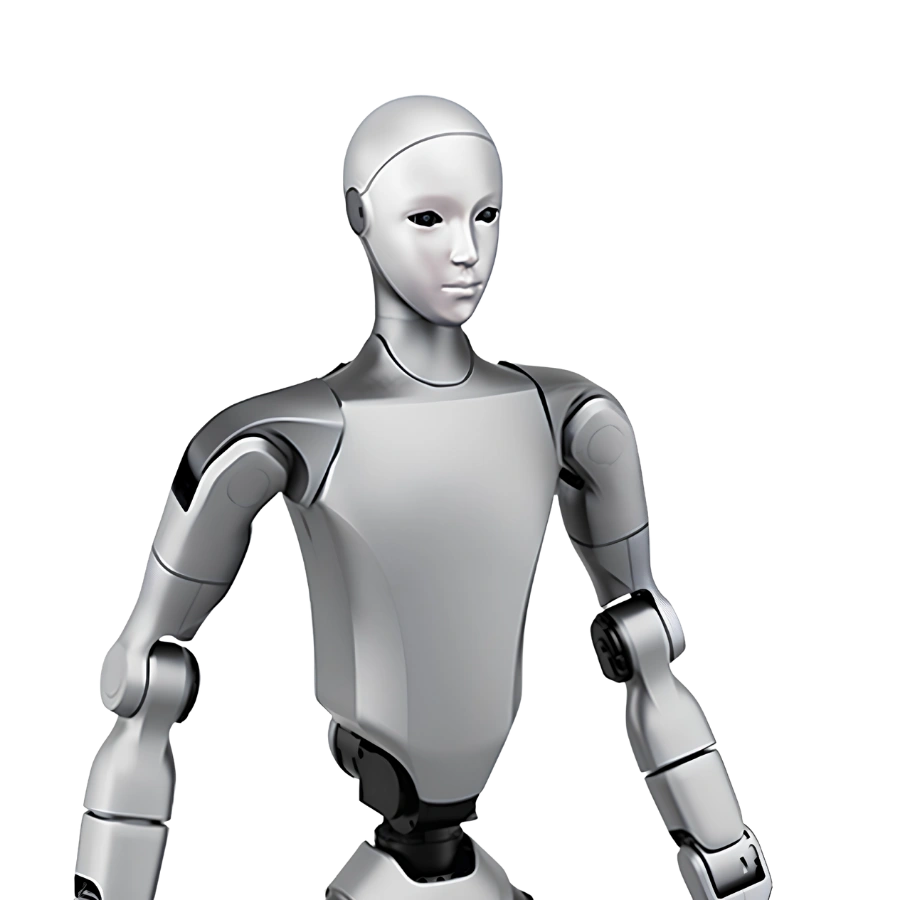
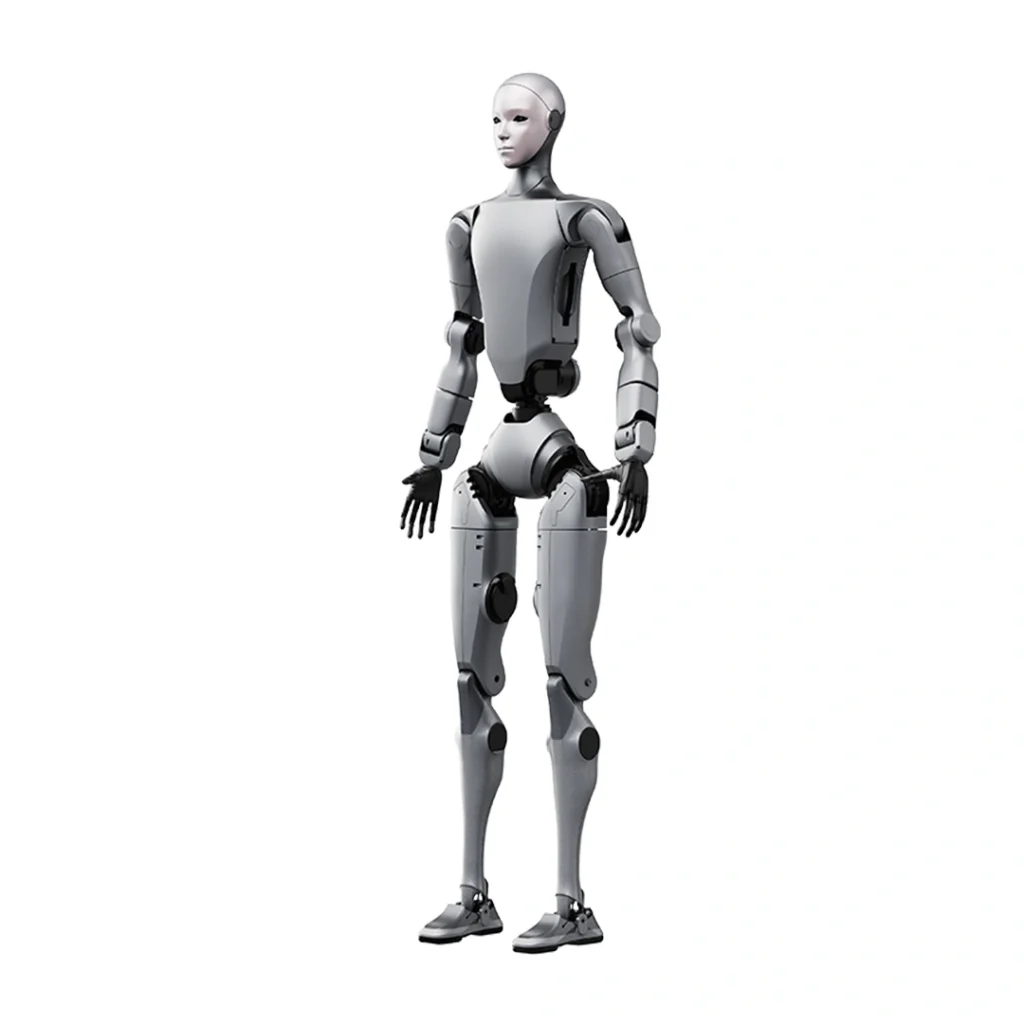
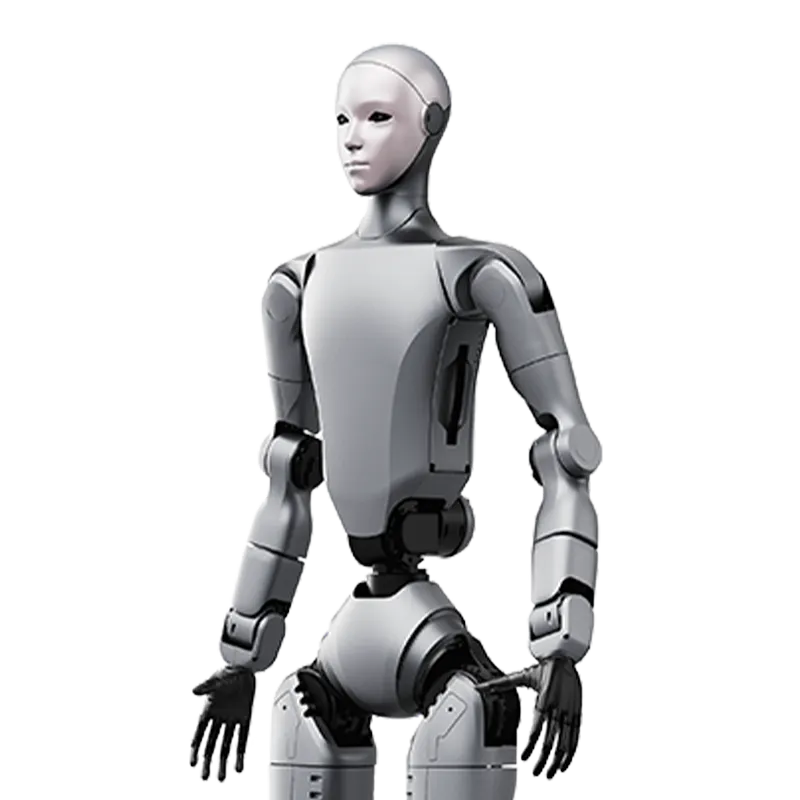
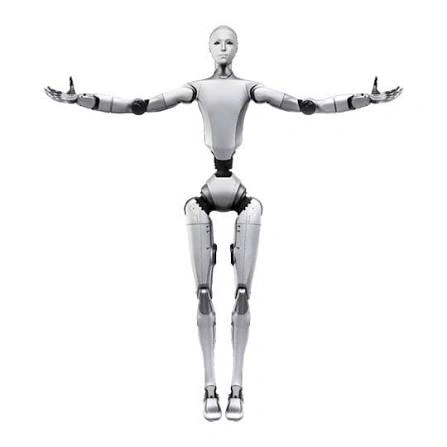
The H2 EDU stands 1820 mm tall, 456 mm wide, and 218 mm deep in standing posture with a total weight of approximately 70 kg including battery — proportions matched deliberately to a human adult so the robot operates correctly in environments designed for people. Laboratories, factories, care spaces, and public areas need no modification to accommodate the H2 EDU's footprint. The 1045 mm combined calf-plus-thigh length and 690 mm forearm-plus-upper-arm length place the robot's hands and gaze at positions that align with typical human working geometry — a condition that matters for the ecological validity of manipulation and interaction research.
The frame combines aircraft-grade aluminium with titanium alloy and high-strength engineering plastics — structural rigidity and impact resistance without the mass penalty of all-metal construction. The bionic head with human-like facial features is standard on every H2 EDU unit, paired with a wide-field-of-view humanoid dual-eye camera at human eye height for scene understanding and stereo depth perception.
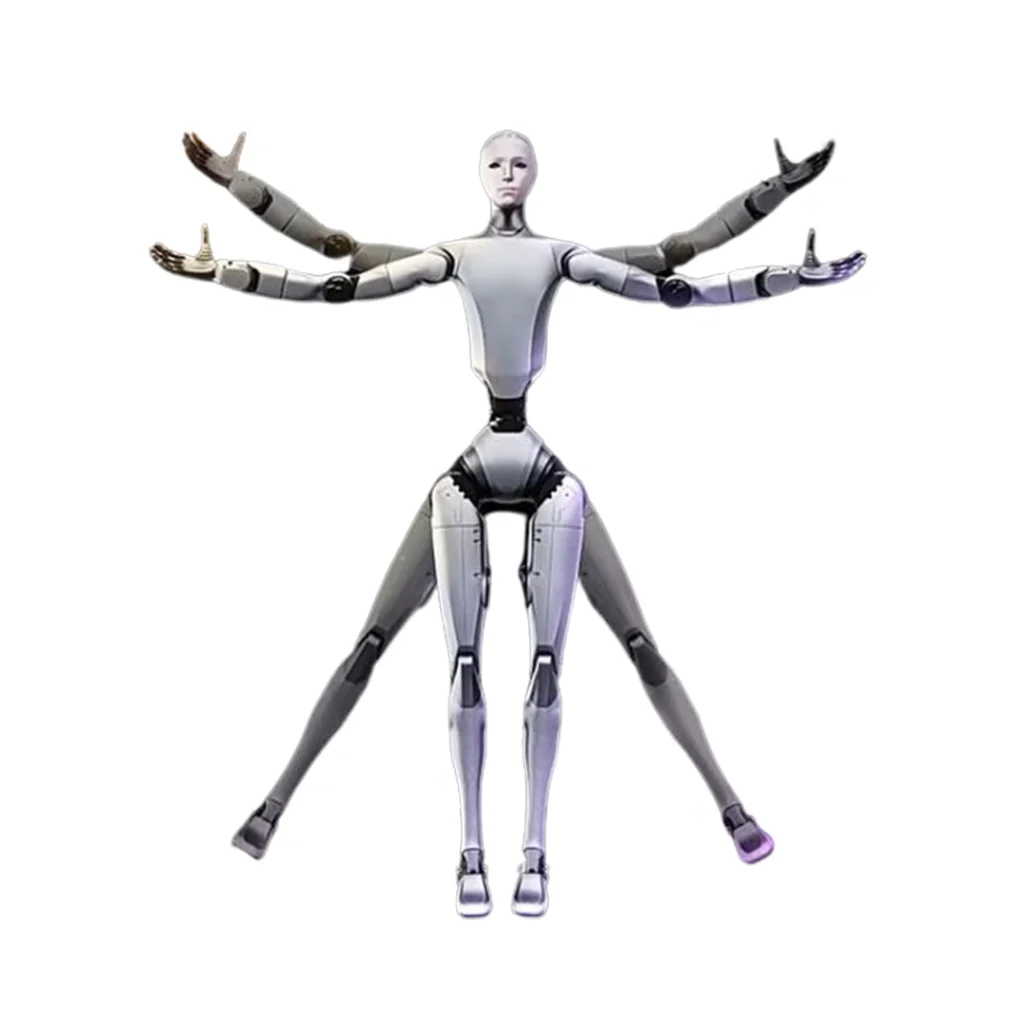
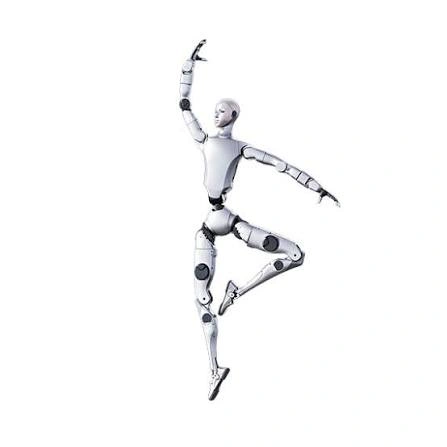
Every joint is actuated by a low-inertia high-speed inner-rotor permanent magnet synchronous motor seated in industrial-grade crossed roller bearings — chosen for superior response speed and thermal performance under sustained dynamic loading. The arm delivers 7 DOF per arm (shoulder ×3, elbow ×2, wrist ×2), with 120 N·m peak arm torque and rated payload of ~7 kg rising to ~15 kg at peak. Each leg carries 6 DOF at 360 N·m peak torque. The 3-DOF waist provides trunk rotation and lateral tilt for extended-reach tasks; the 2-DOF head enables active gaze control for visual attention research.
The standard H2 has no dexterous hand — this is explicit in the official specification. The H2 EDU supports multiple hand models, letting research teams select or change manipulation hardware as objectives evolve: grasping force characterisation, multi-finger dexterity studies, tactile sensing resolution, or proprioceptive feedback research — all within the same robot body without reworking the arm control architecture.
The 7-DOF arm and 690 mm combined arm length place the hand at human-proportionate reach distances from the torso. At 120 N·m peak arm torque the arm generates the contact forces required for non-trivial manipulation tasks — spanning from high-force pick-and-place to delicate fine-motor interactions within a single platform without procuring separate hardware for different task types.
The H2 EDU ships with Intel Core i5 for platform capabilities and Intel Core i7 for custom development — the i7 is exclusive to the EDU variant. An upgradeable compute module bay supports multiple brands and models including options such as Jetson Thor, without any hardware change to the robot. Start with the base configuration and scale onboard AI compute as workloads grow — from running pre-trained policies to on-device model training and evaluation.
Full secondary development access is included and is explicitly absent from the standard H2. Researchers write, deploy, and iterate custom control algorithms, perception pipelines, motion planners, and AI inference models directly on the robot with no platform-level restrictions. Smart OTA updates keep the Unitree base firmware current — running alongside custom layers without conflict — backed by a 12-month warranty covering the full initial research phase.
The bionic head's humanoid binocular camera with wide field of view sits at human eye height with human-proportionate inter-ocular separation — so depth measurements and object localisation apply directly to human-scale tasks without scale adjustments. Array microphones and a high-power speaker in the same assembly enable natural voice interaction for speech-commanded control and spoken dialogue research without external audio hardware.
Wi-Fi 6 and Bluetooth 5.2 provide high-bandwidth, low-latency connectivity for data streaming and remote monitoring. The 15 Ah premium lithium battery (0.972 kWh, 75.6 V max, local air cooling) delivers ~3 hours of continuous operation. The quick-release mechanism allows tool-free swap between research sessions, minimising trial-to-trial downtime. Manual controller and charger included with every unit.

Mechanical body, torques, battery, sensing, and OTA are identical. These five rows are the only differences.
| Specification | H2 EDU |
|---|---|
| Mechanical Dimensions | |
| Height × Width × Depth (Standing) | 1820 × 456 × 218 mm |
| Weight (With Battery) | Approx. 70 kg |
| Degrees of Freedom (Total Joints) | 31 |
| Single Arm DOF | 7 — Shoulder ×3, Elbow ×2, Wrist ×2 |
| Single Leg DOF | 6 |
| Waist DOF | 3 |
| Head DOF | 2 |
| Dexterous Hand | Multiple Model Options — EDU Exclusive |
| Bionic Head with Facial Features | Yes — Standard All Models |
| Calf + Thigh Length | 1045 mm |
| Forearm + Upper Arm Length | 690 mm |
| Joint Output Bearings | Industrial-grade crossed roller bearings (high precision, high load capacity) |
| Joint Motors | Low-inertia high-speed inner-rotor PMSM |
| Maximum Arm Joint Torque | 120 N·m |
| Maximum Leg Joint Torque | 360 N·m |
| Arm Maximum Payload | Peak: ~15 kg — Rated: ~7 kg |
| Materials | Aircraft-Grade Aluminium + Titanium Alloy + High-Strength Engineering Plastics |
| Electrical Characteristics | |
| Cooling System | Local Air Cooling |
| Power Supply | Premium Lithium Battery with Low Internal Resistance |
| Battery Capacity | 15 Ah (0.972 kWh) |
| Battery Voltage (Maximum) | 75.6 V |
| Computing Power | PC1: Intel Core i5 (Platform) + PC2: Intel Core i7 (Custom Development) |
| Sensing | Humanoid Binocular Camera with Wide Field of View |
| Voice Interaction | Array Microphone and High-Power Speaker |
| Wireless | Wi-Fi 6, Bluetooth 5.2 |
| Accessories | |
| High-Power Computing Module | Multiple brands and models available (e.g. Jetson Thor) — EDU Exclusive |
| Smart Battery | Quick-Release |
| Charger | Included |
| Manual Controller | Included |
| Other | |
| Battery Life | About 3 hours |
| Upgraded Intelligent OTA | Yes |
| Secondary Development | Yes — Full Access (EDU Exclusive) |
| Warranty Period | 12 Months (vs 8 Months on Standard H2) |
What exactly differentiates the H2 EDU from the standard H2?
The H2 EDU is mechanically identical to the standard H2 — same frame, weight, 31-DOF architecture, 120 N·m arm torque, 360 N·m leg torque, battery, sensing, and OTA support. The four exclusive differences are: (1) dexterous hand support across multiple models, (2) upgradeable high-power compute module bay including options such as Jetson Thor, (3) Intel Core i7 for custom development alongside the i5, and (4) full secondary development access. The warranty is also extended to 12 months versus 8 months on the standard H2.
What does full secondary development access mean in practice?
It means researchers and engineers can write, deploy, and iterate custom control algorithms, perception pipelines, motion planners, and AI inference models directly on the robot hardware without platform-level software restrictions. The standard H2 does not support secondary development. Smart OTA updates from Unitree keep the base firmware current alongside custom code layers without overwriting them. For full SDK details refer to the Unitree secondary development manual.
What compute does the H2 EDU ship with and what high-power modules can be added?
The H2 EDU ships with Intel Core i5 for platform capabilities and Intel Core i7 for custom development — the i7 is exclusive to the EDU. The upgradeable module bay supports multiple brands and models, including options such as Jetson Thor, without hardware changes to the robot body. Teams can scale AI compute in place as workloads grow — from running pre-trained policies to on-device training and evaluation.
What is the full joint breakdown and payload of the H2 EDU?
31 total degrees of freedom: 7 per arm (shoulder ×3, elbow ×2, wrist ×2), 6 per leg, 3 waist, 2 head. All joints use industrial-grade crossed roller bearings and low-inertia inner-rotor PMSM motors. Peak arm torque: 120 N·m. Rated arm payload: ~7 kg. Peak arm payload: ~15 kg. Arm reach: 690 mm. Leg peak torque: 360 N·m. Leg length: 1045 mm.
What sensing, battery, connectivity, and warranty does the H2 EDU include?
Sensing: wide-FOV humanoid binocular camera in the bionic head, array microphones, high-power speaker for voice interaction. Battery: 15 Ah, 0.972 kWh, 75.6 V max, ~3 hours of operation per charge, quick-release. Connectivity: Wi-Fi 6 and Bluetooth 5.2. Included accessories: manual controller and charger. Warranty: 12 months — four months longer than the standard H2's 8-month coverage.



There are no reviews yet.