

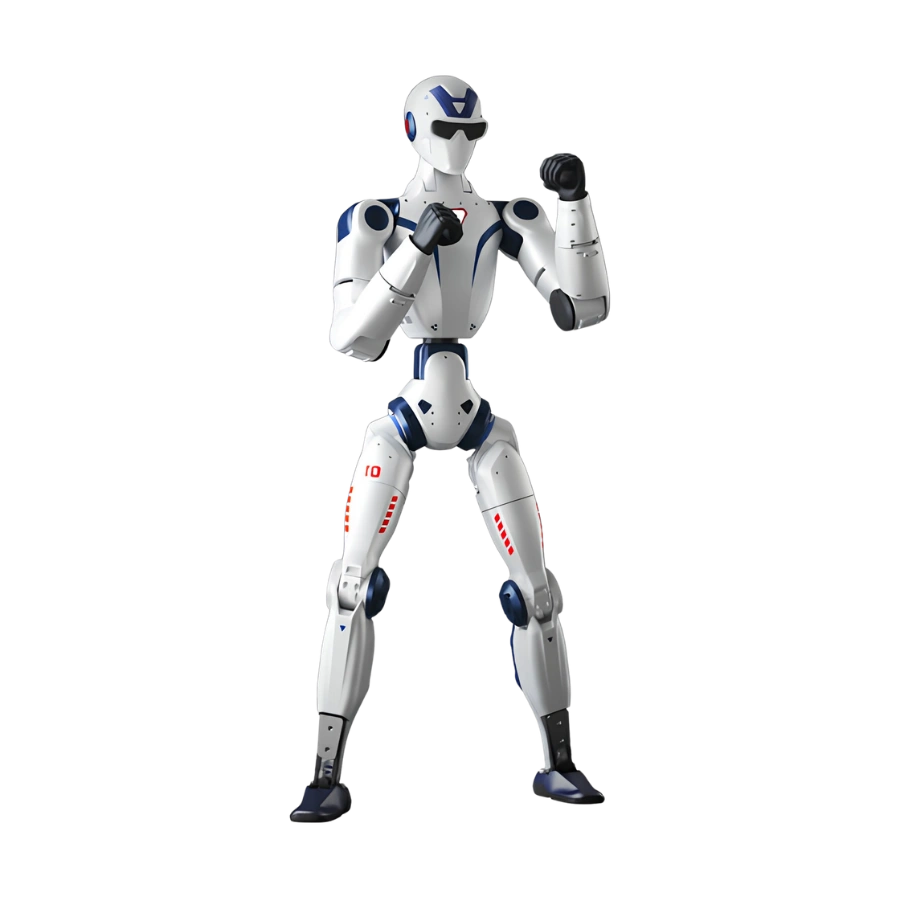
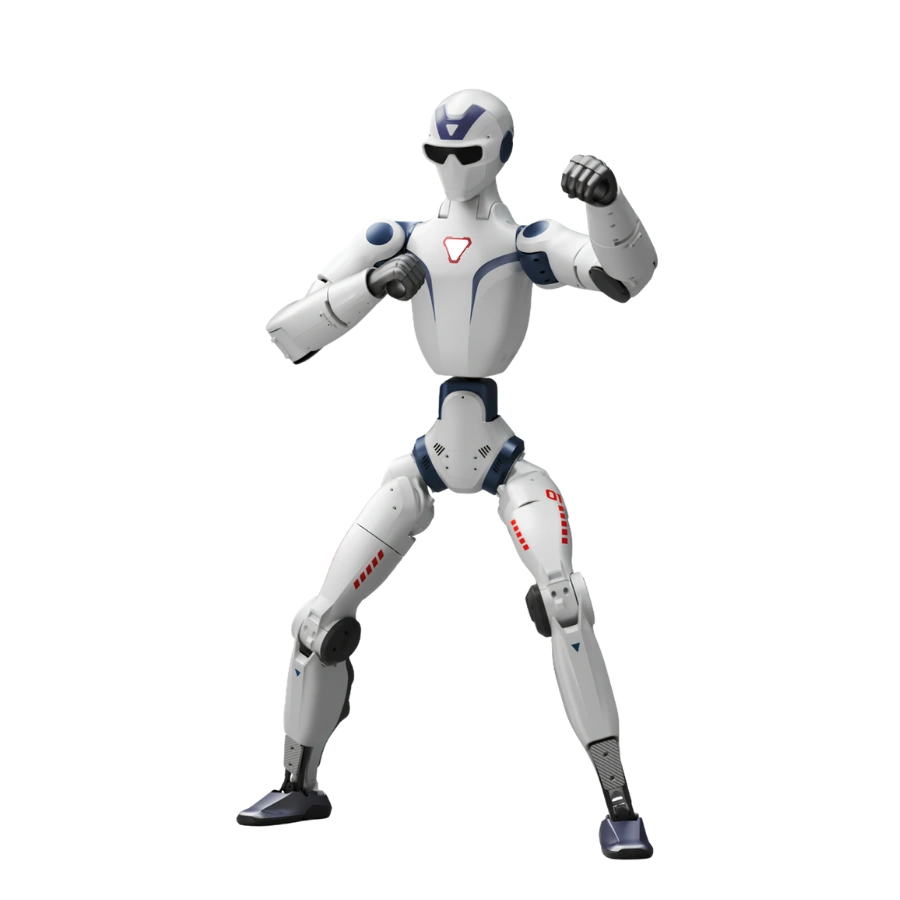
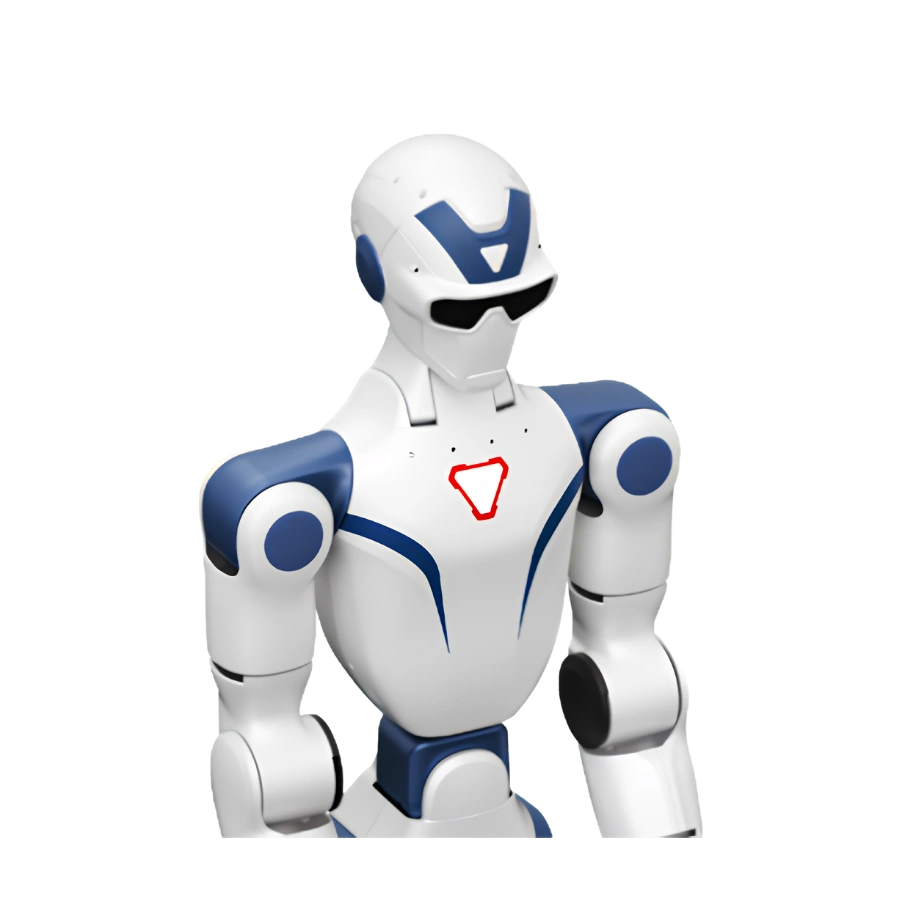
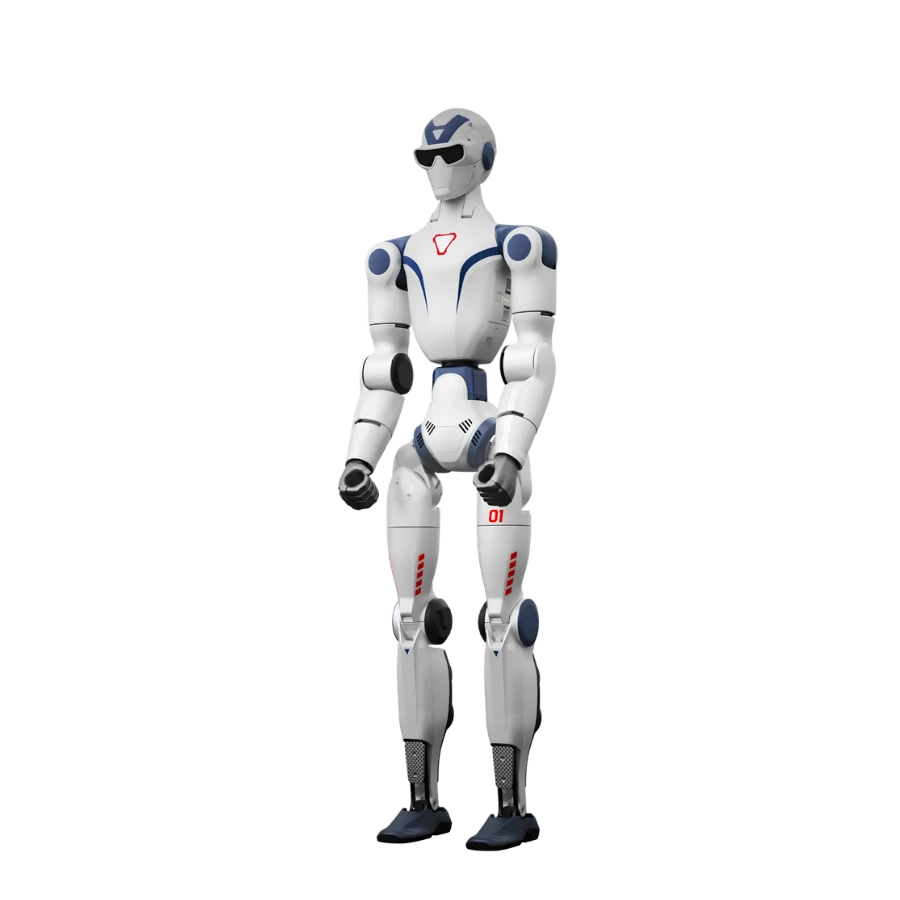
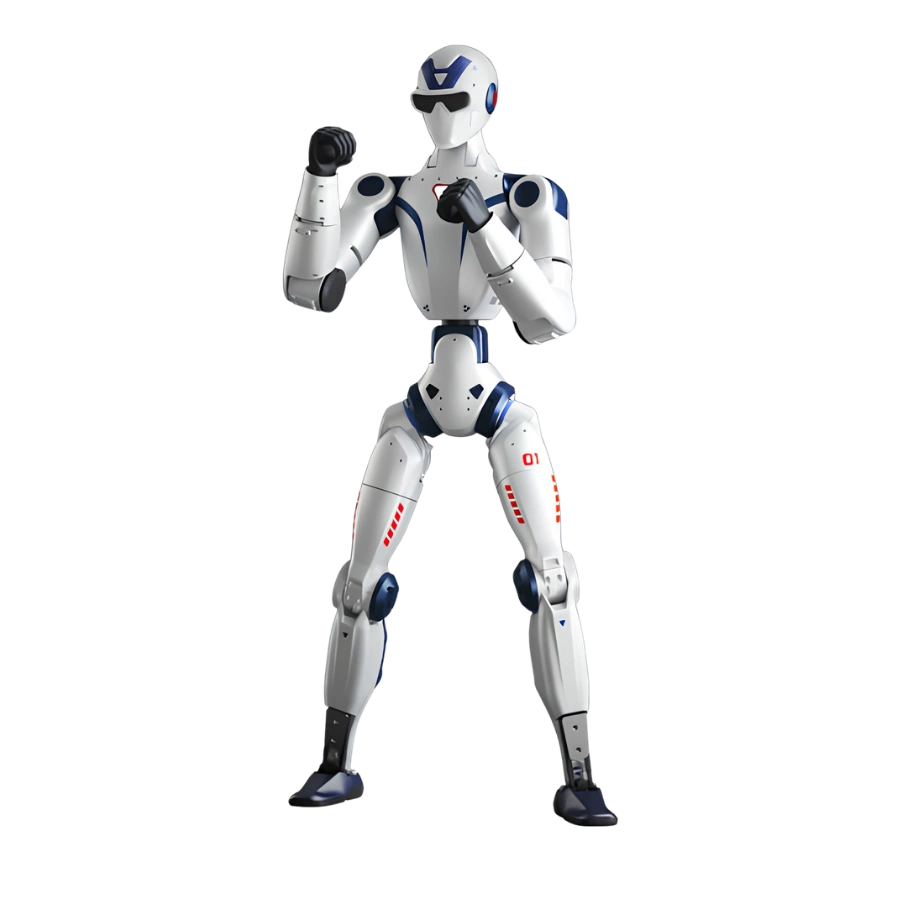
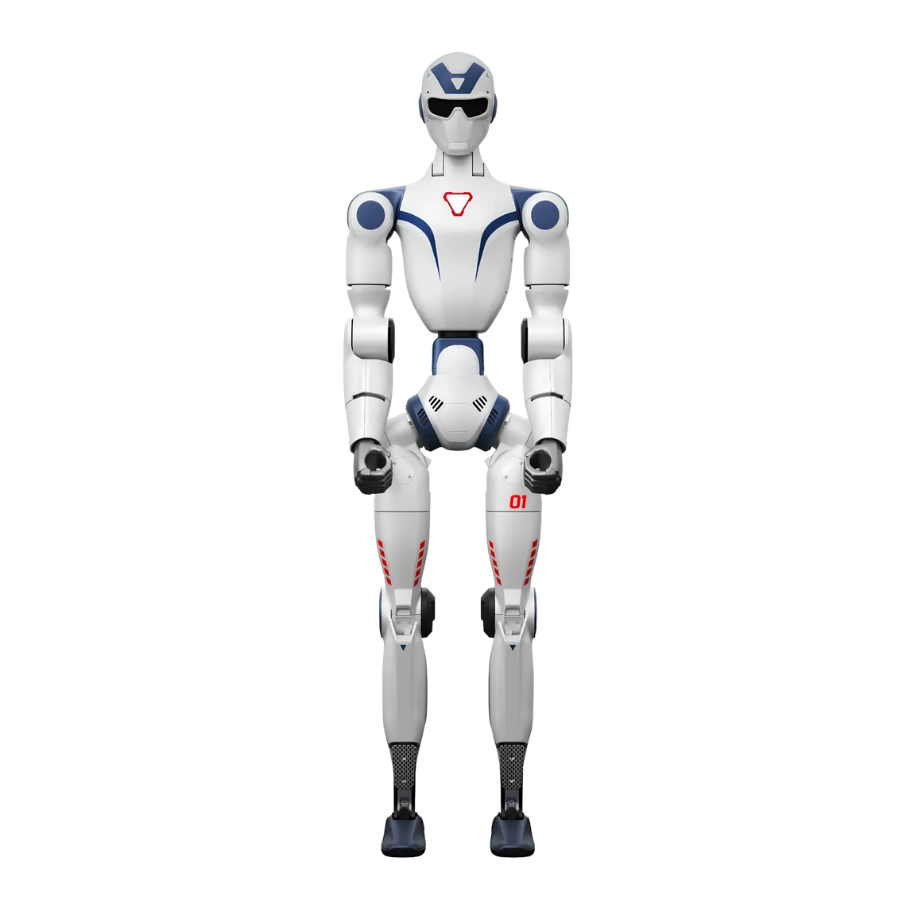
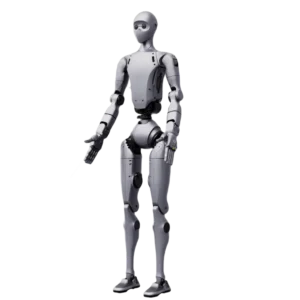
Unitree R1 AIR Humanoid Robot
• 20 degrees of freedom (6 DOF per leg, 4 DOF per arm) — agile bipedal locomotion and coordinated full-body motion in a 123 cm, ~27 kg ultra-lightweight body
• Low-inertia PMSM joint motors with crossed roller bearings and dual+single encoder feedback for precise, responsive articulation across the full kinematic range
• Large multimodal AI model integrates voice and image processing via 4-mic array, monocular camera, and speaker — natural human-robot interaction on an 8-core processor
• WiFi 6 + Bluetooth 5.2 with intelligent OTA upgrade system — continuous over-the-air delivery of new motion capabilities, AI updates, and firmware improvements
• Includes quick-release smart lithium battery (~1 hour runtime), charger, and manual controller — complete and ready to operate out of the box
- Trusted dealerDirect manufacturer partnership
- Pan-India deliveryInsured shipping, all states
- Post-sale supportTraining + service included
What makes it work
Unitree R1 AIR
The ultra-lightweight entry into humanoid robotics — 20 degrees of freedom, approximately 27 kg body weight, monocular vision, 4-mic array, WiFi 6, and continuous OTA software updates in a 123 cm agile form built for the real world.


Accessible Humanoid Intelligence, Ready Out of the Box
The Unitree R1 AIR is the entry-level model of the R1 humanoid robot series — purpose-built to bring credible, capable humanoid motion to a broader audience without sacrificing the engineering quality Unitree is known for. Standing 123 cm tall with a compact 357 × 190 mm footprint and weighing approximately 27 kg including its quick-release lithium battery, the R1 AIR is genuinely lightweight and physically manageable in real-world settings. Its 20-degree-of-freedom kinematic structure — six DOF per leg and four DOF per arm — delivers the natural, agile locomotion that defines the R1 series: stable bipedal walking, complex terrain adaptation, and the movement diversity that forms the foundation for meaningful task execution. Equipped with a monocular camera, 4-microphone array, onboard speaker, and a large multimodal AI model running on an 8-core processor, the R1 AIR enables natural voice and visual interaction. WiFi 6, Bluetooth 5.2, and intelligent OTA upgrades keep the platform improving over time. A quick-release smart battery, charger, and manual controller are included in the box — ready to operate immediately.
Four Principles Behind the R1 AIR
Designed to Move, Built to Interact
Agile Mobility — 20 DOF for Complex Scenarios
The R1 AIR's 20-degree-of-freedom kinematic architecture is the physical foundation of everything it does. Six degrees of freedom per leg provide the hip, knee, and ankle articulation needed for stable, adaptive bipedal walking across varied surface conditions. Four degrees of freedom per arm deliver the reach and upper-body motion range required to interact with objects and the surrounding environment. This structure enables the diversity of movement the R1 series is known for — whether navigating uneven terrain, maintaining dynamic balance, or executing coordinated full-body motions — consistently and in a body that weighs approximately 27 kg.
Ultra-Lightweight — Ready Out of the Box
At approximately 27 kg in a 1230 × 357 × 190 mm standing form, the R1 AIR achieves a weight-to-capability ratio that makes it genuinely practical outside of a laboratory. The compact 123 cm height keeps it within human-scale interaction zones while reducing the physical demands of transport, setup, and repositioning. The R1 AIR ships with a quick-release smart lithium battery, charger, and manual controller — everything required to begin operation is in the box. The quick-release battery design enables fast, tool-free swaps during extended sessions. The robot's exterior also supports personalisation through exclusive creative stickers, making it visually distinctive in education, events, and public-facing environments.
Integrated Multimodal AI — Voice and Vision
The R1 AIR integrates a large multimodal model capable of processing both voice commands and visual input simultaneously — bringing together the 4-microphone array, monocular camera, and onboard speaker into a coherent interaction system. The 4-mic array provides directional audio capture for accurate voice command recognition even in noisy environments. The monocular camera enables visual scene understanding and object recognition through the AI model. The onboard speaker closes the loop with audio feedback and spoken responses — all running on an 8-core high-performance processor. The result is a humanoid platform that can be addressed naturally through speech, respond to its visual environment, and communicate back, with continued capability expansion through OTA updates as AI models improve.
Movement First — Tasks as Well
A diversity of movement is the essential foundation for completing tasks in real-world environments — and the R1 AIR is built with this principle at its core. PMSM joint motors with crossed roller bearings and dual+single encoder feedback deliver the precise, responsive actuation that makes confident, repeatable dynamic motion possible. Hollow and internal cable routing keeps the exterior profile clean while protecting wiring across the full joint range of motion. Every joint in the R1 AIR uses the same low-inertia, high-speed internal-rotor motor architecture as the broader R1 series — ensuring that the AIR tier does not compromise on the core actuation quality that enables the platform's signature dynamic movement capability.
Intelligent Pioneer — Define Its Look
The R1 AIR is designed as an intelligent companion that reflects its owner's identity as much as its engineering pedigree. Exclusive creative stickers let you customise the robot's exterior — making it visually distinctive in classrooms, labs, events, and public environments where personality matters alongside capability. Beneath the surface, WiFi 6 and Bluetooth 5.2 connectivity powers the intelligent OTA upgrade system — delivering continuous improvements over the air without manual intervention. This means the R1 AIR purchased today is not the final version of the robot: it evolves across its service life as Unitree develops and releases new motion capabilities, AI model updates, and firmware improvements directly to the platform.
Engineered From Every Angle
Every module on the R1 AIR is purpose-selected — from the 8-core computing heart to the 4-mic array, monocular camera, quick-release smart battery, and PMSM-driven joints delivering huge power across 20 degrees of freedom.

Six Features That Define the R1 AIR
Unitree R1 AIR — Complete Specification
| Specification | Details |
|---|---|
| Mechanical Dimensions | |
| Height × Width × Thickness (Standing) | 1230 × 357 × 190 mm |
| Weight (With Battery) | About 27 kg |
| Degree of Freedom (Total Joints) | 20 |
| Single Leg Degrees of Freedom | 6 |
| Single Arm Degrees of Freedom | 4 |
| Waist Degrees of Freedom | — |
| Head Degrees of Freedom | — |
| Dexterous Hand | — |
| Calf + Thigh Length | 600 mm |
| Forearm + Upper Arm Length | 420 mm |
| Joint Range of Motion | |
| Knee Joint | −10° ~ +139° |
| Hip Joint — Yaw | ±157° |
| Hip Joint — Pitch | −168° ~ +146° |
| Hip Joint — Roll | −60° ~ +100° |
| Actuation & Sensing | |
| Joint Output Bearing | Crossed Roller Bearings, Double Hook Ball Bearings |
| Joint Motor | Low Inertia High-Speed Internal Rotor PMSM |
| Maximum Torque of Arm Joint | About 2 kg |
| Joint Encoder | Dual + Single Encoder |
| Electrical Characteristics | |
| Electrical Routing | Hollow + Internal Routing |
| Cooling System | Local Air Cooling |
| Power Supply | Lithium Battery (Quick Release) |
| Basic Computing Power | 8-Core High-Performance Processor |
| Camera | Monocular Camera |
| Microphone Array | 4-Mic Array |
| Speaker | Yes |
| WiFi | WiFi 6 |
| Bluetooth | Bluetooth 5.2 |
| Accessories & Other | |
| Smart Battery (Quick Release) | Yes (Included) |
| Charger | Yes (Included) |
| Manual Controller | Yes (Included) |
| High-Power Computing Module | — |
| Battery Life | About 1 Hour |
| Upgraded Intelligent OTA | Yes |
| Secondary Development | — |
| Warranty Period | 6 Months |
Unitree R1 AIR — See It in Action
Unitree R1 — Full Platform Overview
Unitree R1 Official Reveal — Intelligent Companion Introduction (YouTube)
Common Questions About the R1 AIR
What is the difference between the Unitree R1 AIR, R1, and R1 EDU?
The R1 AIR has 20 degrees of freedom (six per leg, four per arm), a monocular camera, and no waist or head DOF — making it the lightest model at approximately 27 kg. The R1 adds waist (2 DOF), head (2 DOF), one additional DOF per arm for 26 DOF total, binocular camera, and approximately 29 kg weight. The R1 EDU shares the R1 mechanical platform (26–40 DOF depending on configuration) and adds full secondary development interfaces, optional dexterous hands, and support for high-power computing modules such as Nvidia Orin. Secondary development is not available on the R1 AIR.
Does the R1 AIR support secondary development or custom programming?
No — the R1 AIR does not support secondary development. It is designed as an out-of-the-box intelligent companion and does not provide open joint or sensor control interfaces for custom algorithm development. Users who need secondary development, simulation platform integration, or custom control interfaces should select the R1 EDU edition. Please enquire at xBoom.in for R1 EDU availability.
What AI and sensing capabilities does the R1 AIR have?
The R1 AIR integrates a large multimodal model that processes both voice and image input. On the hardware side it is equipped with a monocular camera for visual perception, a 4-microphone array for directional audio capture and voice command recognition, and a speaker for audio feedback and spoken responses. Processing runs on an 8-core high-performance processor built into the robot body. This enables natural voice interaction, visual scene awareness, and spoken communication — all expandable through the robot's intelligent OTA update system as Unitree releases new AI capabilities.
How long does the battery last and how is it charged?
The R1 AIR provides approximately one hour of active operation per charge from its quick-release smart lithium battery. The battery is tool-free quick-release, meaning it can be swapped rapidly without any tools — extending operation time by having a charged spare available. A charger is included in the package. Battery life will vary depending on the intensity of movement and the tasks being performed.
What does the OTA upgrade system do and what is required to use it?
The intelligent OTA (over-the-air) upgrade system allows Unitree to deliver software updates, new motion capabilities, AI model improvements, and firmware updates directly to the R1 AIR wirelessly — without requiring physical connection to a computer or manual installation. The robot's WiFi 6 connectivity handles the update delivery. This means the R1 AIR improves automatically over its service life as Unitree develops and releases new features. An active WiFi 6 network connection is required to receive updates. OTA is supported on all R1 series models including the R1 AIR.




There are no reviews yet.