

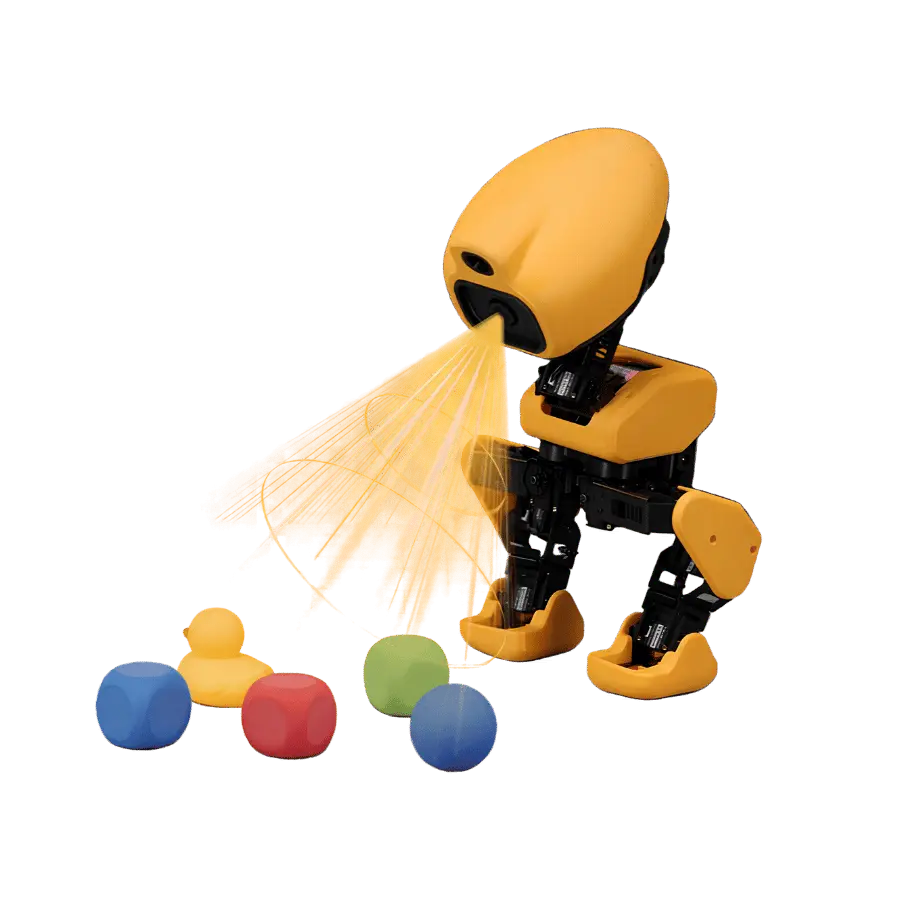
WonderDuck Robot Duck
- Open-source bipedal robot duck by Hiwonder, finished and ready to use out of the box
- 15-DOF design with original metal load-bearing structure, duralumin brackets and dual-axis fixed leg joints
- Modular 3D-printed shell with full 3D structural files open source for modification and printing
- HX-08LCM coreless magnetic-encoder bus servos: 8 kg·cm stall torque, 0.06 s/60° response, 12-bit encoder, 360° rotation
- Dual-brain control: RK3566 (quad-core Cortex-A55, 1 TOPS NPU, 1GB RAM, 32GB TF card, Linux) plus AT32 coprocessor at 50 Hz
- Dual QMI8658 IMUs, 8MP HD camera, TOF ranging sensor, microphone, speaker and 7.4V high-rate lithium battery
- Reinforcement learning with MuJoCo and PPO (mjlab, domain randomization); presets for walking, standing up, sitting and pecking
- WonderRL training tool, web-based PC host computer, mobile APP, open schematics and source code, original courses and development manual
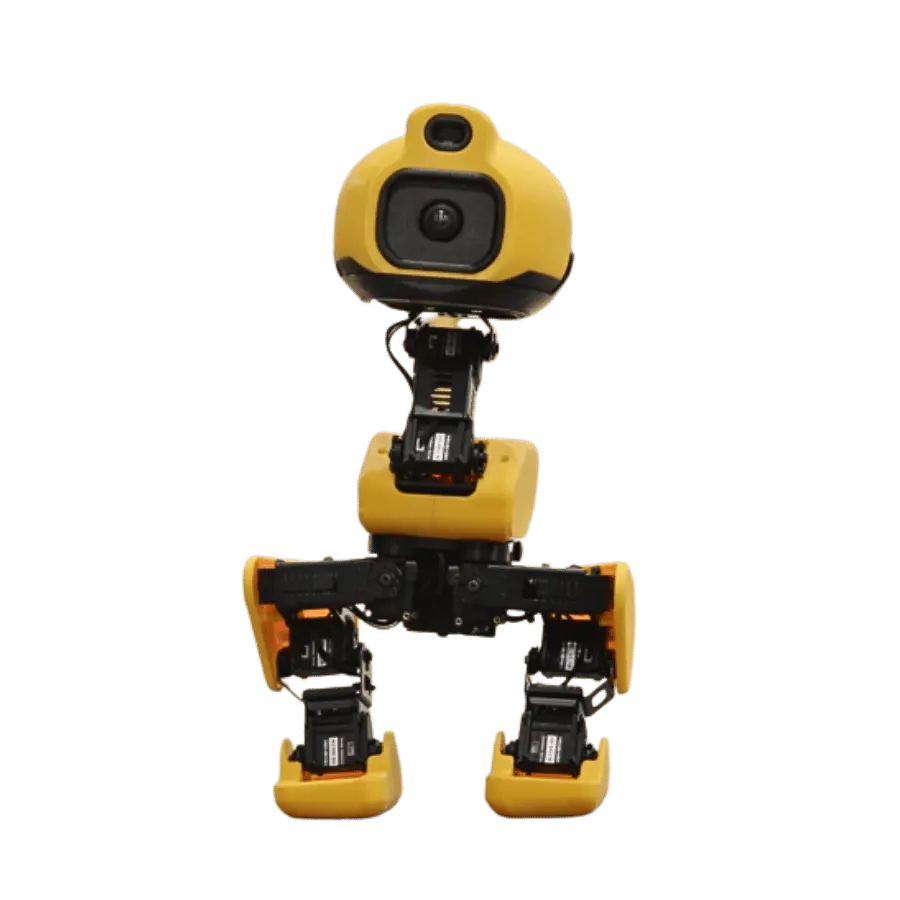
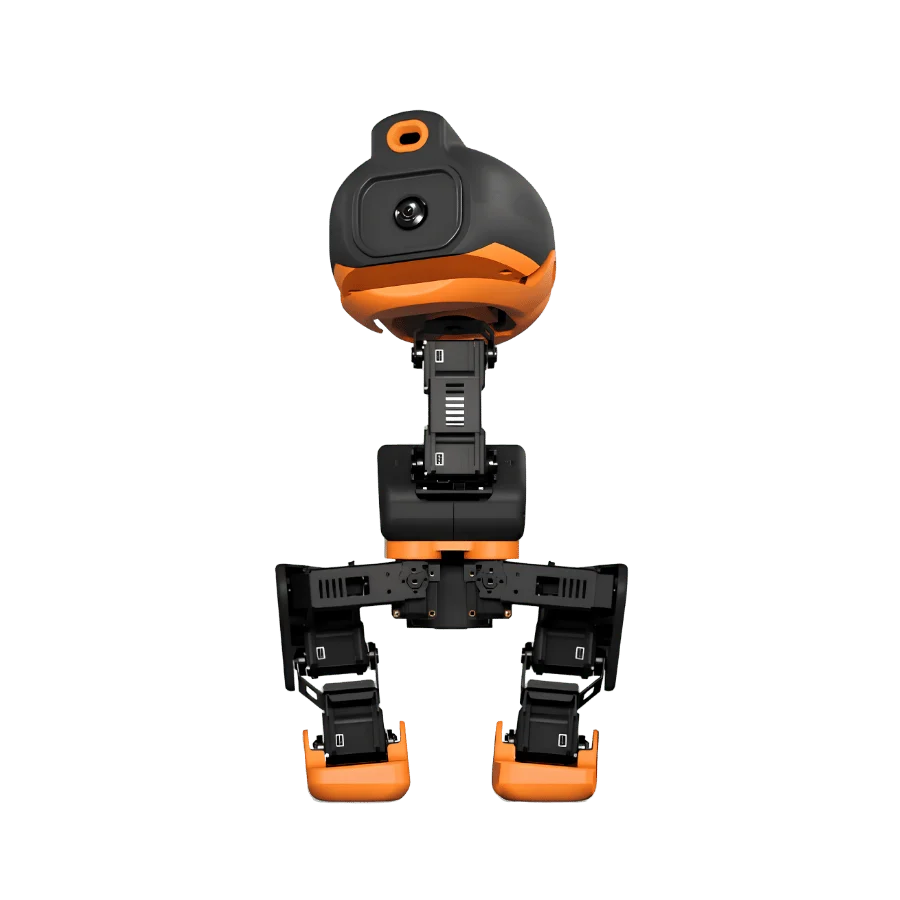
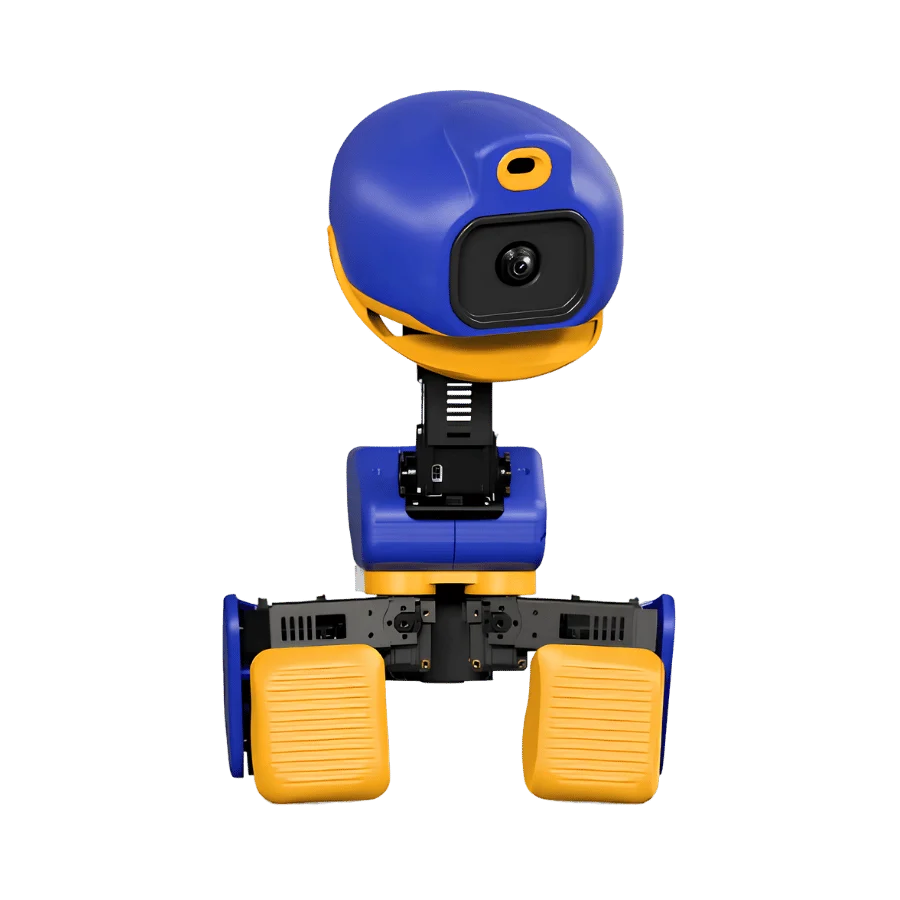
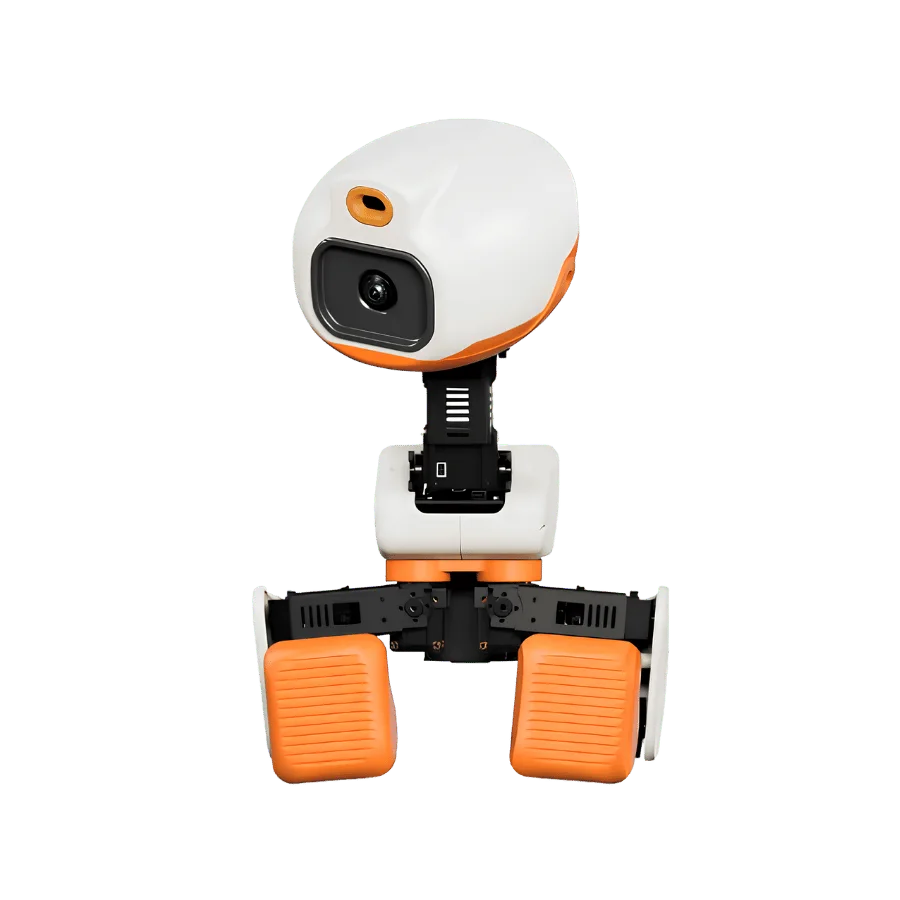
- Colour Yellow, Black & Orange, Blue & Yellow, White & Orange
- Trusted dealerDirect manufacturer partnership
- Pan-India deliveryInsured shipping, all states
- Post-sale supportTraining + service included
What makes it work
WonderDuck Open-Source Bipedal Robot Duck
What makes WonderDuck different? The answer is not in the slogans, but in the engineering details that still hold up after it has been taken apart, run, and trained.

WonderDuck, launched by , is an open-source bipedal robot duck that integrates an original mechanical structure, self-developed joint servos, a heterogeneous dual-brain control system, AI vision, and reinforcement learning. WonderDuck ships as a finished product and is ready to use out of the box. At the same time, it opens its 3D structural files, low-level source code, simulation training projects, and real-robot deployment workflow, so developers can both experience it and conduct in-depth research and secondary development.
See WonderDuck in Action
Different in Structure
First solve standing stability, then talk about walking well.
For a bipedal robot to achieve stable walking, mechanical structure is the foundation. The body's center of gravity, leg structure, and joint layout all directly affect the robot's motion performance.
WonderDuck adopts an original metal load-bearing architecture, with metal structural parts deployed at core load-bearing points. It offers high strength and minimal deformation, and can withstand repeated fall impacts while maintaining mechanical precision. The leg joints use a dual-axis fixation design, using dual-axis support to eliminate the radial play and backlash that single-axis structures are prone to, making joint motion precision and overall rigidity more stable.
The whole machine has a 15-DOF design. Its shell uses an original 3D-printed solution with modular assembly and disassembly, and the full set of 3D structural files is open source, so developers can modify models, print, and add modules. The combination of duralumin brackets and a 3D-printed shell allows this robot duck to withstand repeated impacts during debugging and training while also leaving enough room for modification.

Different at the Joints
Making every servo count in the gait.
WonderDuck's core joints are equipped with 's self-developed HX-08LCM coreless magnetic-encoder bus servo, with a stall torque of 8 kg·cm and a response speed of 0.06 s/60°, perfectly suited to the robot duck's 50 Hz high-frequency control loop. Inside the servo, a high-strength stainless steel gear set and primary/secondary metal servo horns are combined with 12-bit non-contact magnetic encoder feedback to achieve 360° continuous rotation and high-precision positioning. At the same time, a built-in trapezoidal acceleration/deceleration start-stop algorithm effectively reduces joint jitter during start and stop, making motion smoother.
In terms of control and feedback, the HX-08LCM supports reading status information such as position, temperature, and voltage, and provides overheat, overload, and overvoltage protection. Its open communication protocol also makes it convenient for developers to debug servos and develop low-level control.

Different in Control
On-device compute and real-time control divide and collaborate.
The dual-brain architecture, composed of 's self-developed RK3566 main controller and an AT32 coprocessor, is responsible for high-level computing and low-level real-time control respectively. The RK3566 is equipped with a quad-core Cortex-A55 processor and a 1 TOPS NPU, 1 GB of RAM, and 32 GB TF-card storage, and runs a native Linux system. It is mainly responsible for reinforcement learning policy inference, machine vision, video transmission, and high-level application scheduling. The AT32 is responsible for low-level real-time tasks such as IMU attitude data acquisition and servo bus control, ensuring stable operation of the 50 Hz real-time control loop.
For perception and interaction, WonderDuck is equipped with dual QMI8658 IMUs in the head and back, which can collect information such as attitude, angular velocity, and acceleration to provide data support for motion control. It is also equipped with an 8-megapixel HD camera, a TOF ranging sensor, a microphone, and a speaker. Together with an audio codec and a 7.4V high-rate lithium battery, these form a complete hardware foundation for on-device perception and interaction.

Driven by Reinforcement Learning
Letting the robot duck learn locomotion policies on its own.
Traditional robots usually rely on preset motions and control commands to complete movements, while reinforcement learning provides robots with a new approach to autonomously explore motion policies.
WonderDuck carries out reinforcement learning training in the MuJoCo physics simulation environment based on the mainstream PPO algorithm. The robot repeatedly tries in the virtual environment and continuously adjusts its motion policy according to reward feedback, gradually learning walking, posture adjustment, and other motion capabilities. During training, WonderDuck combines the mjlab framework and domain randomization technology to expose the robot to different simulation conditions and improve its adaptability. After training is completed, the model can be exported and deployed to the real robot, completing the transfer from simulation training to real-robot operation.
In addition to autonomous training, WonderDuck also comes preset with multiple mature policies, including walking, autonomous standing up, sitting, and pecking.

Full-Pipeline Software Tools
Lowering the barrier and making training and debugging more convenient.
WonderDuck is accompanied by the WonderRL reinforcement learning training tool, which has a built-in MuJoCo simulation environment and PPO training framework. It supports training process visualization, custom reward functions, and ONNX model export, connecting simulation training, model optimization, and real-robot deployment into a complete workflow.
The PC web-based visual host computer is installation-free. A browser can directly connect to the robot for real-time monitoring of the whole machine's status, online debugging of servo parameters, camera preview, switching motion policies, and firmware updates. The mobile APP provides basic motion remote control, real-time video transmission, visual human tracking, gesture control, visual line following, and other preset gameplay.
Full-Stack Open Source
From beginner to advanced, supporting embodied intelligence development.
WonderDuck opens its 3D structural files, hardware schematics, and low-level source code, allowing developers to start with hardware and low-level control and understand how the robot system is implemented. At the same time, it provides a MuJoCo simulation environment, PPO training project, and real-robot deployment workflow. Developers can build simulation environments, train motion policies, and perform Sim-to-Real transfer based on the existing projects.
It also comes with original courses and a development manual, covering motion control, reinforcement learning, machine vision interaction, and other comprehensive content, providing reference for developers to carry out independent learning, technical research, and project practice.
Gallery


Technical Specifications — WonderDuck
| Product | WonderDuck open-source bipedal robot duck |
|---|---|
| Brand | |
| Degrees of Freedom | 15 DOF |
| Structure | Original metal load-bearing architecture; duralumin brackets; leg joints with dual-axis fixation design |
| Shell | Original 3D-printed shell, modular assembly and disassembly |
| Servo | self-developed HX-08LCM coreless magnetic-encoder bus servo |
| Servo Stall Torque | 8 kg·cm |
| Servo Response Speed | 0.06 s/60° |
| Servo Encoder | 12-bit non-contact magnetic encoder |
| Servo Rotation | 360° continuous rotation |
| Servo Gears & Horns | High-strength stainless steel gear set; primary/secondary metal servo horns |
| Servo Motion Control | Built-in trapezoidal acceleration/deceleration start-stop algorithm |
| Servo Feedback | Position, temperature, voltage |
| Servo Protection | Overheat, overload, overvoltage protection |
| Main Controller | self-developed RK3566 |
| Processor | Quad-core Cortex-A55 |
| NPU | 1 TOPS |
| RAM | 1 GB |
| Storage | 32 GB TF card |
| Operating System | Native Linux system |
| Coprocessor | AT32 (IMU attitude data acquisition, servo bus control) |
| Real-time Control Loop | 50 Hz |
| IMU | Dual QMI8658 (head and back): attitude, angular velocity, acceleration |
| Camera | 8-megapixel HD camera |
| Ranging | TOF ranging sensor |
| Audio | Microphone, speaker and audio codec |
| Battery | 7.4V high-rate lithium battery |
| Learning Framework | MuJoCo simulation, PPO algorithm, mjlab framework, domain randomization |
| Preset Policies | Walking, autonomous standing up, sitting, pecking |
| Training Tool | WonderRL (MuJoCo environment, PPO training, training visualization, custom reward functions, ONNX model export) |
| PC Host Computer | Web-based, installation-free: real-time status monitoring, servo parameter debugging, camera preview, policy switching, firmware updates |
| Mobile APP | Motion remote control, real-time video transmission, visual human tracking, gesture control, visual line following |
| Open Source | 3D structural files, hardware schematics, low-level source code, MuJoCo simulation environment, PPO training project, real-robot deployment workflow |
| Learning Material | Original courses and development manual |
Frequently Asked Questions
What is the WonderDuck?
WonderDuck, launched by , is an open-source bipedal robot duck that integrates an original mechanical structure, self-developed joint servos, a heterogeneous dual-brain control system, AI vision and reinforcement learning. It ships as a finished product, ready to use out of the box.
What servos and how many degrees of freedom does the WonderDuck have?
The whole machine has a 15-DOF design. Its core joints use 's self-developed HX-08LCM coreless magnetic-encoder bus servo, with 8 kg·cm stall torque, 0.06 s/60° response speed, 12-bit non-contact magnetic encoder feedback and 360° continuous rotation.
What controller and sensors does the WonderDuck use?
A dual-brain architecture of a RK3566 main controller (quad-core Cortex-A55, 1 TOPS NPU, 1 GB RAM, 32 GB TF card, native Linux) and an AT32 coprocessor running a 50 Hz real-time control loop. Sensors and I/O include dual QMI8658 IMUs, an 8-megapixel HD camera, a TOF ranging sensor, a microphone and a speaker, powered by a 7.4V high-rate lithium battery.
How does the WonderDuck learn to walk?
It trains with the PPO algorithm in the MuJoCo physics simulation environment using the mjlab framework and domain randomization. The trained model is exported (ONNX) and deployed to the real robot. It also comes with preset policies for walking, autonomous standing up, sitting and pecking.
Is the WonderDuck open source, and what software comes with it?
Yes. It opens its 3D structural files, hardware schematics, low-level source code, MuJoCo simulation environment, PPO training project and real-robot deployment workflow. It comes with the WonderRL training tool, an installation-free web-based PC host computer, a mobile APP, and original courses with a development manual.
The full sheet
| Colour | Yellow, Black & Orange, Blue & Yellow, White & Orange |
|---|
Related products
-
·LND·00
-
·LND·01
-
·LND·02
-
·LND·03


There are no reviews yet.