
Unitree H2 Humanoid Robot: Complete Guide, Features, Use Cases, and Real-World Applications
The Unitree H2 represents a new phase in humanoid robotics, where machines are no longer confined to controlled lab environments but are increasingly designed for real-world deployment. Building on advancements seen in platforms like the Unitree H1 humanoid robot, the H2 focuses on improving mobility, manipulation, and operational intelligence across multiple industries.
What is Unitree H2?
The Unitree H2 is a full-size humanoid robot engineered to perform dynamic, real-world tasks such as walking, handling objects, inspecting environments, and interacting with human-centric infrastructure. Unlike traditional robots that require specialized setups, the H2 operates effectively in human-designed environments that include stairs, doors, tools, and workstations, making it highly versatile.
Key Features of Unitree H2
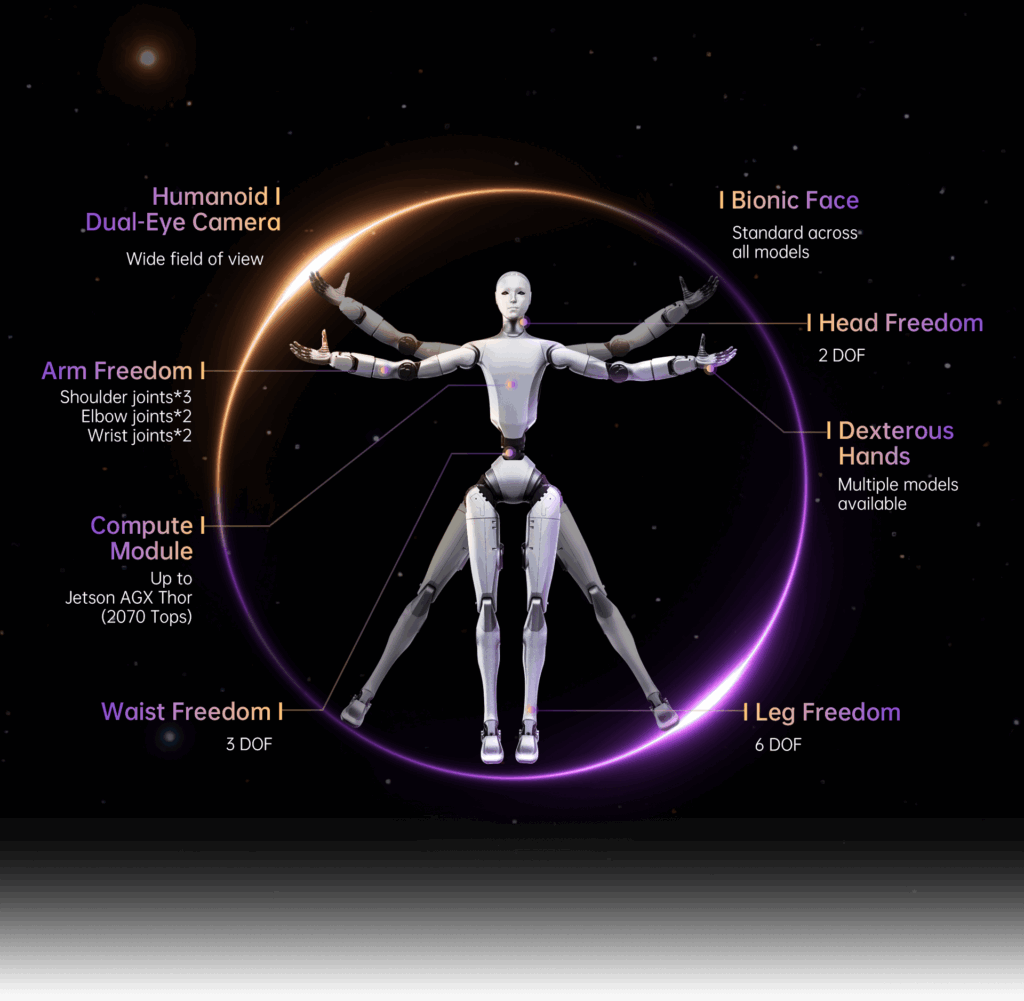
The Unitree H2 delivers advanced mobility by using a bipedal locomotion system that enables it to walk smoothly, turn efficiently, climb stairs, and maintain balance even when external forces disturb it. Its control algorithms continuously adjust posture and movement in real time, ensuring stability in complex environments.
The robot also demonstrates strong manipulation capabilities through its multi-jointed arms and dexterous hands. It can grasp objects of different sizes, execute precise movements, and coordinate both hands simultaneously to complete complex tasks, which makes it suitable for industrial and service applications.
The H2 integrates AI-driven perception systems that combine depth cameras, LiDAR in certain configurations, and inertial measurement sensors to understand and navigate its surroundings. It actively identifies objects, maps environments, and avoids obstacles while operating.
In terms of control, the robot supports autonomous execution, remote teleoperation, and hybrid control modes where human input and AI collaborate. This flexibility allows operators to deploy the robot in both independent and supervised scenarios.
The design of the Unitree H2 emphasizes efficiency by optimizing its weight-to-power ratio and improving battery usage, allowing it to perform demanding tasks while remaining relatively portable for deployment.
Technical Overview
The Unitree H2 typically stands around human height and incorporates more than twenty joints that enable fluid and natural movement. It moves at a pace comparable to human walking and supports moderate payload handling for real-world tasks. The robot uses a swappable lithium battery system to maintain operational continuity and integrates onboard computing systems capable of running AI models for perception and decision-making.
Operational Capabilities of Unitree H2
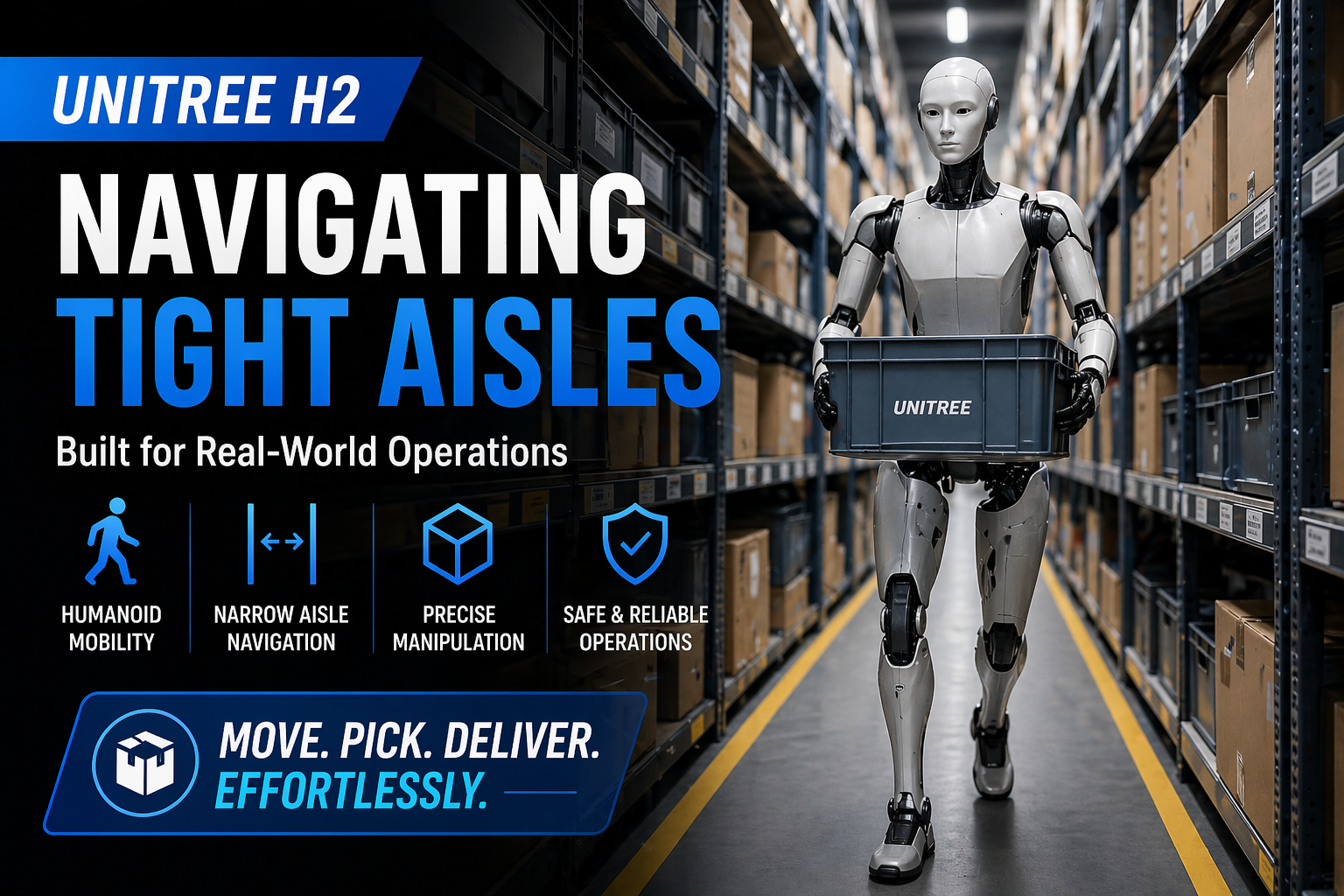
In industrial environments, the Unitree H2 actively supports warehouse operations by picking items, sorting materials, assisting in assembly processes, inspecting equipment, and transporting goods through narrow and complex pathways.
For infrastructure and inspection tasks, the robot navigates challenging environments such as power line corridors, bridges, and industrial facilities. It evaluates structural conditions, monitors factory floors, and identifies potential hazards in real time.
Within service and hospitality settings, the H2 engages with people by assisting at front desks, guiding visitors, and delivering items across hotels or office spaces. Its humanoid design allows it to interact naturally within these environments.
In research and development, engineers use the robot to train AI models for manipulation, study human-robot interaction, and test new robotics algorithms under realistic conditions.
For security applications, the robot conducts patrol routines, monitors environments continuously, and supports emergency response teams by providing situational awareness.
Real-World Use Cases
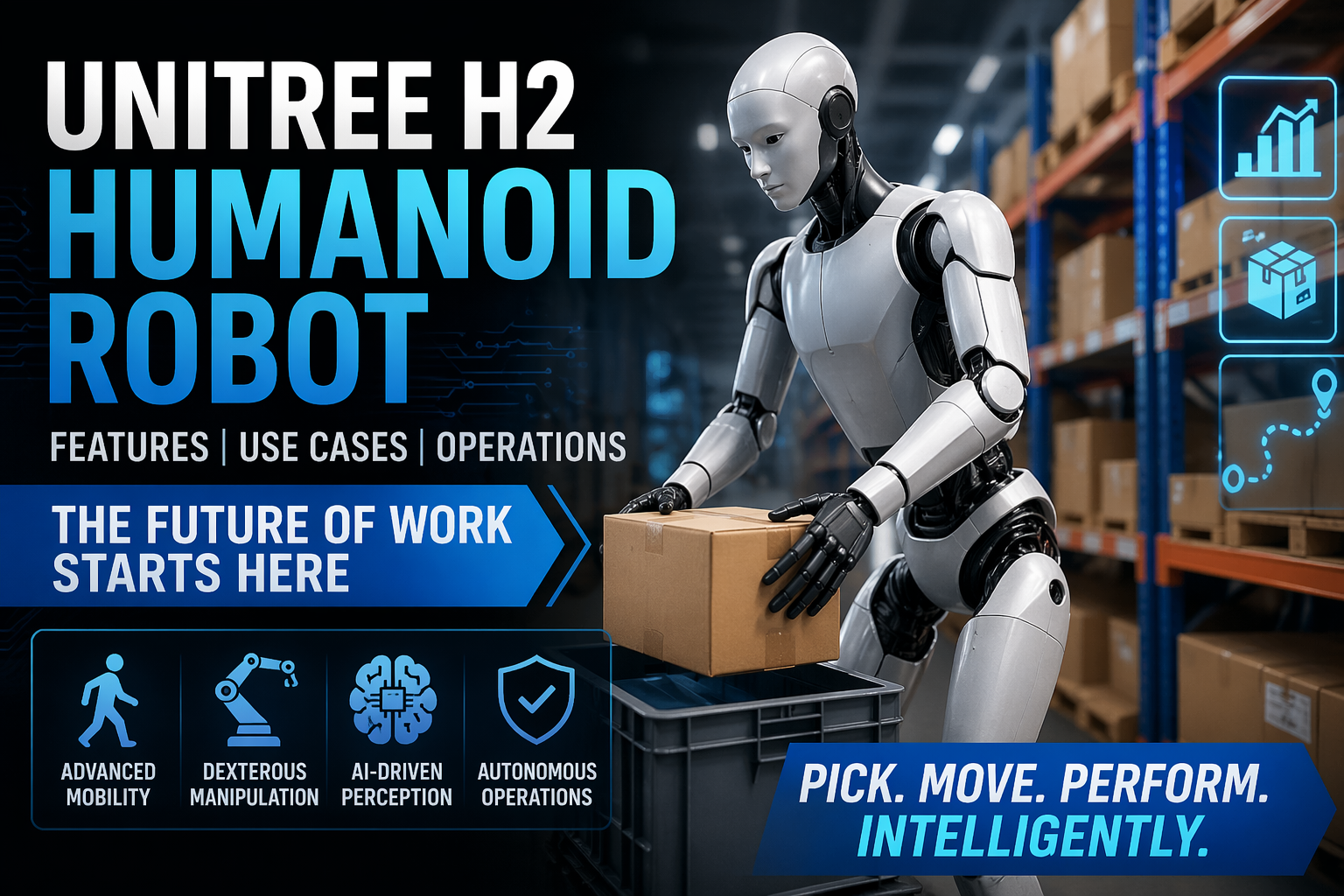
In smart warehousing, the Unitree H2 transforms operations by actively picking items, loading and unloading shelves, and navigating tight aisles without requiring infrastructure changes. This significantly improves efficiency in logistics workflows.
In industrial automation, the robot moves between different workstations, uses existing tools, and adapts to varying processes, which allows companies to deploy automation without redesigning production lines.
In disaster response scenarios, the H2 enters hazardous environments, searches for survivors, and handles debris carefully, demonstrating its potential in high-risk operations.
In retail environments, the robot interacts with customers, provides product information, and performs inventory checks, enhancing both operational efficiency and customer experience.
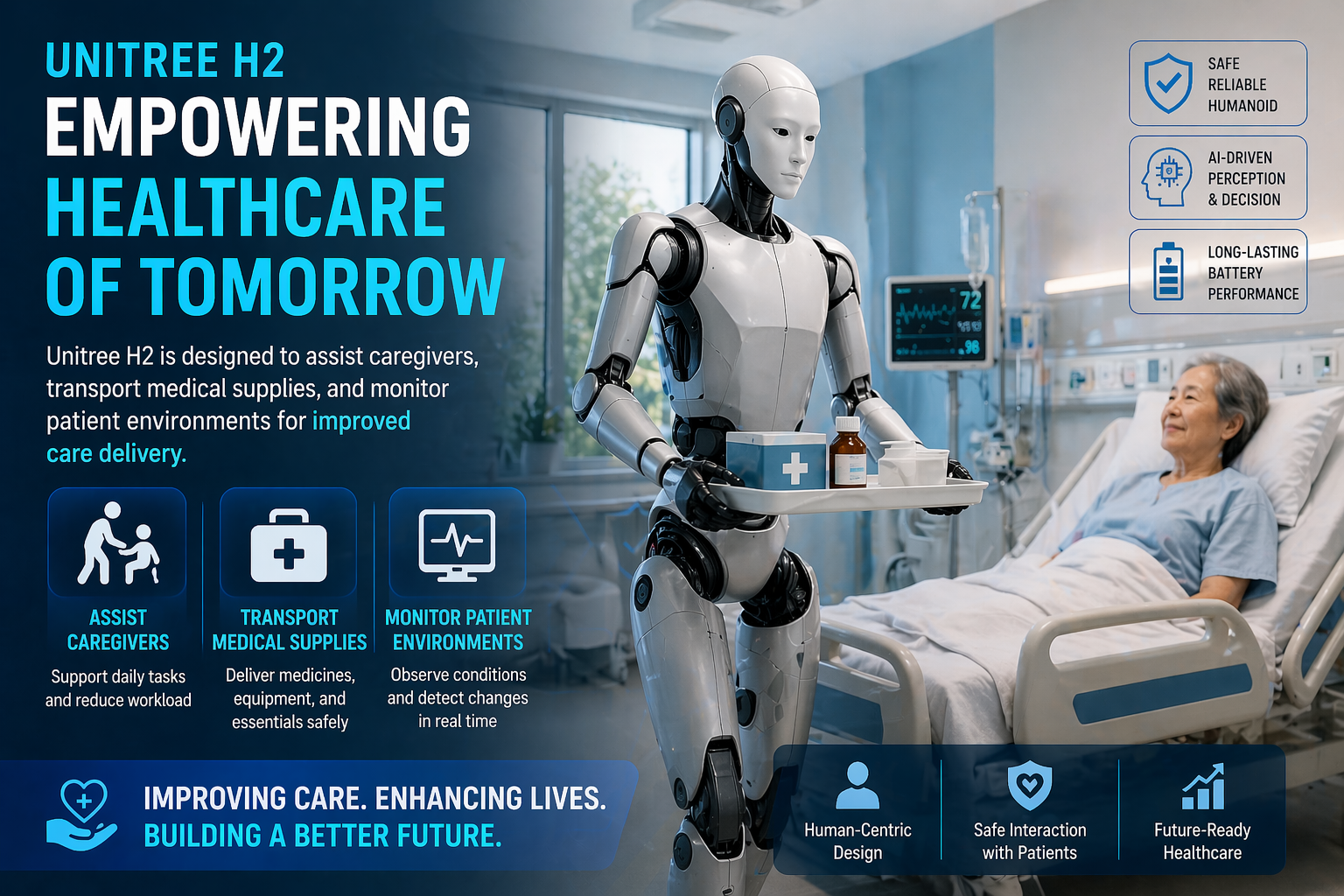
In healthcare settings, future implementations may enable the robot to assist caregivers, transport medical supplies, and monitor patient environments, contributing to improved care delivery.
Advantages of Unitree H2
The Unitree H2 operates seamlessly in human-designed environments, which eliminates the need for costly infrastructure modifications. It combines mobility and manipulation within a single platform, enabling it to perform a wide range of tasks. Its AI-ready architecture supports continuous learning and adaptation, allowing businesses to scale automation across different operations effectively.
Limitations to Consider
Despite its advanced capabilities, the Unitree H2 still faces challenges related to real-world reliability, as humanoid robotics continues to evolve. The initial investment for deployment can be high, and the robot performs best in controlled or semi-structured environments. Battery life also limits extended operations, requiring efficient task planning or battery management.
Unitree H2 vs Traditional Robots
The Unitree H2 delivers significantly higher mobility compared to traditional industrial robot arms, which remain fixed in place. It offers greater flexibility by adapting to multiple tasks, while mobile robots provide only moderate versatility. The humanoid design allows the H2 to integrate seamlessly into human environments, whereas traditional robots often struggle outside specialized setups. As a result, the H2 supports a broader range of applications with higher operational adaptability.
Why Unitree H2 Matters
The Unitree H2 signals a shift toward general-purpose robotics by enabling a single system to perform multiple roles across industries. This reduces dependency on specialized machines and aligns with global trends in AI-driven automation, workforce optimization, and smart infrastructure development.
FAQs About Unitree H2
What is Unitree H2 used for?
The Unitree H2 performs industrial automation, inspection, logistics, service, and research tasks within human environments.
Can Unitree H2 operate autonomously?
Yes, it executes tasks autonomously while also supporting remote and hybrid control modes.
Is Unitree H2 available commercially?
Unitree primarily offers its humanoid robots to enterprise clients and research institutions, with availability varying by region and application.
How is Unitree H2 different from H1?
The H2 improves upon the H1 by enhancing mobility, manipulation capabilities, and AI-driven perception systems.
Can Unitree H2 replace human workers?
The robot primarily assists and augments human workers, especially in repetitive or hazardous tasks, rather than fully replacing them.
What industries benefit most from Unitree H2?
Manufacturing, logistics, infrastructure inspection, retail, and research sectors benefit significantly from its capabilities.
Does Unitree H2 require special infrastructure?
The robot operates in existing human environments without requiring major infrastructure changes.
Future of Humanoid Robots Like Unitree H2
Humanoid robots are advancing rapidly as developers improve tactile sensing, enhance AI decision-making, reduce production costs, and expand deployment across industries. These advancements will make robots like the Unitree H2 more accessible and practical for everyday use.
Conclusion
The Unitree H2 stands at the forefront of practical humanoid robotics by combining mobility, dexterity, and intelligent perception into a single platform. It enables industries to automate complex tasks without redesigning their environments and opens new possibilities for human-machine collaboration. As the technology matures, the Unitree H2 will play a crucial role in shaping the future of automation and intelligent systems.