
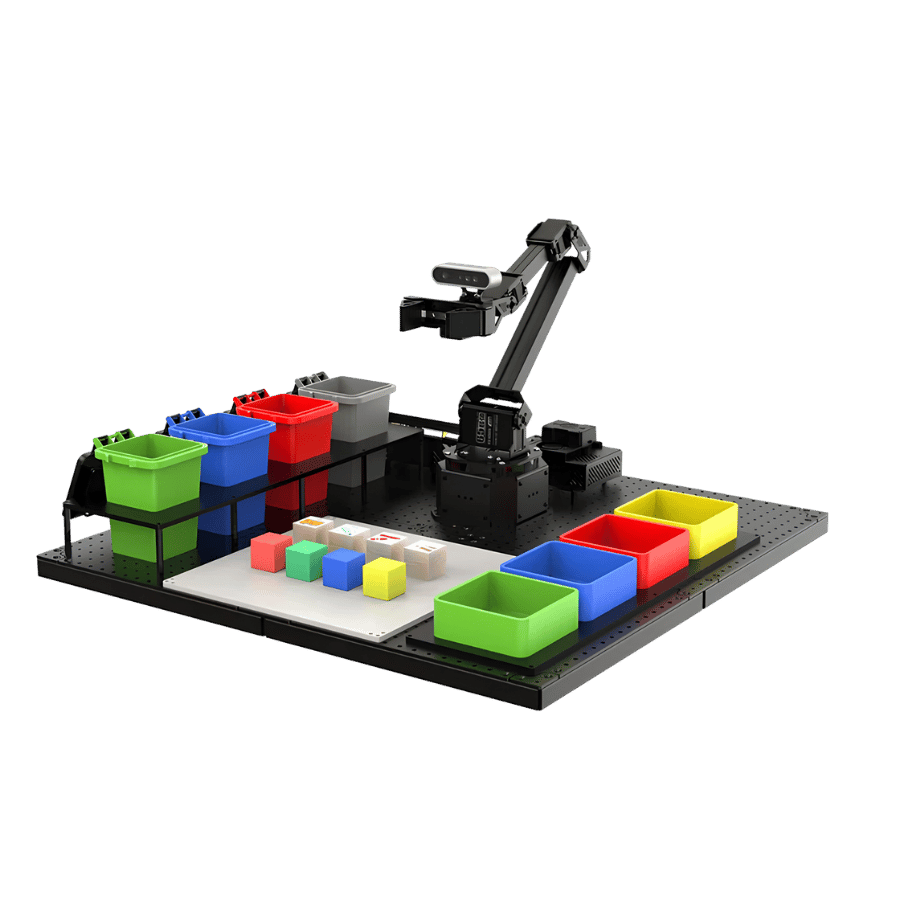
NexArm ROS2 Basic Sorting Sandbox Kit (Without Raspberry Pi)
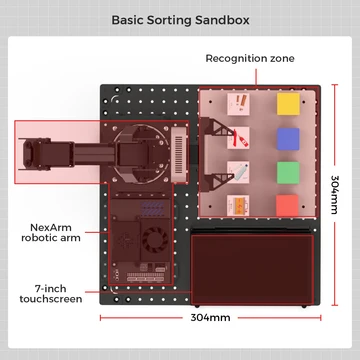
- Basic sorting sandbox, 304 × 304 mm
- NexArm ROS robotic arm with 3D depth vision and hand-eye coordination
- Sorts by color and shape using vision, localization and path planning
- 7-inch HD touchscreen and PS3 wireless controller in the kit
- ESP32 (ESP-WROOM) controller with Ubuntu 22.04 + ROS 2 Humble
- Python, C and C++ with app and PC software control
- Includes the accessory pack for kits without Raspberry Pi 5
- Variant: Basic Sorting Sandbox Kit, Without Raspberry Pi Controller
- Trusted dealerDirect manufacturer partnership
- Pan-India deliveryInsured shipping, all states
- Post-sale supportTraining + service included
What makes it work
NexArm ROS2 Basic Sorting Sandbox Kit (Without Raspberry Pi Controller) – ROS2 AI Robotic Arm, ESP32 Open-Source Kit with VLA, 3D Vision & Multimodal AI
The NexArm ROS Sandbox Kit is an all-in-one experimental platform purpose-built for advanced ROS education and embodied AI research.
Product Description
The NexArm ROS Sandbox Kit is an all-in-one experimental platform purpose-built for advanced ROS education and embodied AI research. Featuring an advanced modular architecture, it natively fuses multimodal large models, OpenClaw agents, ACT, VLA, machine vision, and inverse kinematics into a complete validation loop spanning foundational concepts to high-level embodied algorithms.
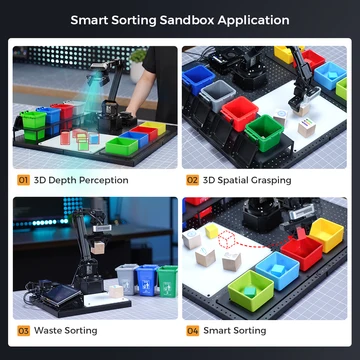
The NexArm ROS Sandbox Kit unifies computer vision, localization, path planning, and grasping control into a complete smart sorting sandbox. It recognizes distinct features like color and shape to rapidly classify and sort cluttered objects.
Available Options
Model
Controller
Key Features & Applications

Large AI Model & OpenClaw
Fusing the OpenClaw agent with multimodal AI models across speech, language, and vision, the NexArm ROS robotic arm executes complex remote tasks like visual scene understanding, dynamic object tracking, and data aggregation and analysis.

Flexible Sandbox Setups
Progressive setups adapt to diverse learning stages and development goals. Scaling from standalone robotic arm control to multi-workstation collaboration, this single platform fulfills all classroom instruction, hands-on training, and research workflows.

Multi-DOF Robotic Arm Manipulation
Featuring a multi-DOF joint design paired with trapezoidal acceleration/deceleration, NexArm ROS ensures smooth, jitter-free motion. It effortlessly executes multi-angle grasping, transport, and placement.

3D Depth Vision & Hand-Eye Coordination
Fusing RGB and depth data allows the NexArm ROS to perceive object colors and point cloud information. Leveraging inverse kinematics, it enables advanced AI projects including arbitrary 3D grasping, sorting, and transporting.
Modular Sandbox Ecosystem
The expandable NexArm ROS robotic arm seamlessly integrates with advanced peripherals, including electric sliding rails . The modular metal sandbox baseplate enables highly efficient replication of complex physical interaction scenarios like smart warehousing.
Smart Sorting Sandbox Application


Flexible Configuration Options
The NexArm ROS series offers highly flexible hardware combinations to effortlessly adapt to diverse R&D stages and application environments. Featuring a dual-controller architecture, 3D depth camera, and AI voice interaction module as standard across the entire lineup, the series delivers consistent, high-tier core performance backed by multimodal perception and precise manipulation.

NexArm ROS Robotic Arm
The standalone NexArm ROS robotic arm integrates multimodal large AI models, delivering deep visual perception and natural interaction for effortless basic grasping, sorting, and visual calibration. This setup is specifically designed for ROS onboarding and rapid algorithm validation.

Sliding Rail Warehouse Sandbox
Integrates a high-precision electric linear sliding rail and multi-tier shelving. It supports multi-workstation transport, automated inventory sorting, and inbound control to fully replicate industrial warehousing and logistics workflows.

Dual-Arm Conveyor Development Kit
This highly integrated sandbox features a dual-arm 3D vision system, an AI edge computing controller, and motorized drive mechanisms. It is engineered for dual-arm collaborative experimentation and embodied AI algorithm validation.

Suspended Mobile Chassis
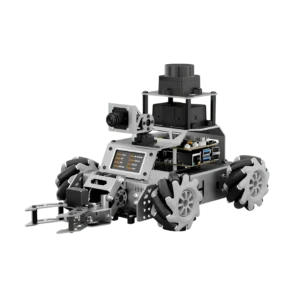
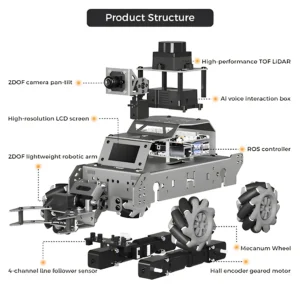
NexArm ROS is integrated with a suspended tank or suspended omnidirectional Mecanum wheel chassis. Beyond supporting remote mobile control via wireless controller or app, the setup drives efficient mobile tracking and autonomous line following.

Hardware Specifications


Product Videos
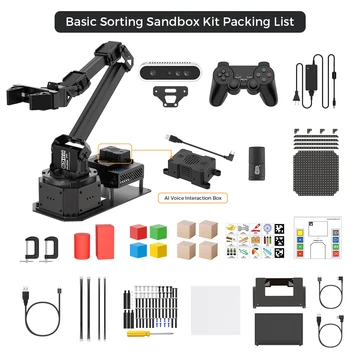
Packing List


Technical Specifications

| Product model | Basic sorting sandbox |
|---|---|
| Dimensions | 304 × 304 mm |
| Material | Metal brackets |
| ESP32 controller | ESP-WROOM main chip |
| Control Methods | ROS topics/nodes, Python programming, app control, PC software control |
| Camera | Depth camera |
| Power supply | 12V 5A DC power adapter |
| Operating system | Ubuntu 22.04 + ROS 2 Humble |
| Software | iOS/Android app, Windows PC software |
| Communication | USB, Wi-Fi, Ethernet |
| Programming tools | Python, C, C++ |
| Servo model | HX-12H / HX-30HM / HX-65HM intelligent bus servos |
| Included materials | Comprehensive tutorials, ROS source code, ESP32 source code, system images, supporting softwares |
Frequently Asked Questions
What does the Basic Sorting Sandbox Kit without Raspberry Pi include?
It includes the Basic Sorting Sandbox Kit packing list plus the "Accessory Pack for Kits without Raspberry Pi 5" (top and bottom covers, Raspberry Pi 5 expansion board, cooling fan, cables and screws). The Raspberry Pi 5 board itself is not included.
How large is the Basic Sorting Sandbox?
The Basic sorting sandbox measures 304 × 304 mm.
What can the sandbox do?
It unifies computer vision, localization, path planning and grasping control, recognizing features like color and shape to classify and sort cluttered objects.
Which software and programming tools are supported?
It runs Ubuntu 22.04 + ROS 2 Humble, with Python, C and C++, plus iOS/Android app and Windows PC software.
How is the robotic arm controlled?
Through ROS topics/nodes, Python programming, app control or PC software control, over USB, Wi-Fi or Ethernet.





There are no reviews yet.