

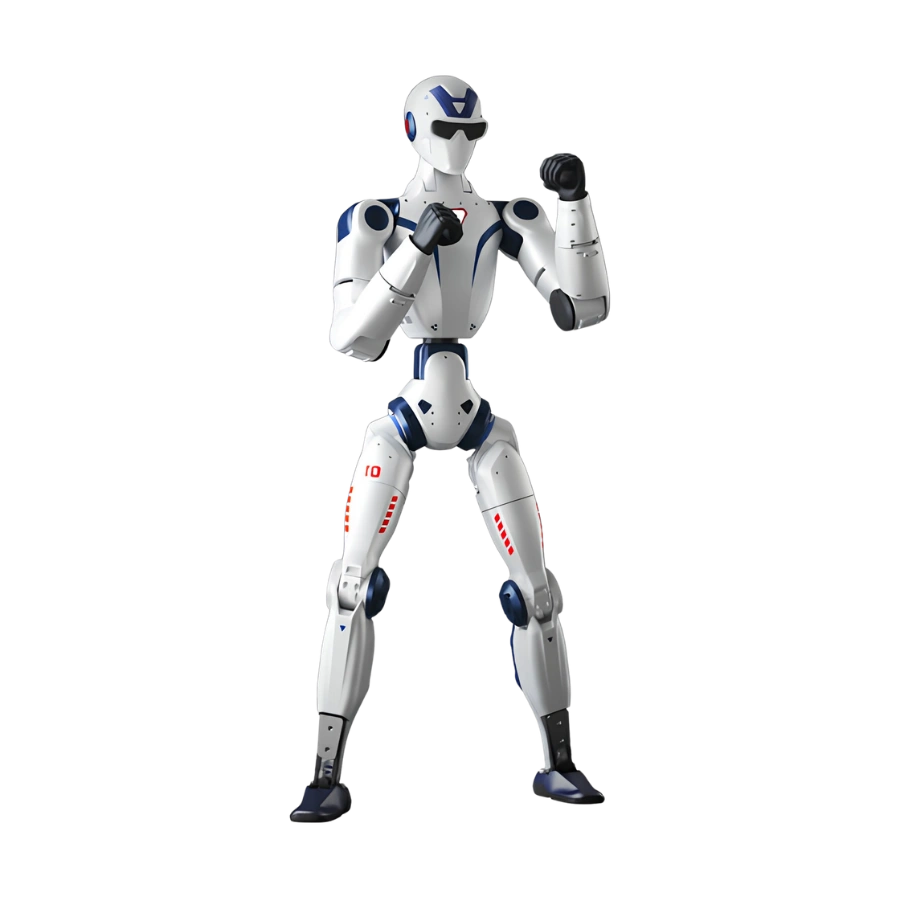
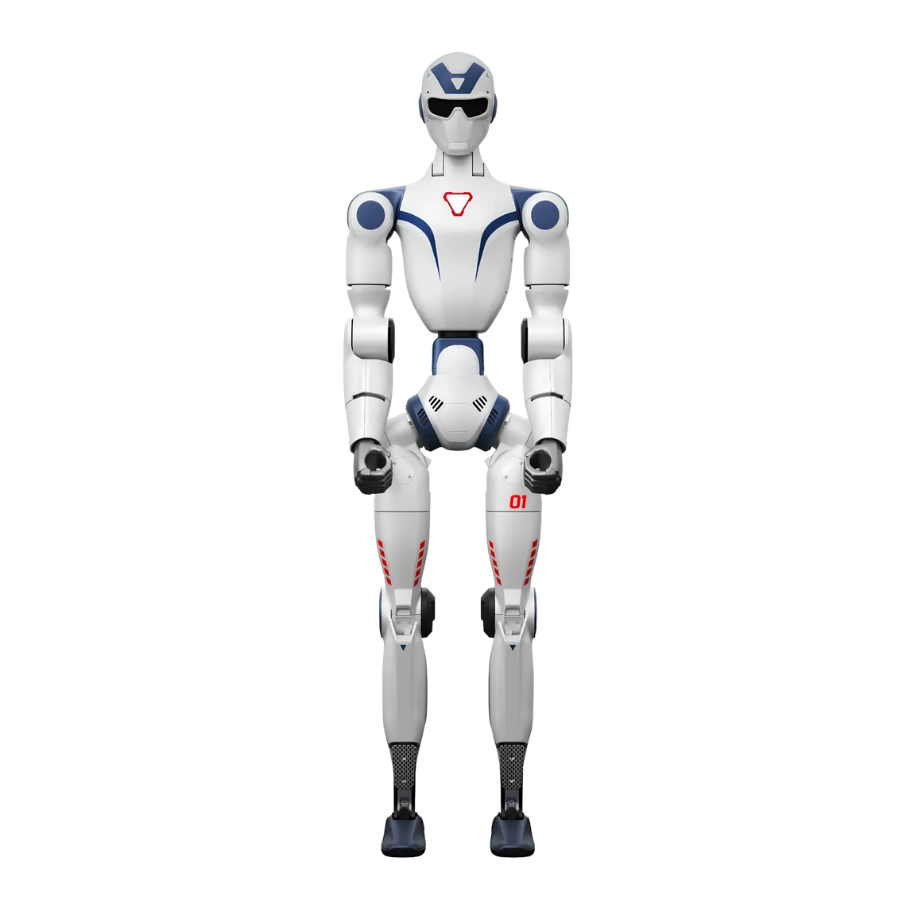
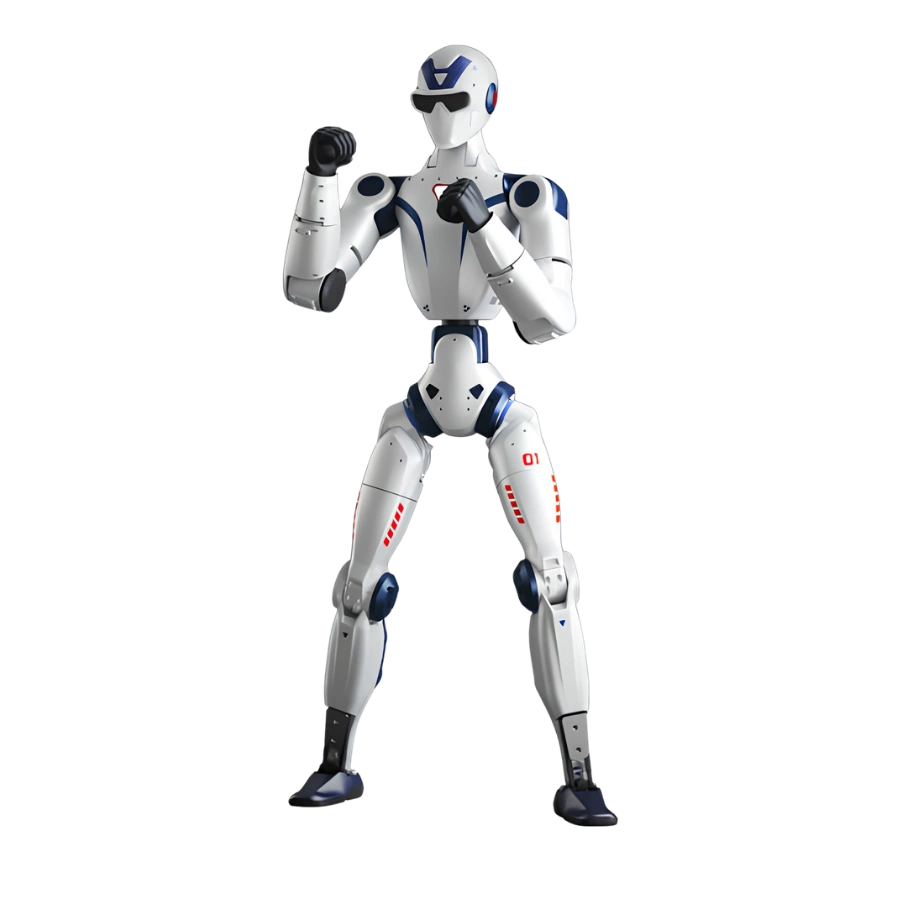
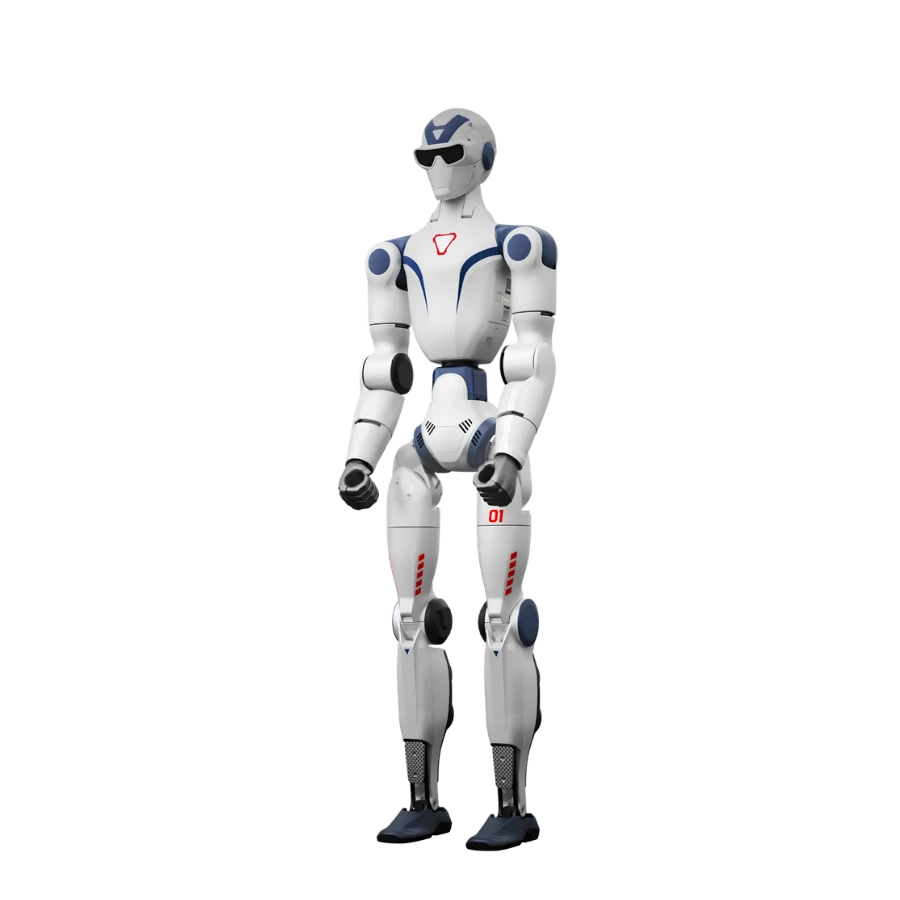
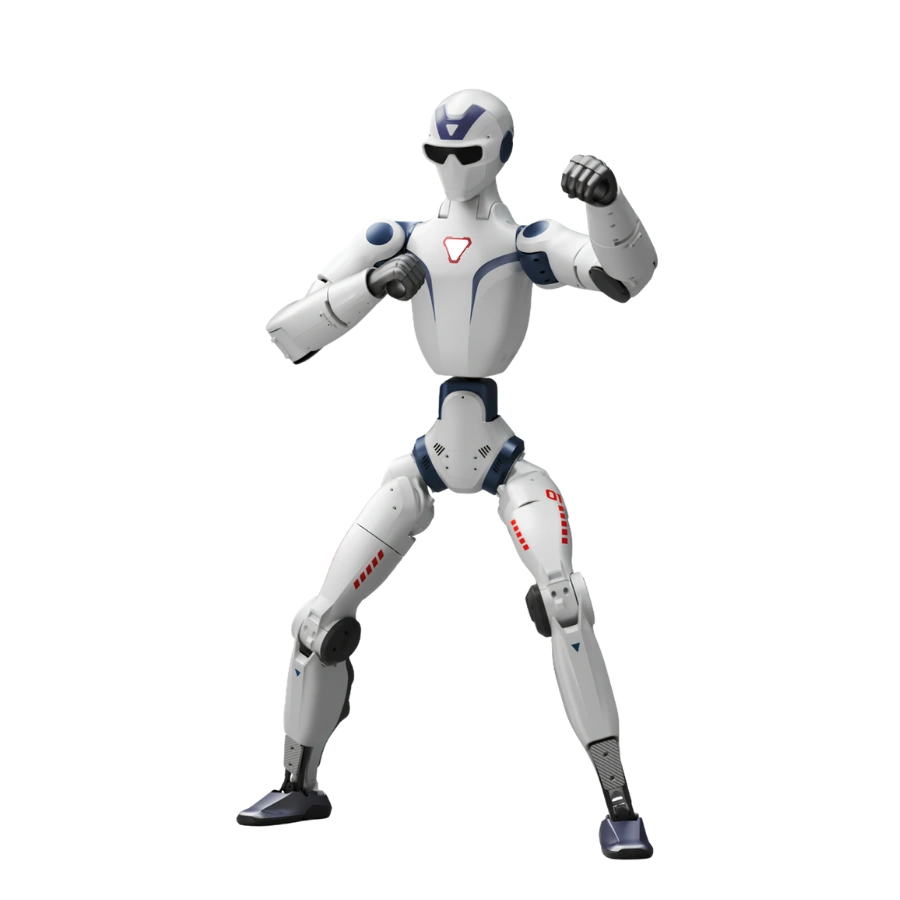
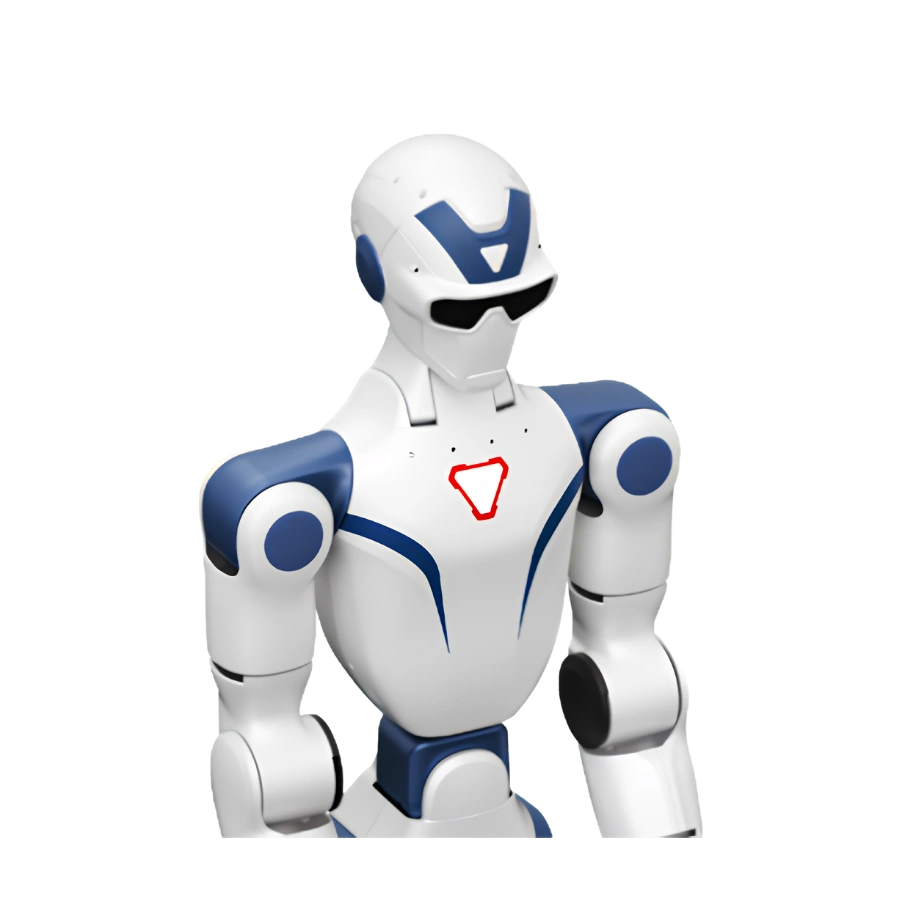
Unitree R1 EDU-U2 Humanoid Robot
- Total degrees of freedom (joint motors): Upgraded to 26
- Leg degrees of freedom: 6; waist degrees of freedom: 2; arm degrees of freedom: 5
- Head degrees of freedom: Upgraded to 2
- Built-in computing power upgraded to 100Tops expansion dock, enabling secondary development and including AI algorithm support
- Maximum arm load: 2kg
- Supports high- and low-level secondary development, provides robot models and simulation interfaces, and supports simulation environments such as Isaac SIM
- Provides excellent technical support services, comprehensive development manuals, and ecosystem support
- Trusted dealerDirect manufacturer partnership
- Pan-India deliveryInsured shipping, all states
- Post-sale supportTraining + service included
What makes it work
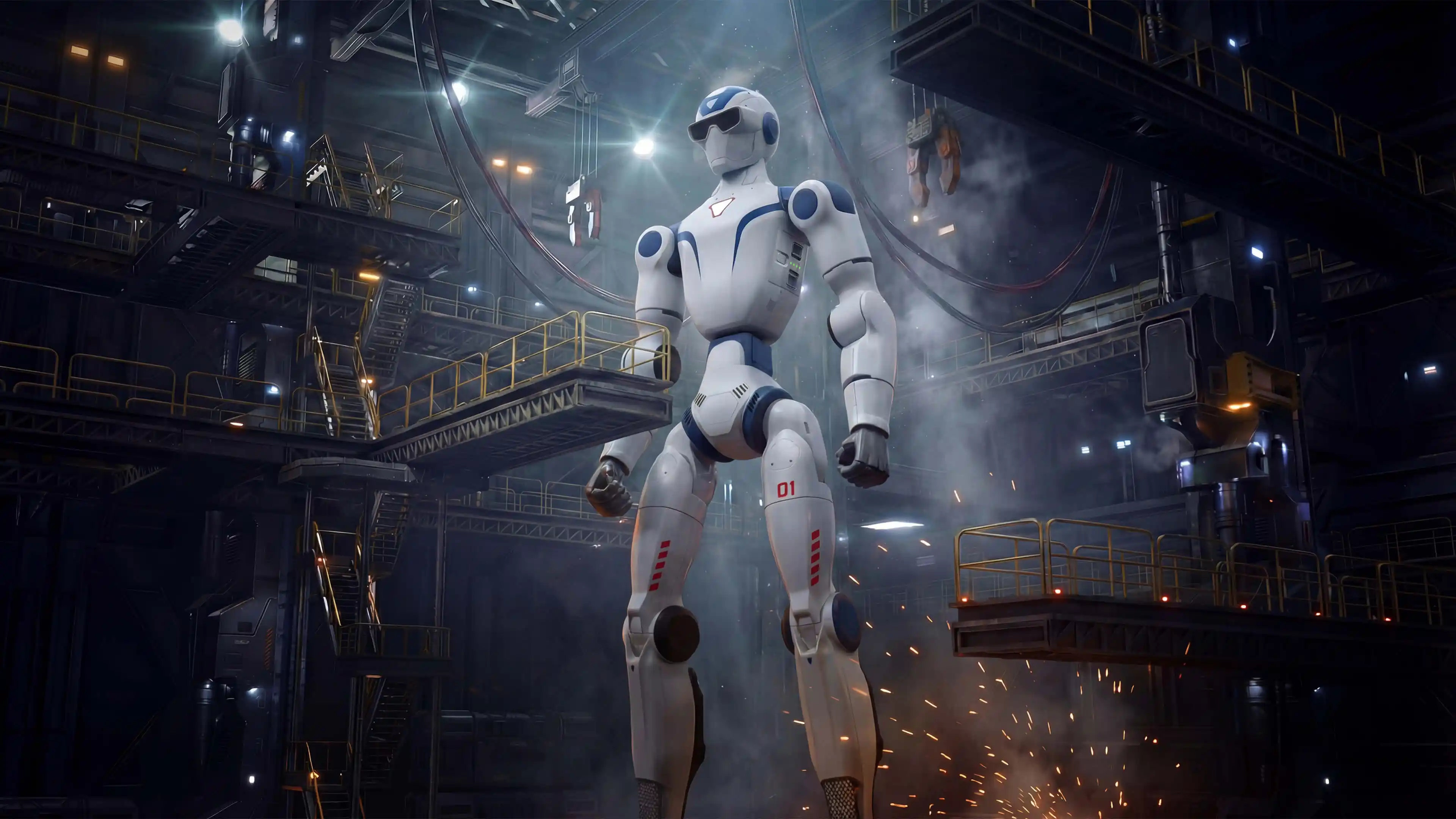
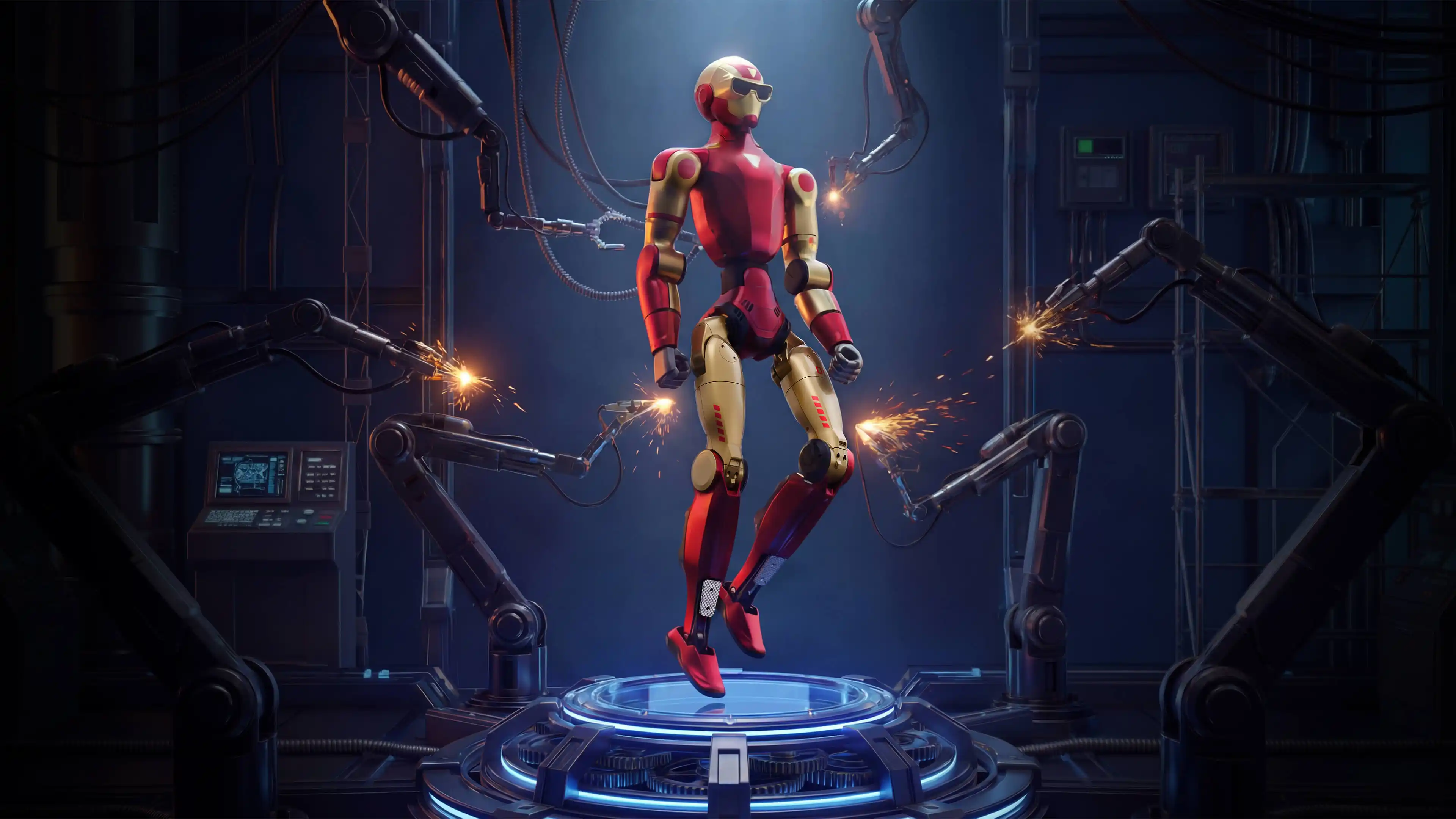
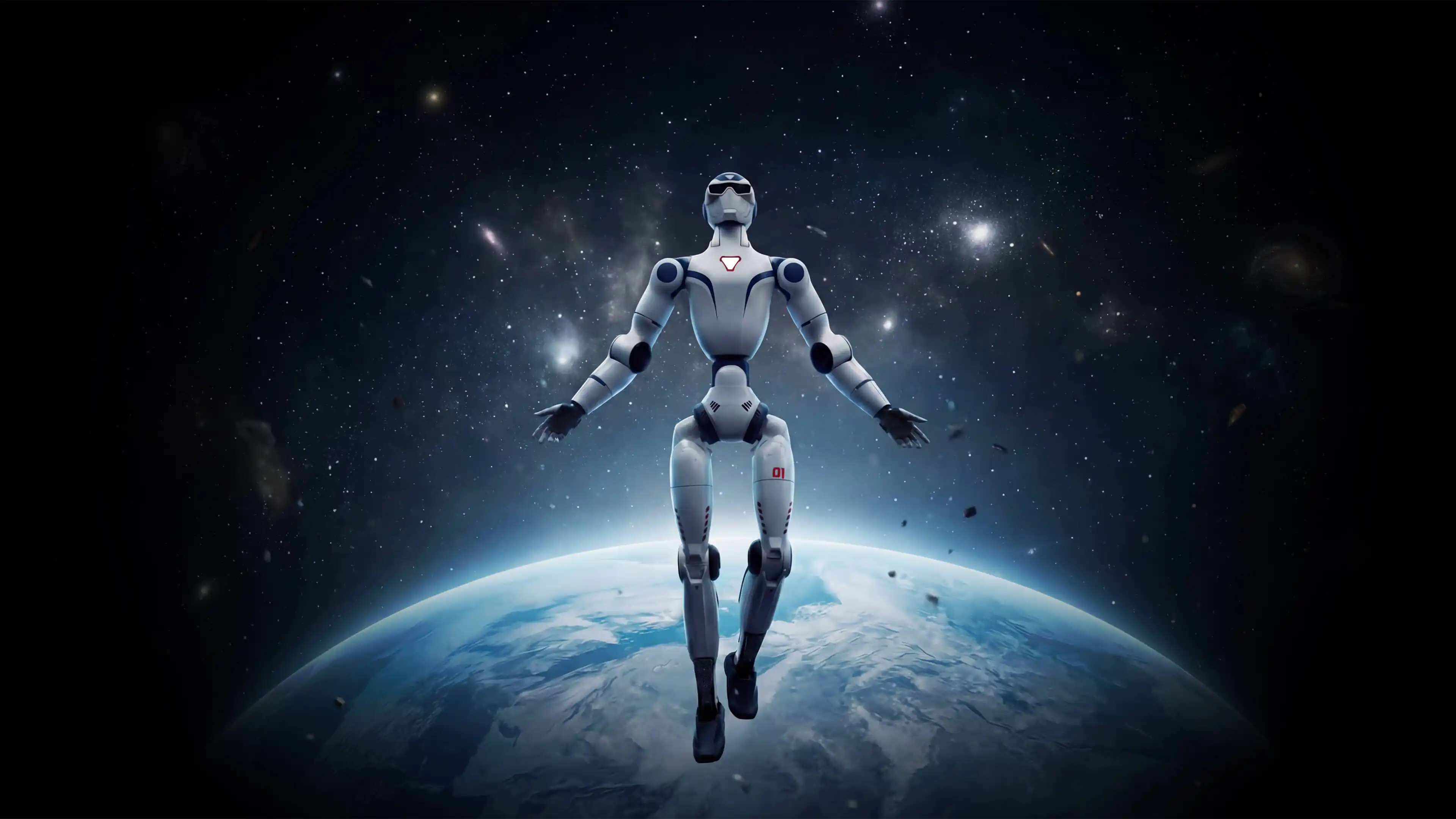
Unitree R1 EDU-U2
The upgraded research humanoid platform — 26 degrees of freedom, 100 TOPS onboard AI computing, binocular camera, full secondary development support, and simulation-ready interfaces for Isaac SIM and beyond.
Unitree R1 EDU-U2 — 100 TOPS AI, Full Secondary Development, Built for Demanding Experiments
The Unitree R1 EDU-U2 is the high-compute open-development tier of the R1 humanoid robot series — purpose-built for universities, research labs, robotics institutions, and engineering teams that need a physically capable, fully programmable humanoid platform. Standing 123 cm tall and weighing approximately 29 kg including its quick-release lithium battery, the R1 EDU is based on the R1 mechanical platform with 26 degrees of freedom: 6 DOF per leg, 5 DOF per arm, 2 DOF at the waist, and 2 DOF in the head. A built-in expansion dock delivers 100 TOPS of onboard AI computing power for secondary development and AI algorithm support — upgraded from the standard R1 EDU — with optional high-power computing modules (including Orin-class processors) available for even higher throughput applications. The R1 EDU supports full high- and low-level secondary development, provides robot models and simulation interfaces, and is compatible with Isaac SIM and other simulation environments. It also provides comprehensive development manuals, ecosystem support, and dedicated technical services. Perception is handled by a humanoid binocular camera for stereo depth and visual scene understanding. The R1 EDU carries a 12-month warranty — the longest in the R1 series — reflecting its positioning as a serious long-term development platform.
Four Principles Behind the R1 EDU
Engineered for Research. Upgraded to Perform.
26 DOF Full-Body Mobility — Head, Waist, Arms and Legs
The R1 EDU operates with 26 degrees of freedom across its entire kinematic structure — significantly expanding on the entry-level R1 AIR to include a two-DOF waist and two-DOF head, in addition to six DOF per leg and five DOF per arm. The waist articulation adds yaw (±150°) and roll (±30°) to the torso, enabling the whole-body coordinated motion essential for manipulation tasks, balance compensation, and natural movement in research scenarios. The two-DOF head provides pan and tilt, enhancing environmental perception and enabling natural gaze direction during human-robot interaction studies. Together, this structure makes the R1 EDU a credible full-body humanoid platform capable of supporting locomotion research, manipulation experiments, and motion generation work across the full joint set.
Built-In 100 TOPS Expansion Dock — Advanced AI On-Robot
The R1 EDU-U2 includes a built-in expansion dock delivering 100 TOPS of onboard AI computing power — a significant upgrade over the standard R1 EDU — purpose-built for secondary development and AI algorithm support. This high-capacity compute layer runs directly on the robot alongside the 8-core base processor, enabling researchers and developers to deploy perception models, reinforcement learning policies, and multimodal AI pipelines on-board without dependency on an external compute server. For applications requiring even higher throughput, optional high-power computing modules — including Orin-class processors — are also available, providing a fully scalable compute architecture.
Full Secondary Development — High- and Low-Level Interfaces
Secondary development is the defining capability of the R1 EDU tier. The platform supports both high-level and low-level development interfaces — giving research teams direct access to joint control, sensor data streams, motion planning hooks, and full SDK integration. Robot models and simulation interfaces are provided as part of the development package, enabling algorithm design and verification in simulation before deployment on hardware. The R1 EDU is compatible with Isaac SIM and other standard robotics simulation environments — bridging the sim-to-real gap that is critical for modern data-driven robotics research. ROS 2 integration is also supported, making the R1 EDU compatible with the broader open-source robotics toolchain used by universities and research institutions globally.
Humanoid Binocular Camera — Stereo Depth Perception
The R1 EDU is equipped with a humanoid binocular camera — providing stereo depth perception for visual scene understanding, object localisation, and spatially-aware AI applications. Binocular vision enables the robot to estimate distances and reconstruct 3D structure from the environment, which is foundational for manipulation research, navigation, and visual AI work. This upgrade from the monocular camera in the R1 AIR is significant for researchers running SLAM algorithms, visual manipulation pipelines, or depth-dependent perception models. The binocular camera integrates directly with the onboard AI compute through the expansion dock, enabling vision-based AI workflows to run entirely on-robot without external processing.
12-Month Warranty, Comprehensive Manuals & Ecosystem Support
The R1 EDU carries a 12-month warranty — twice the coverage of the R1 standard model — reflecting Unitree's commitment to supporting long-duration research and development programmes. Comprehensive development manuals cover the full platform from hardware integration to SDK usage, simulation environment setup, and joint-level control. Dedicated technical support services are available alongside an active Unitree ecosystem of developers, universities, and research partners. Optional dexterous hands can be added to the R1 EDU for manipulation research, expanding the platform's task space significantly. The quick-release smart battery, charger, and manual controller are included in the standard package — ready to operate immediately while development work begins.
R1 Series — Full Kinematic Overview
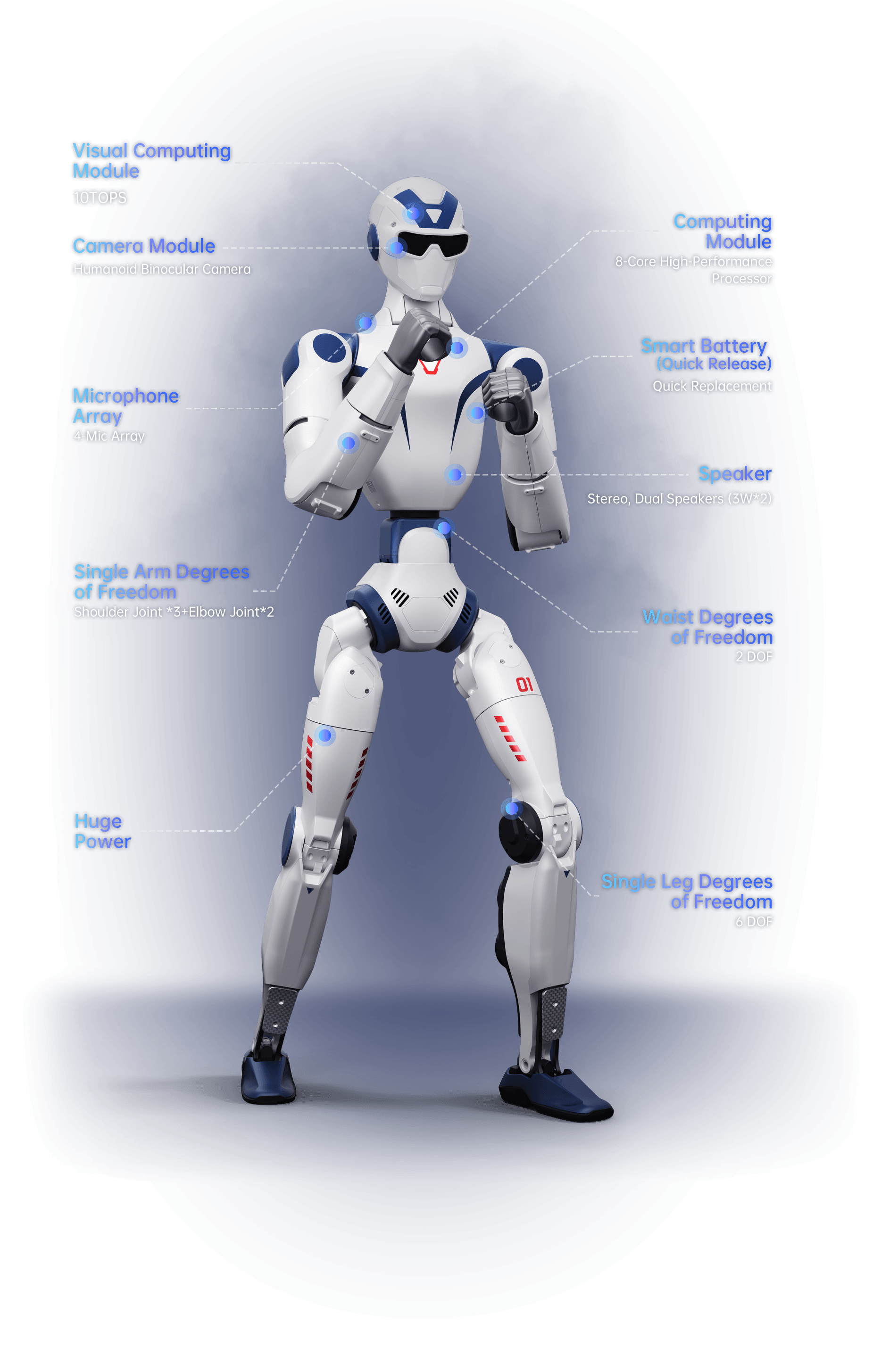
Six Features That Define the R1 EDU
Unitree R1 EDU — Complete Specification
| Specification | Details |
|---|---|
| Mechanical Dimensions | |
| Height × Width × Thickness (Standing) | 1230 × 357 × 190 mm |
| Weight (With Battery) | About 29 kg |
| Degrees of Freedom | |
| Total Degrees of Freedom (Joint Motors) | 26 |
| Leg Degrees of Freedom (per leg) | 6 |
| Arm Degrees of Freedom (per arm) | 5 |
| Waist Degrees of Freedom | 2 |
| Head Degrees of Freedom | 2 |
| Dexterous Hand | Optional |
| Joint Range of Motion | |
| Waist Joint — Yaw | ±150° |
| Waist Joint — Roll | ±30° |
| Knee Joint | −10° ~ +139° |
| Hip Joint — Yaw | ±157° |
| Hip Joint — Pitch | −168° ~ +146° |
| Hip Joint — Roll | −60° ~ +100° |
| Calf + Thigh Length | 600 mm |
| Forearm + Upper Arm Length | 420 mm |
| Actuation & Sensing | |
| Joint Output Bearing | Crossed Roller Bearings, Double Hook Ball Bearings |
| Joint Motor | Low Inertia High-Speed Internal Rotor PMSM |
| Maximum Arm Load | 2 kg |
| Joint Encoder | Dual + Single Encoder |
| Compute & AI | |
| Built-in Expansion Dock | Yes — 100 TOPS AI Computing Power |
| AI Algorithm Support | Yes (via Expansion Dock) |
| Optional High-Power Computing Module | Multiple brands and models available (e.g., Orin — 40–100 TOPS) |
| Basic Computing Power | 8-Core High-Performance Processor |
| Perception & Interaction | |
| Camera | Humanoid Binocular Camera |
| Microphone Array | 4-Mic Array |
| Speaker | Yes |
| Electrical Characteristics | |
| Electrical Routing | Hollow + Internal Routing |
| Cooling System | Local Air Cooling |
| Power Supply | Lithium Battery (Quick Release) |
| WiFi | WiFi 6 |
| Bluetooth | Bluetooth 5.2 |
| Development | |
| Secondary Development | Yes — High-Level & Low-Level |
| Robot Models & Simulation Interfaces | Yes (Provided) |
| Simulation Environment Support | Isaac SIM and others |
| Development Manuals | Comprehensive (Provided) |
| Technical Support | Yes — Dedicated Support Services |
| Accessories & Other | |
| Smart Battery (Quick Release) | Yes (Included) |
| Charger | Yes (Included) |
| Manual Controller | Yes (Included) |
| Battery Life | About 1 Hour |
| Upgraded Intelligent OTA | Yes |
| Warranty Period | 12 Months |
Unitree R1 EDU-U2 — See It in Action
Unitree R1 — Full Platform Overview
Unitree R1 — Balance, Agility & Motion Capabilities
Common Questions About the R1 EDU-U2
What is the difference between the Unitree R1 EDU and the standard R1?
The R1 EDU is the full research and education tier of the R1 series. It shares the R1 mechanical platform (26 DOF — including 2-DOF waist and 2-DOF head) but adds a built-in expansion dock with 100 TOPS of AI computing power, full high- and low-level secondary development interfaces, robot models, simulation interfaces (including Isaac SIM support), comprehensive development manuals, and dedicated technical support services. Optional dexterous hands are also available for the R1 EDU. The standard R1 and R1 AIR do not support secondary development. The R1 EDU also carries a 12-month warranty versus 8 months for the standard R1.
What does secondary development support include on the R1 EDU?
Secondary development on the R1 EDU includes high-level and low-level programming interfaces giving direct access to joint control and sensor data, robot models for simulation-based algorithm design, and simulation environment interfaces compatible with Isaac SIM and other platforms. ROS 2 is supported, making the R1 EDU compatible with the standard academic robotics development stack. Comprehensive development manuals are provided along with dedicated technical support services from Unitree and its ecosystem partners. This makes the R1 EDU suitable for locomotion research, manipulation experiments, visual AI development, human-robot interaction studies, and algorithm deployment from simulation to real hardware.
What is the built-in expansion dock and how does the AI computing work?
The R1 EDU-U2 includes a built-in expansion dock that provides 100 TOPS of dedicated AI computing power for secondary development and algorithm execution on-robot — double the compute of the standard R1 EDU's 40 TOPS dock. This high-capacity compute layer runs alongside the 8-core base processor in the robot body, enabling researchers to deploy demanding AI models — including perception, inference, and control policies — directly on the hardware. For applications requiring even higher throughput, optional high-power computing modules including Orin-class processors are also available.
What perception sensors does the R1 EDU have?
The R1 EDU is equipped with a humanoid binocular camera — providing stereo depth perception and 3D scene reconstruction capability that the entry-level R1 AIR's monocular camera cannot deliver. It also includes a 4-microphone array for directional audio capture and voice command recognition, and an onboard speaker for audio output. The 2-DOF head (pan and tilt) allows the binocular camera to be directed across the environment, improving visual coverage during operation and research tasks.
What is the maximum arm load and are dexterous hands available?
The R1 EDU's arms support a maximum load of approximately 2 kg — with the caveat from Unitree that this varies depending on arm extension posture, as reaching further from the body reduces effective load capacity. For manipulation research requiring dexterous finger-level control, optional dexterous hands are available for the R1 EDU tier. Dexterous hands are not available on the standard R1 or R1 AIR. Please enquire at xBoom.in for dexterous hand configuration options with the R1 EDU.
The full sheet
Related products
-
·LND·00
 Unitree B2- Basic Version with 3D LIDAR Robot Dog (Industry grade)₹8,516,949 (Excl. GST)Add to cart
 -
·LND·01
 Unitree Go2 Air- Robot Dog (Without Controller)Original price was: ₹292,373.₹249,153Current price is: ₹249,153. (Excl. GST)Add to cart
 -
·LND·02
-
·LND·03



There are no reviews yet.