

Most schools that want a robotics lab end up with a pile of kits in a cupboard. The hardware arrives, but nobody planned the room, the curriculum, the teacher training or what happens when a drone breaks in week three. A good robotics lab for schools is not a shopping list. It’s a space, a syllabus and a support plan that still work in year three.
XBOOM designs and delivers drone and robotics labs for schools, ITIs, polytechnics and engineering colleges across India. This guide covers what you actually need to decide: which kind of lab, how much space, what it costs, how long it takes, and what should be in the box.
First, Decide Who the Robotics Lab Is For
The right lab depends on the age group, the curriculum board and the budget. We scope labs for five institution tiers:
| Tier | What students do | Typical footprint |
|---|---|---|
| Grades 3–8 | Beginner drones, block coding, LEGO-style robotics, 3D-design basics, with a captive classroom flying net | 300–500 sq ft |
| Grades 9–12 | Tello EDU-class drones, Arduino / Raspberry Pi / micro:bit, Python, embedded electronics, intro AI | 500–900 sq ft |
| ITI & Polytechnic | Drone repair, assembly and maintenance, mechatronics benches, agri-spray trainer drones | 800–1,200 sq ft |
| Engineering & University | Enterprise platforms, Unitree Go2 EDU, robotic arms, ROS-ready compute, SLAM research | 1,200–2,500+ sq ft |
| Atal Tinkering Labs | NITI Aayog ATL-spec kits: IoT, robotics, drones, 3D printing, electronics | 500–800 sq ft |
If you only have part of the space, the lab can be built in phases and grown later.
Three Ways to Configure the Lab
1. Drone Lab: flight first
A lab built around flying: physics of flight, piloting from basic to advanced, simulator training, aerial photography and survey basics. It typically includes DJI Tello EDU and trainer drones, an indoor captive flight net with charging stations, simulator workstations, and mission-planning software. It suits Grades 9–12, ITIs and UG programmes, and usually takes 4–8 weeks to set up.
2. Integrated STEM Lab: the most popular choice
Drones, ground robotics, fabrication and electronics in one space. It combines starter and intermediate drones with Arduino, Raspberry Pi, micro:bit and LEGO Spike kits, educational 6-DOF robotic arms, 2–4 desktop 3D printers, electronics workbenches, and a curriculum spanning Grades 6–12. This is the configuration most ATL and PM SHRI schools adopt, because one investment serves several grades and project streams. Typical setup: 6–10 weeks.
3. Robotics Research Lab: for colleges
A thesis- and competition-grade lab for engineering colleges and universities. It’s built around the Unitree Go2 EDU quadruped, industrial and collaborative robotic arms, a Tello EDU swarm kit, ROS-ready workstations with NVIDIA Jetson compute, and professional fabrication tools, with an optional motion-capture rig for SLAM research. Typical setup: 8–14 weeks.
What Should Be in the Box: Eight Work-Streams
A lab that only ships hardware fails within a year. Every XBOOM lab is delivered as eight work-streams, through one vendor relationship:
- Drone hardware: graded from programmable Tello EDU to Mavic-class trainers, plus simulators.
- Robotics hardware: Arduino, Raspberry Pi, micro:bit and LEGO Spike kits, educational arms and sensor kits. See the education robots we stock.
- Fabrication: FDM 3D printers, resin printers and optional laser cutters, with the first year’s consumables.
- Electronics workbenches: soldering stations, multimeters, bench power supplies and component bins, plus oscilloscopes for colleges.
- Software and simulation: student IDEs, flight simulators, TinkerCAD and Fusion 360, Scratch for younger grades, and ROS for colleges.
- Curriculum: grade-wise lesson plans, project briefs, rubrics and workbooks mapped to CBSE, ICSE, state boards or the AICTE model syllabus.
- Teacher training: a 5–10 day on-site train-the-trainer programme, a handbook and a helpline.
- Safety and AMC: flight netting, fire-safety kit, anti-static mats and first aid, with an annual maintenance contract and a 12-month workmanship warranty.
How Much Does a Robotics Lab for Schools Cost?
These are the indicative ranges we publish:
- ATL-spec school lab: from about ₹12–25 lakh
- Integrated STEM lab: from about ₹18–45 lakh
- Engineering-college research lab: from about ₹35 lakh to over ₹1 crore, depending on platforms
The real number comes after a site visit and curriculum map. We quote fixed-scope, so there are no mid-project surprises. The institution owns the equipment outright from commissioning. Some institutions prefer a rent-to-own structure over 2–3 years, which can be arranged case by case.
The Setup Journey: Six Steps
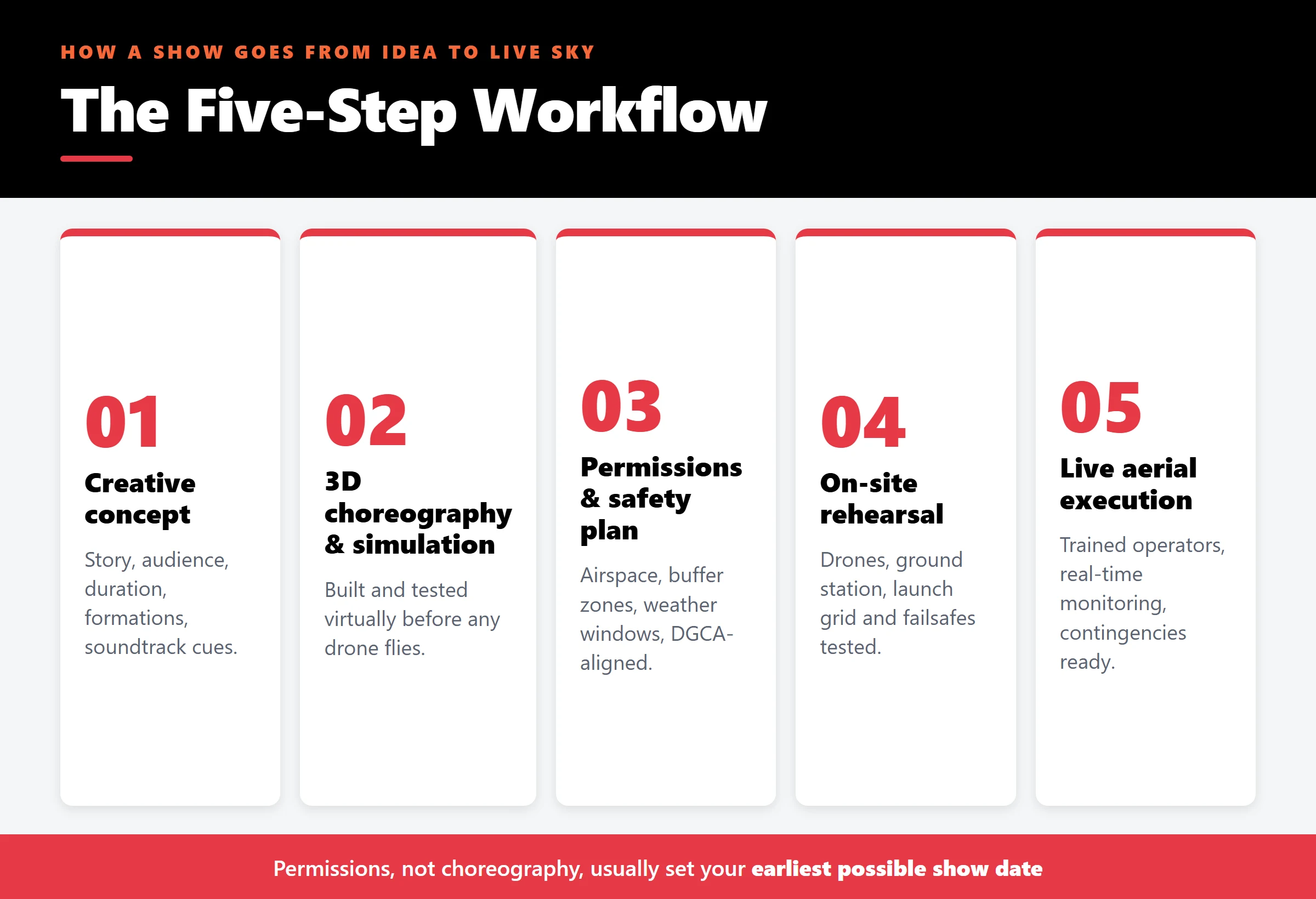 From proposal signing to the first class taught usually takes 6–10 weeks. Timelines can be compressed for ATL compliance deadlines. In practice, the most common delay is on the school’s side: getting the room’s flooring, electrical points, network and ventilation ready. Start that work as soon as the design document arrives.
Built to Fit the Scheme You’re Applying Under
Lab specifications, documentation and proposals can be structured for the scheme or funding route you’re using:
- Atal Tinkering Labs (NITI Aayog): the equipment list and documentation are prepared against the ATL guidelines.
- PM SHRI Schools: mapped to the NEP-aligned infrastructure and experiential-learning components.
- NEP 2020 vocational exposure: drone piloting, robotics assembly, electronics and 3D fabrication as ready-to-adopt modules.
- AICTE model curriculum for colleges, and Skill India / NSDC for ITIs.
- State schemes and corporate CSR: proposals structured for both the institution’s outcomes and the CSR team’s reporting.
What Students Walk Away With
A lab is judged by what students can build and show by the time they leave it. The curriculum works as a ladder: safe assisted piloting from Grade 5, block and then Python drone programming from Grade 7, Arduino and Raspberry Pi projects from Grade 8, AI and computer-vision basics from Grade 10, and competition projects for WRO, FLL, Robocon and the ATL Marathon. College labs run through ROS, SLAM and multi-robot systems. Students aged 18 and over can go on to drone pilot certification through partner training programmes.
If you’re choosing robots for the lab, our guide to Arduino vs Raspberry Pi vs Jetson explains which controller suits which grade, and the Edu Robot Finder narrows the choice in a few questions.
Plan Your Lab
The first step is a free consultation and site visit. You get a one-page fit assessment covering goals, student strength, infrastructure, board alignment, budget and scheme eligibility.
Plan your drone & robotics lab with XBOOM →
Robotics Lab for Schools: Frequently Asked Questions
How much space does a school robotics lab need?
School labs fit in 300–900 sq ft depending on tier. ATL and integrated STEM labs sit comfortably in 500–800 sq ft. College research labs typically need 1,200–2,500 sq ft.
How long does it take to set up?
Usually 6–10 weeks from signing to the first class. Getting the room’s civil and electrical work ready on the school’s side is the most common bottleneck.
Is curriculum and teacher training included?
Yes. Grade-wise lesson plans, workbooks, project briefs and assessment rubrics are bundled, along with a 5–10 day on-site train-the-trainer programme and a first-year helpline for teachers.
Who owns the equipment?
The institution, outright, from commissioning. It isn’t a rental model, although rent-to-own over 2–3 years can be arranged.
What happens when something breaks?
First-year AMC is bundled, with on-call support and replacement parts for consumable failures. Student-damaged equipment is replaced the same week at replacement cost.